
LONDON, July 2, 2026 (EP Desk) - Global crude oil prices extended their losses on Wednesday as improving oil flows through the Strait of Hormuz and easing geopolitical tensions in the Middle East reinforced expectations of a supply surplus.
US benchmark West Texas Intermediate (WTI) crude fell 1.3 percent to settle at $68.58 per barrel, while Brent crude for September delivery declined 1.9 percent to $71.57 per barrel.
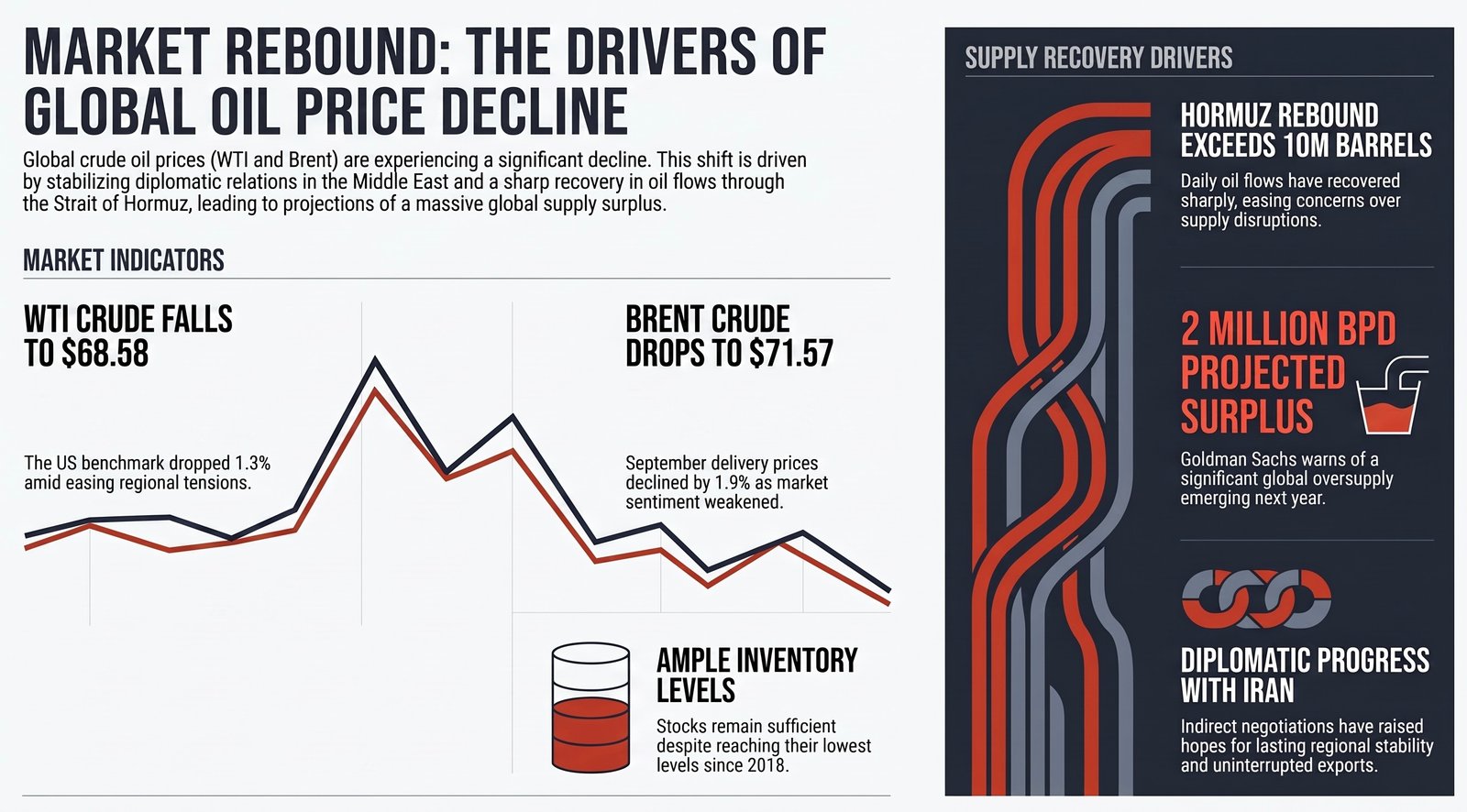
Market sentiment weakened after US President Donald Trump said indirect negotiations with Iran had made progress, raising hopes of a lasting reduction in regional tensions and uninterrupted oil exports through the Strait of Hormuz.
Prices came under additional pressure following US government data showing a smaller-than-expected decline in crude inventories, suggesting that supply remains relatively ample despite stockpiles being at their lowest level since 2018.
Analysts said the market is increasingly focusing on the prospect of a global supply surplus later this year, as oil exports from the Middle East continue to recover. Increased shipments from Saudi Arabia, Iran and Russia have also added to expectations of oversupply.
Commercial shipping through the Strait of Hormuz has rebounded sharply in recent weeks, with daily oil flows exceeding 10 million barrels, further easing concerns over supply disruptions.
Major investment banks, including Goldman Sachs and Morgan Stanley, have warned that global oil markets could move into surplus as regional supply normalizes faster than expected. Goldman Sachs projects a global oversupply of nearly 2 million barrels per day next year, while Morgan Stanley has lowered its oil price forecasts amid improving supply conditions.
Despite the recent decline in prices, analysts noted that geopolitical risks remain, with unresolved issues surrounding Iran’s nuclear program and broader regional security continuing to pose potential risks to global energy markets.