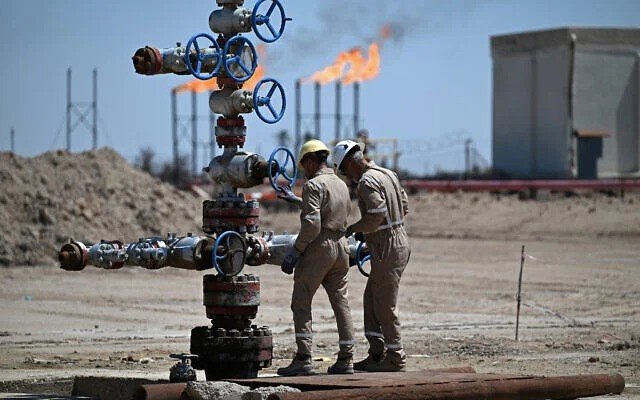
Global oil prices rebounded on Monday, June 29 as investors weighed the resumption of peace talks between the United States and Iran, even as renewed tensions around the Strait of Hormuz underscored the fragility of the current ceasefire.
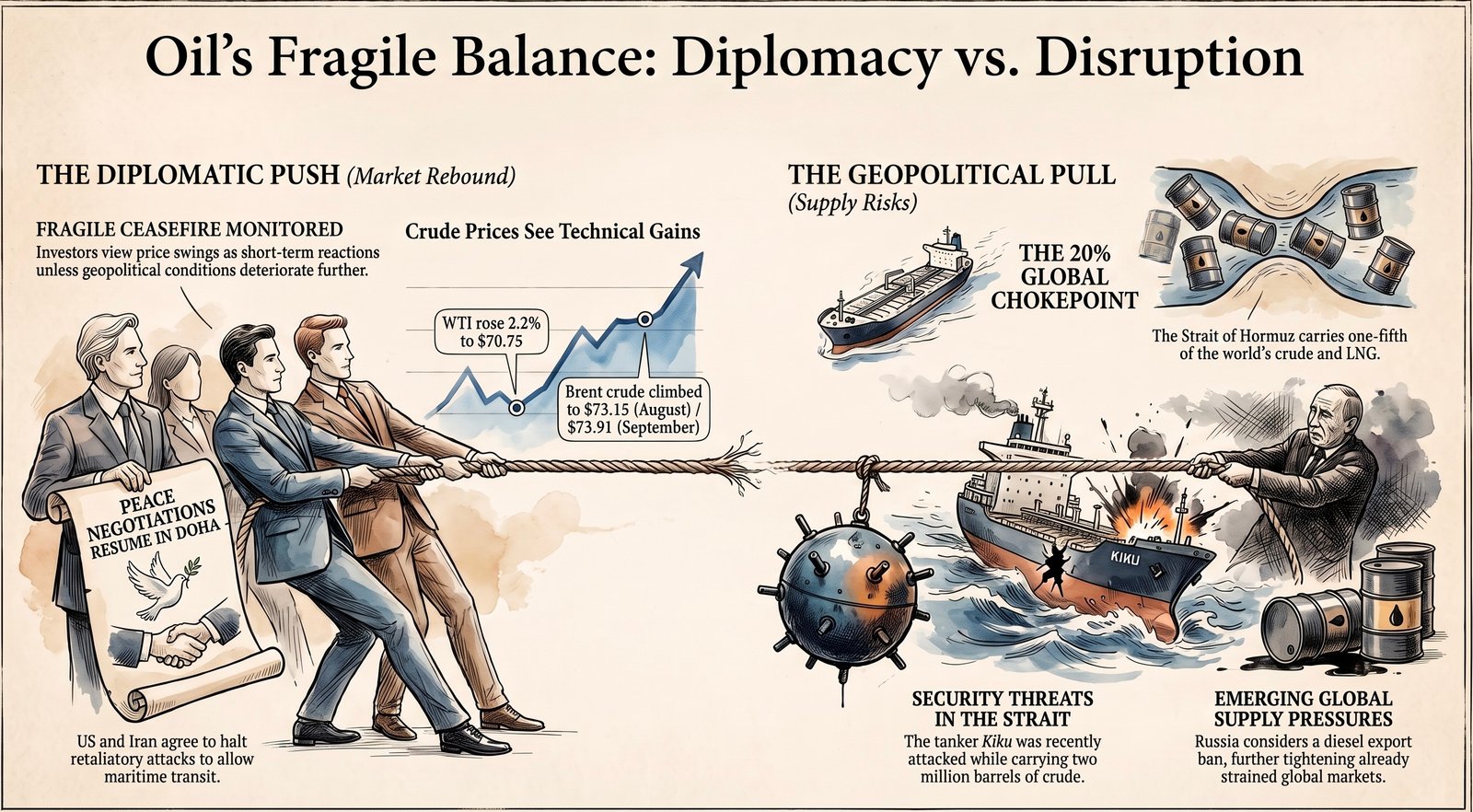
US benchmark West Texas Intermediate (WTI) crude rose 2.2 percent to settle at US$70.75 per barrel, while Brent crude for August delivery gained 1.6 percent to close at US$73.15 per barrel. The more actively traded September Brent contract advanced 1.8 percent to US$73.91 per barrel.
AI-Assisted Infographic
The gains came after US President Donald Trump announced that Washington and Tehran are expected to resume peace negotiations in Doha on Tuesday. A US official, speaking on condition of anonymity, said both sides had agreed to halt retaliatory attacks for the time being, allowing vessels to continue transiting the Strait of Hormuz.
Iran, however, said it would send an expert delegation to Doha but would not hold direct talks with the US delegation. Tehran also reiterated plans to proceed with measures to regulate maritime traffic through the Strait of Hormuz, even without Oman’s involvement.
Shipping activity through the strategic waterway slowed over the weekend following renewed security concerns. The Strait of Hormuz normally carries about one-fifth of the world’s crude oil and liquefied natural gas (LNG) supplies, making it one of the world’s most critical energy transit routes.
Energy analysts said concerns over tighter oil supplies, combined with a technical rebound after recent price declines, helped lift crude prices.
Market participants noted that although shipping continues through the Strait, vessel movements remain below normal levels as shipowners and insurers closely monitor security conditions.
Oil prices have now erased much of the sharp gains recorded after the conflict between the United States, Israel and Iran began earlier this year. Investors increasingly view recent price swings as short-term reactions unless geopolitical conditions deteriorate significantly.
Over the weekend, the oil tanker Kiku, carrying approximately two million barrels of Qatari crude, came under attack while transiting the Strait of Hormuz, highlighting the continuing security risks facing commercial shipping in the region.
Meanwhile, Saudi Arabia reported that a helicopter operated by Saudi Aramco crashed near Ras Tanura, one of the kingdom’s major energy hubs. Authorities have not yet disclosed the cause of the incident, and there was no immediate indication of any impact on oil production or export facilities.
In Russia, President Vladimir Putin acknowledged growing fuel shortages and confirmed that Moscow is considering a complete ban on diesel exports to ease domestic supply constraints. Analysts said such a move could further tighten global fuel markets already under pressure from geopolitical disruptions in the Middle East.