International partners have announced US$900 million in new financial commitments to expand clean cooking access across Africa, raising fresh momentum ahead of the Second Summit on Clean Cooking in Africa, as governments and development partners seek to improve energy access for nearly one billion people.
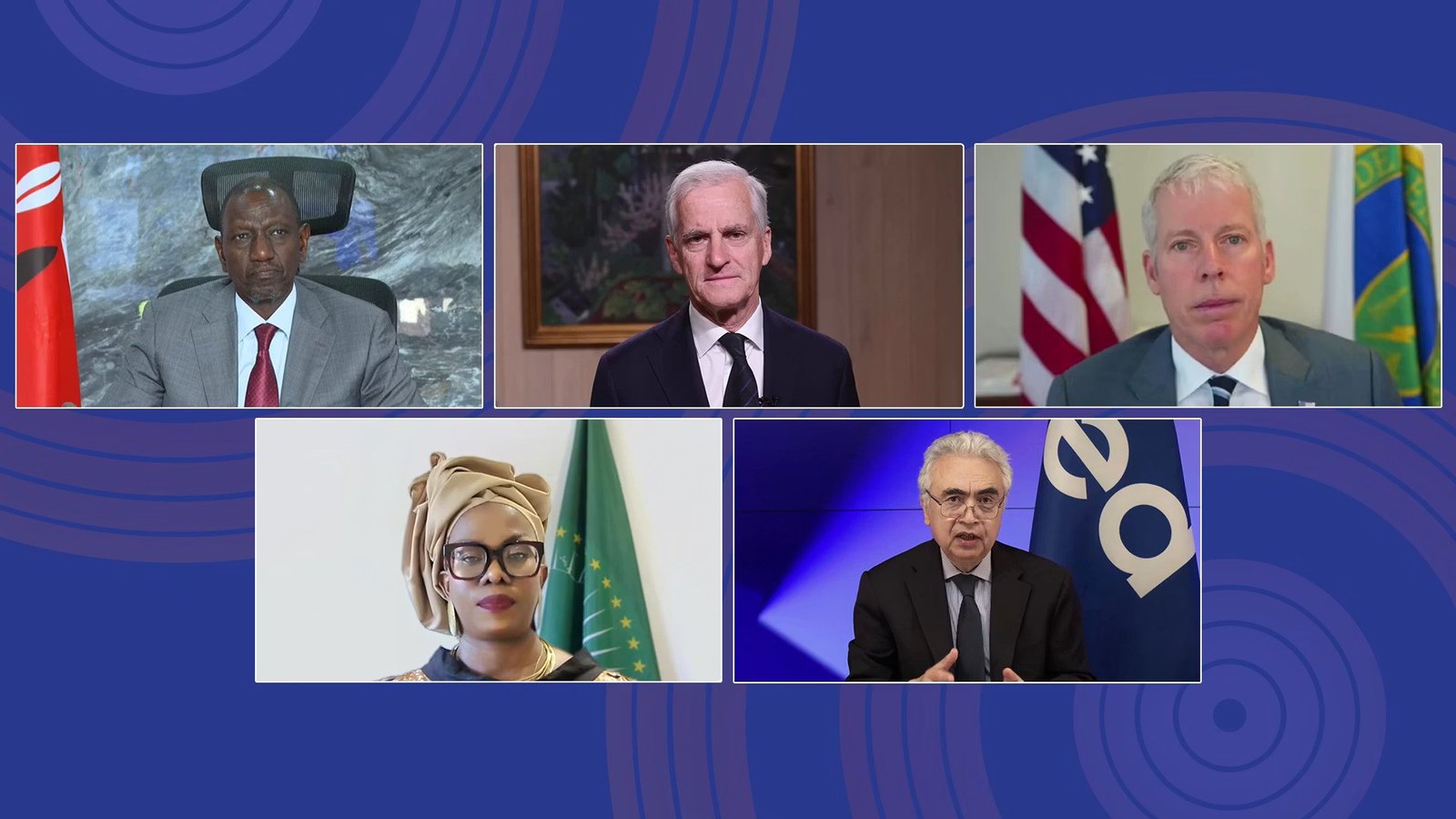
The announcement was made during a high-level virtual meeting co-chaired by Kenyan President William Ruto and Norwegian Prime Minister Jonas Gahr Støre, alongside senior representatives from the International Energy Agency (IEA), the African Union (AU), the African Development Bank (AfDB) and the United States Department of Energy.
According to the IEA, the new pledges add to the US$2.2 billion mobilized during the inaugural Paris Summit in 2024. Of that amount, around US$740 million has already been deployed across 22 African countries, supporting clean cooking initiatives and energy access programs.
The IEA estimates that nearly one billion Africans still lack access to clean cooking, while indoor air pollution from traditional cooking fuels contributes to approximately 850,000 premature deaths annually, particularly among women and children.
IEA Executive Director Fatih Birol said the latest commitments demonstrate growing international support for addressing one of Africa’s most urgent energy challenges.
“More than one-third of the commitments made in 2024 have already been disbursed. With an additional US$900 million now pledged, we are building strong momentum to improve the lives of millions who still lack access to clean cooking,” Birol said.
A new IEA progress report shows that since the first summit, 121 new clean cooking policies have been adopted in more than 30 African countries, covering about 80 percent of the continent’s population without access to clean cooking.
During the meeting, the IEA also launched a new Clean Cooking Security Programme, aimed at strengthening global clean cooking fuel supply chains following disruptions in liquefied petroleum gas (LPG) supplies caused by shipping constraints through the Strait of Hormuz earlier this year.
The agency noted that about 30 percent of globally traded LPG was affected by the disruption, highlighting the vulnerability of energy supply chains for the 3.4 billion people worldwide who rely on LPG as their primary cooking fuel.
Kenyan President William Ruto emphasized that expanding clean cooking access requires significantly higher investment.
“Ambition alone is not enough. It must be backed by investment. Closing Africa’s clean cooking access gap will require financing at a much larger scale,” he said.
Norwegian Prime Minister Jonas Gahr Støre described clean cooking as one of the most overlooked opportunities in global development and climate policy.
“We have the technology and the knowledge. By working together, governments, development partners and the private sector can deliver rapid progress,” he said.
US Energy Secretary Chris Wright stressed that expanding access to affordable and reliable energy, particularly propane, could transform millions of lives across Africa.
The meeting also marked the inaugural session of the newly established Clean Cooking Alliance (CCA) as a multilateral initiative hosted by the IEA. The alliance aims to strengthen cooperation among governments and development partners and accelerate implementation of national clean cooking strategies.
The next Summit on Clean Cooking in Africa is expected to build on these new commitments, with organizers seeking additional financial pledges and stronger policy support to achieve universal access to clean cooking across the continent.