Proposals include higher bulk, retail, and transmission charges as subsidy pressure mounts
Bangladesh is set to increase electricity prices for the first time in 26 months, with proposals to raise bulk, retail, and transmission tariffs amid rising fuel import costs and mounting subsidy pressure.
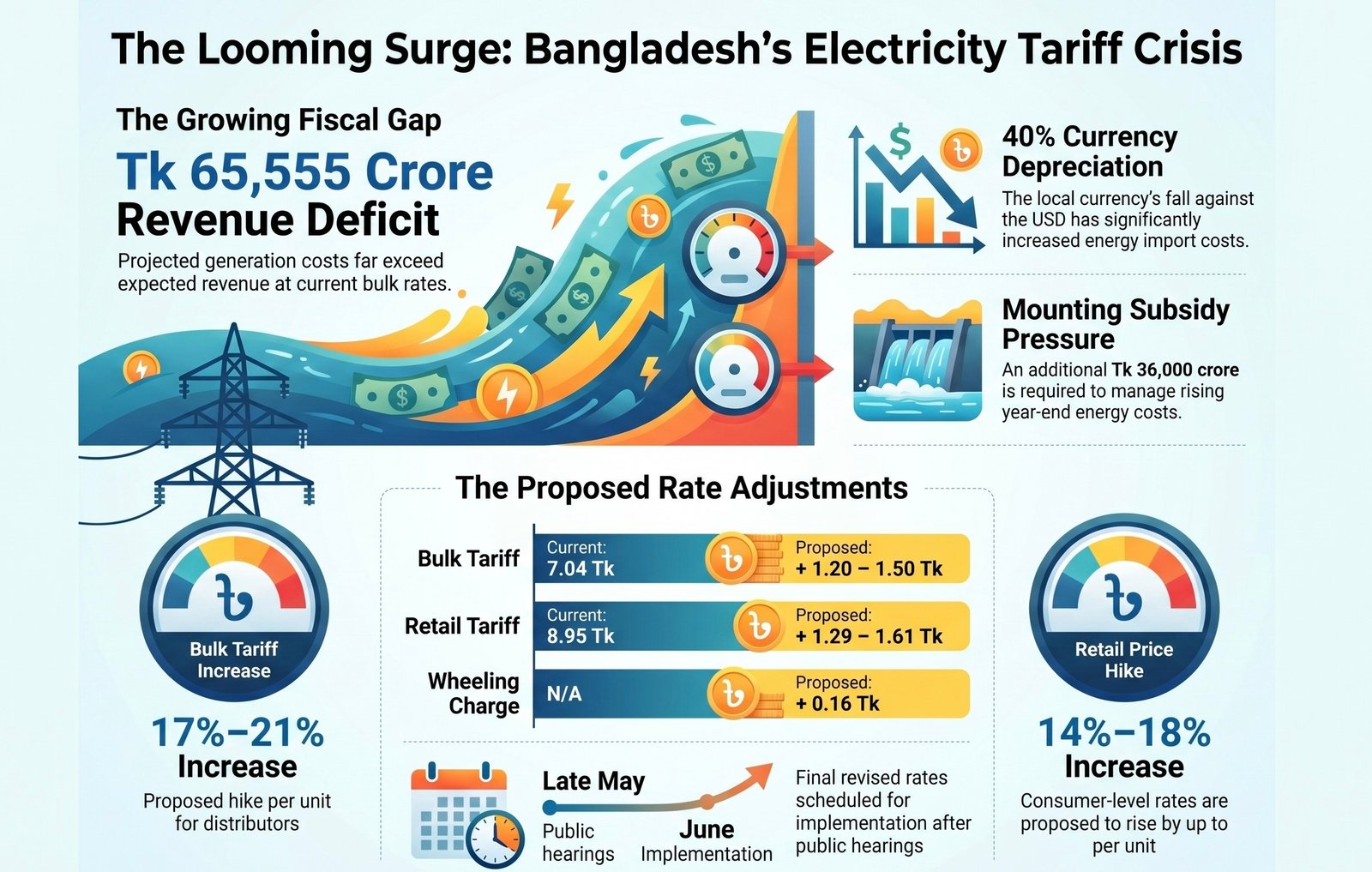
According to sources at the Bangladesh Energy Regulatory Commission, public hearings on the proposed tariff adjustments are likely to be held on May 20 and 21. If approved, the revised rates could take effect from June.
The move comes in the wake of rising global energy prices, driven in part by geopolitical tensions involving the United States, Israel, and Iran. On April 18, the government adjusted fuel prices, but losses persist—particularly in diesel, where the loss is estimated at Tk 89 per liter despite a retail price of Tk 115. Meanwhile, the cost of LNG imports has nearly doubled, prompting discussions on gas price adjustments as well.
The Bangladesh Power Development Board has proposed increasing bulk electricity tariffs by Tk 1.20 to Tk 1.50 per unit, representing a rise of 17% to 21%. Distribution companies have proposed raising retail tariffs by Tk 1.29 to Tk 1.61 per unit, or 14.21% to 17.76%.
At the same time, Power Grid Company of Bangladesh PLC has proposed increasing wheeling charges by 16 paisa per unit. Several distribution entities—including the Bangladesh Rural Electrification Board, Dhaka Electric Supply Company, Dhaka Power Distribution Company, West Zone Power Distribution Company, and Northern Electricity Supply Company—have also submitted proposals to raise consumer-level tariffs.
BPDB estimates that electricity generation costs for the 2026–27 fiscal year could reach Tk 143,108 crore, with an average generation cost of Tk 12.91 per unit. In contrast, projected revenue at current bulk tariffs would be around Tk 77,553 crore, leaving a deficit of approximately Tk 65,555 crore. Even with the proposed tariff hikes, only a small portion of this gap would be reduced.
Currently, the average bulk electricity tariff stands at Tk 7.04 per unit, while the average retail tariff is Tk 8.95.
Experts have expressed mixed views on the proposed increase. Some argue that losses could be reduced without raising tariffs, while others suggest a phased approach to eliminate subsidies over three to four years. Energy expert Ijaz Hossain recommended reducing losses by 50% through tariff adjustments within a year, with the remaining reduction achieved through improved efficiency, better fuel mix, and curbing corruption.
In contrast, Shamsul Alam, energy adviser to the Consumers Association of Bangladesh, opposed the move, arguing that higher tariffs are not a solution. He pointed out that flawed policies have already increased power generation costs by around 40%, and emphasized cost reduction instead of price hikes.
Economist Masrur Riaz noted that the depreciation of the local currency—by over 40% against the US dollar in the past five years—has also significantly contributed to rising energy costs.
The government has denied that the tariff hike is linked to conditions tied to a $4.7 billion loan from the International Monetary Fund. Finance Minister Amir Khasru Mahmud Chowdhury said the decision is driven by the need to manage rising subsidy burdens, especially as an additional Tk 36,000 crore is required in the final months of the fiscal year due to increased energy costs.
Under existing law, BERC holds the authority to set electricity tariffs. Following proposal submissions, a technical committee reviews the details before public hearings are held and a final decision is made. However, the rapid formation of the committee and scheduling of hearings within a week of receiving proposals has been described by observers as unprecedented.
The last electricity price adjustment was made on February 29, 2024, through an executive order. Recent legal changes have restored full authority to BERC for tariff determination after interim revisions to the regulatory framework.
As the country balances rising global energy costs and domestic economic pressures, the proposed tariff hike is expected to remain a subject of intense debate in the coming weeks.