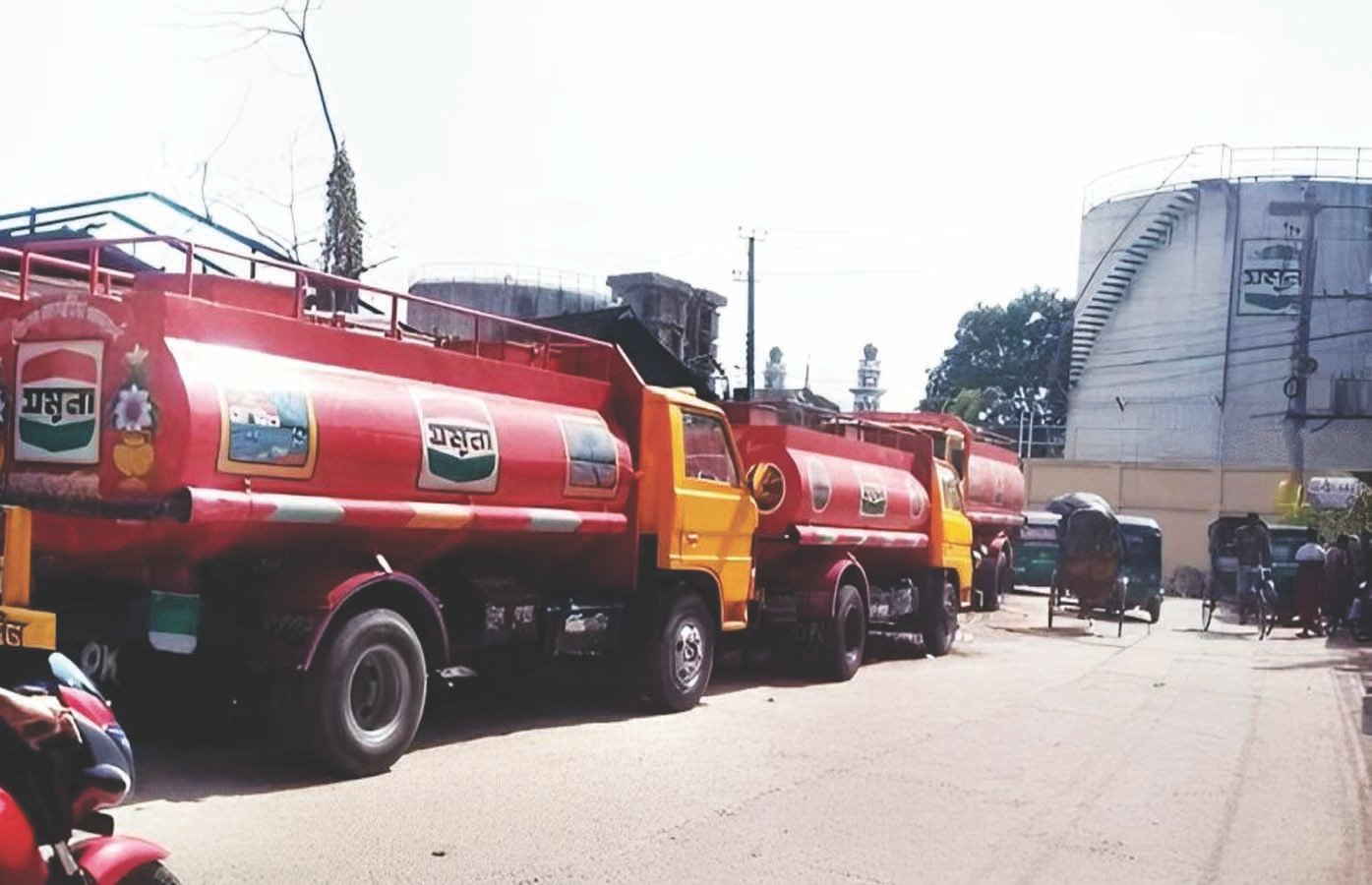
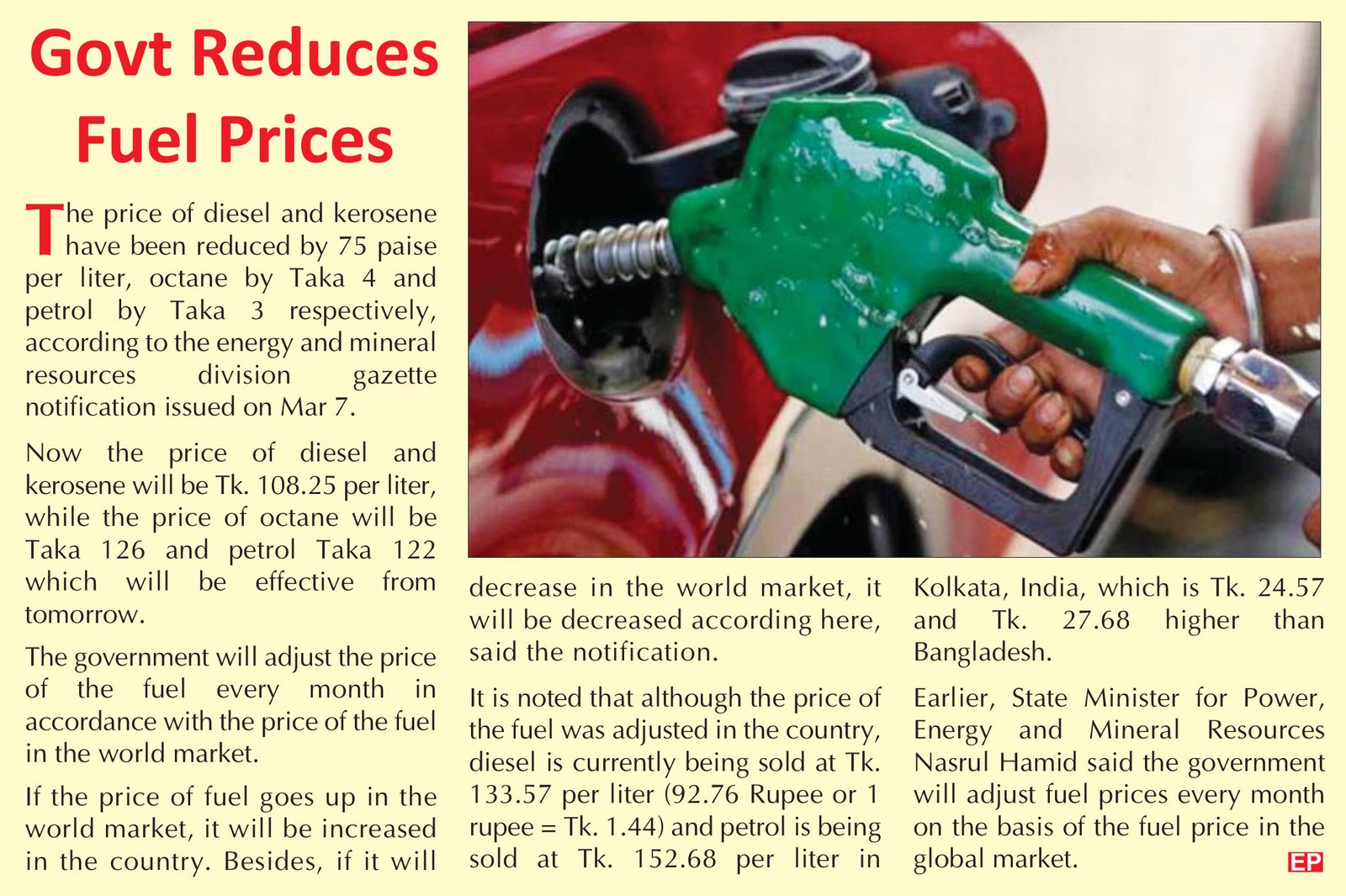
The Ministry of Power, Energy and Mineral Resources (MPEMR) has recently announced a noble Automated Pricing Policy for liquid fuel. From now on price of liquid fuel shall be automatically adjusted every month based on the global price of liquid fuel adding the associated cost of import and transportation and a profit margin of fuel distribution companies. There may be some discussions about various costs. Otherwise, the fixation of price on a given formula will indicate the liquid fuel market. The end users, industry planners, and investors can make plans and projections. It would be more appropriate if such a policy could be worked out and administered by the Bangladesh Energy Regulatory Commission (BERC). In a country where public and private companies exist in business and trading, the regulator is the independent authority dealing with such activities. The BERC earlier announced a policy and formula for adjusting the price of LPG based on the Contract Price (CP) of LPG every month announced by Saudi ARAMCO, and it is so far working well. Now it needs to be observed how the market responds to the newly announced liquid fuel pricing policy.
Summary of Automated Pricing
The gazette notification of the automated pricing policy was issued on 29 February 2024, stating that the automated pricing formula will be applicable for petroleum products like diesel, kerosene, petrol, octane, and other products of different grades. It also stated that if Bangladesh Petroleum Corporation (BPC), a state-owned enterprise deems it suitable, it can apply the formula to other products that it markets. This pricing formula of adjusting the price of liquid fuel with the global market price came into effect in March 2024. Cost components of imported diesel and diesel refined at ERL from imported crude oil will also be included in the automated pricing formula announced for diesel and kerosene.
Pricing formula for diesel and kerosene
Automated Selling Price (H) = Price of commodity (A) + Import duty, advance income tax (AIT), Vat at import stage (B) + Operational expenses (C) + Financial, Administrative, Maintenance cost (D) + BPC margin € + Vat at sales (F4) + Sales, distribution cost (G)
Considering the costs of imported refined octane, its price will be determined using the following formula:
Automated price of Octane (H) = Commodity price (A)+ Import duty, Advance Income tax, VAT at source (B) + Operational expense (C) + Financial, administrative and maintenance cost (D)+ BPC Margin (E) + Alpha (a) +VAT (F) + Distribution and sales cost (G)
Octane and Petrol are mostly used in private transport and as such are considered luxury commodities. The unit cost of octane now is Tk 21.00 per liter higher than diesel. In the formula, a factor “a” has been included to ensure that the difference in the price of octane remains at least TK 10 higher than diesel.
All the elements of cost have been included in the formula. But it will depend on how accurately and transparently these are calculated. Operational, maintenance, and administrative costs will largely depend on how efficiently the SOEs and companies are operated and how transparently the costs are calculated. The EMRD or MPEMR has developed and announced the policy all right, but this must be enforced by an independent authority like the BERC. There are concerns among experts that the BPC and marketing companies are not being operated efficiently. There are allegations of poor governance and mismanagement in project management. The projects got delayed and costs increased. In such a situation, managing enforcement and compliance with the policy by the ministry will be a conflict of interest. The benefits of automated fuel pricing will not be properly realized. The BERC must manage and administer the pricing following the announced policy.
The price of petroleum products in Bangladesh so far remained administered and controlled by the government. There was no option to do that for a developing economy as Bangladesh is a net importer of crude oil and almost exclusively relies on the global market for the price of petroleum products. Bangladesh has only one refinery which also relies on imported crude. Recently some mini refineries have been set up for refining condensate. The market of petroleum products has expanded significantly as Bangladesh's economy transitioned from a least developed country to a developing economy. Various global developments kept the global fuel market volatile. It has created huge challenges for Bangladesh's economy to pay a substantial amount of subsidy in managing the business of the SOEs in the power and energy sector. Announcing the automated pricing policy is the right move. Hope, the government lets an independent authority administer the policy to establish transparency and accountability of the enterprises involved in fuel supply chain management.
Download Analysis As PDF/userfiles/EP_20_19_Analysis.pdf