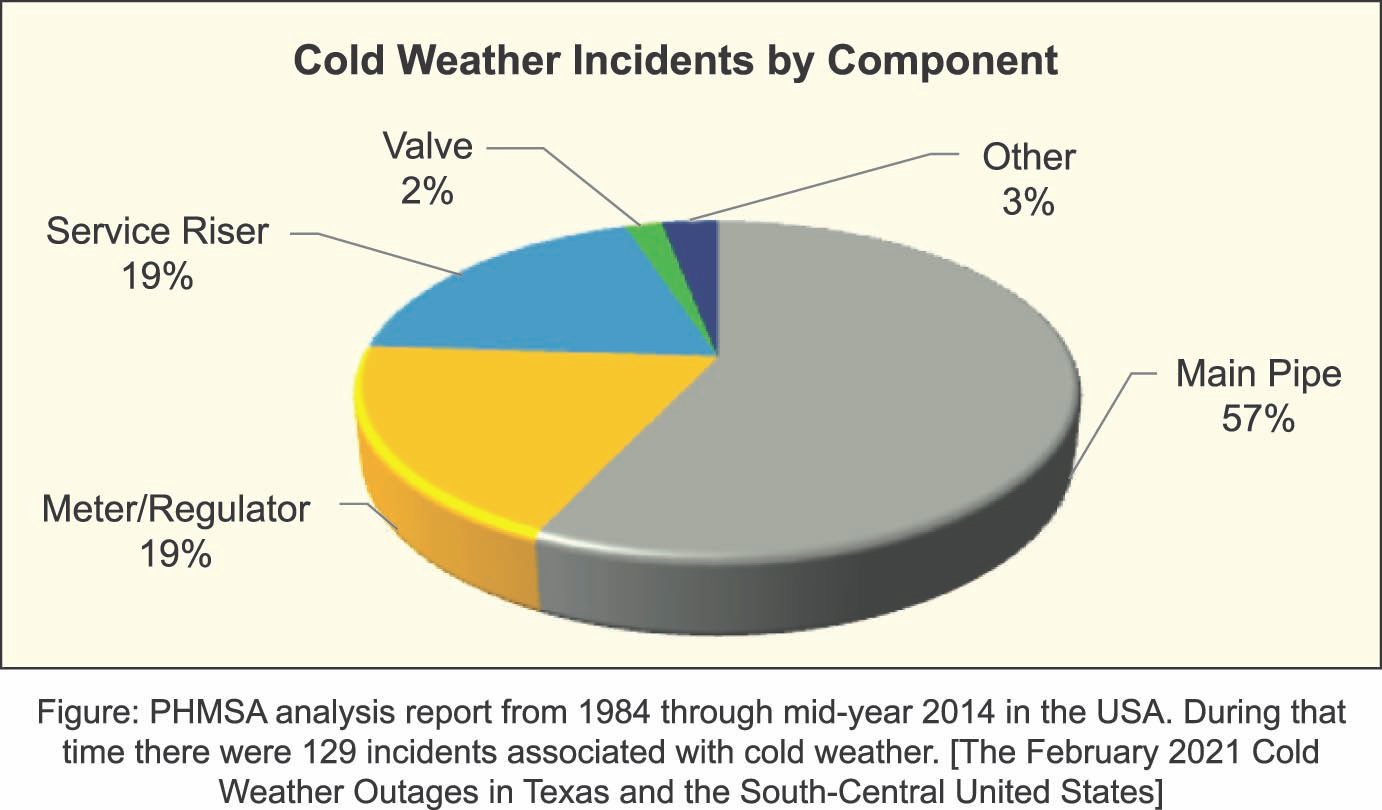
Bangladesh is one of the largest consumers of natural gas in Asia, but it faces an acute energy crisis due to the depletion of its domestic gas reserves and the volatility of the global LNG market. Cold weather can pose additional challenges to the safety and reliability of its natural gas distribution pipeline systems. This article summarizes the main cold-weather threats and the preventive measures that can be taken by the operators and the government. The reporting interval for the data reviewed was 1984 through mid-year 2014 in the USA. During that time there were 129 incidents associated with cold weather (Figure 1). Of these incidents, the frequently cited was frost heave, followed by failures due to snow or ice movement.
Frost Heave: Frost heave is a phenomenon that occurs when ice forms below the soil surface during freezing conditions. The ice grows vertically toward the surface, drawing water from below the frozen soil. The ice formation is constrained by the overlying soil, which creates a load that limits its vertical growth and causes it to form a lens-shaped body of ice within the soil. The ice lenses consume water at the freezing front and lift the soil and anything embedded in it, such as pipelines or other structures.
Frost heave was the most frequent cause of cold weather incidents reported by The Pipeline Hazardous Material Safety Administration (PHMSA) from 1984 to mid-2014, affecting 58 pipeline systems in the USA. In Bangladesh, frost heave can occur in the northern and northeastern regions, where the temperature can drop below zero degrees Celsius in winter. Frost heave can damage the pipelines, meters, regulators, and valves, causing leaks or failures.
Snow and Ice Movement: Snow and ice movement refers to the effects of snow and ice accumulation on pipeline components, such as valves, regulators, meters, and service lines. The weight of snow and ice can impose loads on these components, causing them to bend, break, or leak. Additionally, snow and ice can block vents, regulators, and relief valves, affecting the pressure and gas flow in the system.
Snow and ice movement was the second most frequent cause of cold weather incidents reported by PHMSA from 1984 to mid-2014, affecting 35 pipeline systems. In Bangladesh, snow and ice movement can occur in the hilly areas, where snowfall is rare but possible. Snow and ice movement can affect the above-ground components, especially the valves, which are critical for controlling the gas flow.
Thermal Stresses: Thermal stresses are caused by extremely cold temperatures that affect the material properties and dimensions of pipeline components. When the temperature drops, the components contract and become more brittle, increasing the risk of cracking or fracturing. Thermal stresses can also cause differential movement between components that have different thermal expansion coefficients, such as steel and plastic, resulting in leaks or failures at the joints.
Thermal stresses were the third most frequent cause of cold weather incidents reported by PHMSA from 1984 to mid-2014, affecting 16 pipeline systems. In Bangladesh, thermal stresses can occur in any region, as the temperature can vary significantly between day and night. Thermal stresses can affect the below-ground components, especially the service lines, which connect the main pipelines to the customers' premises.
Freezing Water Expansion: Freezing water expansion occurs when water trapped inside pipeline components freezes and expands, exerting pressure on the walls of the components. This can cause the components to rupture or leak, especially if they are not designed to withstand such pressure. Freezing water expansion can affect components that are exposed to moisture, such as meters, regulators, valves, and service lines.
Freezing water expansion was the fourth most frequent cause of cold weather incidents reported by PHMSA from 1984 to mid-2014, affecting 15 pipeline systems. In Bangladesh, freezing water expansion can occur in any region, as the humidity level is high throughout the year. Freezing water expansion can affect the above-ground components, especially the meters and regulators, which measure and regulate the gas pressure and flow.
Gas Condensation: As temperatures plummet during the winter months in Bangladesh, the nation's natural gas infrastructure faces a notable challenge – a substantial increase in gas condensation within pipelines. Recent statistical data reveals a significant surge of over 25% in instances of condensation during the cold weather season. The drop in temperatures exacerbates the condensation of water vapor present in the gas stream, leading to operational disruptions and the formation of hydrates. This statistical uptick underscores the urgency for effective solutions to mitigate the impact of condensation, such as the application of chemical inhibitors, improved insulation techniques, and targeted temperature control measures. As Bangladesh grapples with these challenges, proactive measures are imperative to ensure the resilience and reliability of its natural gas supply system during the winter freeze.
Preventive and Mitigating Measures: The identification of the most common cold weather threats and the most susceptible system attributes can help gas distribution system operators assess their risks and implement preventive and mitigating measures. Some examples of these measures are:
· Inspecting and repairing components before the winter season.
· Installing insulation, heat tracing, or freeze protection devices on exposed components.
· Clearing snow and ice from vents, regulators, and relief valves.
· Monitoring and adjusting pressure and flow in the system.
· Educating customers and employees about the signs and hazards of cold weather threats.
The government of Bangladesh can also support the operators by:
In pursuit of bolstering energy security, there is a growing emphasis on developing local liquefied natural gas (LNG) storage infrastructure as a strategic move to diminish reliance on imported LNG Floating Storage and Regasification Units (FSRUs).
Promoting renewable energy sources to diversify the energy mix and reduce greenhouse gas emissions.
Enhancing the regulatory framework and oversight to ensure the safety and reliability of the natural gas systems.
While Bangladesh's climate may not be as severe as that of the USA, the nation is experiencing a gradual increase in extreme weather events, ranging from extreme cold to extreme heat. In light of these changing weather patterns, it becomes imperative to implement precautionary measures for sustainable solutions, with a specific focus on building a smarter Bangladesh. By adopting and implementing these measures, Bangladesh can significantly improve the safety and reliability of its natural gas distribution systems. This proactive approach aims to mitigate the likelihood and consequences of incidents related to cold weather, ensuring a more resilient and efficient energy infrastructure for the nation.
Engr. Md Shahin Alom, B.Sc. in Mechanical, M.Sc. in Petroleum Engineering, MBA, CSCM, Senior General Manager, Mobil Bangladesh PLC
Article As PDF/userfiles/EP_21_16_Article_Engr Md Shahin Alom.pdf