Infrastructure Development Company Limited (IDCOL) is the first nationally accredited entity to Green Climate Fund (GCF) in Bangladesh to access both loans and grants up to USD 250 million per project or program. GCF will provide IDCOL with USD 250 million concessional credit and USD 6.5 million as Technical Assistance. This is the first concessional GCF credit line for Bangladesh, as well as the first private-sector financing of GCF in the country. With more than 23 years of experience in leveraging private sector finance under the PPP modality, IDCOL hopes to blend GCF concessional resources to de-risk climate-smart investment to stimulate private co-financing in scale. IDCOL already has a pipeline of bankable projects developed from the Country Program which will be submitted to GCF soon.
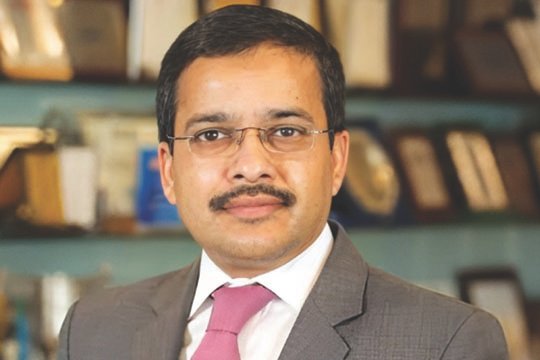
Executive Director & CEO of IDCOL Alamgir Morshed shared the development in an exclusive interview with Energy & Power Editor Mollah Amzad Hossain.
IDCOL has recently celebrated its silver Jubilee. How do you evaluate the 25-year journey of IDCOL? What are your plans moving forward?
Bangladesh has been making steady progress throughout the years. To provide grid electricity commensurate with the rise in energy consumption in the remote locations of Bangladesh, IDCOL has been entrusted by the government to engage the private sector with developing and decentralizing energy generation mechanisms based on photovoltaic panels under the national strategy of universal access to electricity by 2021.
This responsibility was given when IDCOL’s Solar Home System (SHS) program was introduced with support from the World Bank. Given our country’s tropical climate featuring abundant year-round sunshine, Solar PV had a substantial off-grid potential. On top of that, IDCOL’s innovative, partially subsidized SHS delivery and financing scheme proved to be effective in reaching the neediest communities. IDCOL leveraged the root-level outreach of the implementing partners with well-defined roles and responsibilities to ensure the flow of funding, technical standards of the products, quality of installations, and after-sales support. With an integrated and inclusive set of the program, it soon became the world’s fastest-growing off-grid SHS program. Presently, it is acclaimed as the largest off-grid renewable energy program in the world. With the installation of more than 4.1 million SHSs, IDCOL ensured the supply of solar electricity to 18 million people, i.e. 12% of the country’s total population who previously used kerosene lamps for lighting purposes.
With the success of the SHS program, the proven benefits to household adopters and policymakers had opened doors for IDCOL to bring in new interventions to address the prospects of renewable energy in the country. Since then, IDCOL has installed 26 solar mini-grids, 1,523 solar irrigation pumps, more than 63,000 biogas plants, 1,880 kWp capacity of bio-electricity plants and approved 32 industrial rooftop solar systems with a capacity of 65 MWp. IDCOL is devoted to facilitating the government’s vision of achieving 10% electricity generation from renewable energy sources by 2030.
IDCOL has already facilitated the installation of 31% of Bangladesh’s total private sector electricity generation capacity through investments of USD 622 million, approved financing of 31 private sector power and captive projects with an aggregate installed capacity of 3,881 MW, extended financing to the country’s first private sector land port and river port, accounting for 22% of the total annual domestic export container capacity, financed Bangladesh’s one of the two offshore LNG terminals in Cox’s Bazar. IDCOL has financed the first PPP project in the healthcare sector comprising a hospital offering affordable dialysis services, extended major finance to the ICT & Telecom sector of USD 118 million, obtained financing approval of BDT 500 crore for the development of Economic Zones, obtained financing approval for infrastructure backward linkage industries of BDT 1200 crore and financed a hotel and tourism sector project with USD 20 million and BDT 1000 million.
IDCOL is one of the leading financial institutions in the country promoting energy efficiency investments in the manufacturing, services, and households sector. IDCOL is one of the two national executing agencies for the ‘Energy Efficiency and Conservation Promotion Financing (EECPF) Project’ in association with JICA. Under this initiative, IDCOL has gained considerable experience in providing preferential loans for the industrial sectors for the adoption of specific energy-saving technologies and equipment.
IDCOL is also enlisted as a Participating Financial Institution (PFI) under the Green Banking Wing of the Green Banking and CSR Department of the Bangladesh Bank. Under the GoB-led initiatives for Improved Cook Stoves (ICS) and Energy Efficient Brick Kilns, IDCOL as an executing entity has already achieved tremendous success in financing the large-scale adoption of these energy-efficient technologies. And thus financed USD 113 million for Energy Efficiency projects and supported the installation of more than 3 million Improved Cook Stoves. IDCOL is tapping into opportunities in emerging areas of importance that complement its development mandate as well as offer commercial scope in Bangladesh, subject to further feasibility studies.
IDCOL aims to double its energy efficiency and renewable portfolio by 2025. To achieve the target, IDCOL has been preparing for expanding into newer areas such as renewable-based power generation, increasing penetration of solar rooftops among industrial clients and continuing to create a stable pipeline. In the area of energy efficiency, IDCOL is expanding into cement, textiles, and RMG under the industrial component. Besides, commercial and residential green buildings present a good financing opportunity in the mid-term. Although the power portfolio is likely to undergo a reduction in share over the mid-term due to the phasing out of fossil fuel-based investments, IDCOL may prioritize financing combined cycle gas-based power plants in line with broader development plans.
The Solar Home System (SHS) program is a great success in renewable energy which has brought some international recognition to Bangladesh and IDCOL was the main stakeholder of the program. What is the present state of SHSs?
IDCOL made a strong case for the SHS program in Bangladesh by improving access to clean energy and by building capacity within the private sector to support and expand renewable energy investment. Till December 2017, 4.13 million SHSs have been installed under the program in remote areas where electrification through grid expansion was challenging. It ensured access to electricity for 18 million people i.e. 12% of the country’s total population living in the off-grid area using hazardous kerosene lamps for lighting purposes.
The program delivered wider welfare benefits that came with access to energy and directly led to improvements in the policy, regulatory, and investment environment for the renewable energy sector in Bangladesh. IDCOL’s SHS program officially ended in the year 2019 as the GoB took the initiative to scale it up extensively under its social safety net program.
The involvement of the private sector was the exit strategy for IDCOL and the key instrument for its sustainability. IDCOL worked with several Partner Organizations (POs) to deliver this program. POs sold, installed and provided after-sales services to the customers. IDCOL extended grants, soft loans, and necessary technical assistance to the POs and their customers.
The program has been acclaimed as the largest off-grid renewable energy program in the world. The sustainable business model, innovative financing options, cost-efficient design that assured quality standards, development of local support industries, quality assurance, and after-sales service, strong monitoring mechanism in place from IDCOL, access of POs in the grass-root level, and strong commitment from the government, together acted as critical success factors of the program.
Currently, the POs are providing post-installation services and IDCOL is continuing its monitoring activities.
We have heard that IDCOL is now shifting its focus from SHSs to rooftop net-metering programs. What are IDCOL's targets and what is the financing model?
Bangladesh is a good recipient of solar irradiation. It can generate significant electricity from solar power. Installation of one mega-watt-peak solar power plant requires approximately 3.5-4 acres of land. However, the availability of plenty of open rooftops may address the space constraint issue for installing solar panels. On top of that, with the significant decrease in the price of solar panels (photovoltaic panels) as well as the increase in grid electricity tariff, the solar rooftop has appeared to be an attractive solution to the industrial sector of Bangladesh.
The rooftop solar project is a viable solution for industries and businesses as its generation cost is much lower than the electricity tariff of the utilities. To promote this, the government approved Net Metering Policy in 2018 which allows industries and businesses to utilize the electricity generated from the solar system in the daytime and feed the electricity to the distribution grid if generation is higher than consumption. Rooftop solar thus comes as a popular choice for industries to minimize electricity costs.
IDCOL has already approved more than 32 MWp of rooftop solar projects with a cumulative capacity of 65 MWp and has a pipeline of 110 MWp projects. We have set a target to finance 300 MWp rooftop solar projects by 2025.
To support our initiative, several multilateral agencies & development banks are providing financing for rooftop solar projects in Bangladesh through IDCOL.
Being a stand-alone financier in renewable projects, how would IDCOL explain the main obstacles to renewable financing in Bangladesh?
A typical challenge about renewable energy is a lack of awareness among stakeholders about the technologies, benefits, and policy framework. The inertia is often noticed among consumers to shift to new technology, stemming largely from a lack of confidence.
There is often an absence of general knowledge about the policy framework among consumers. For example, many industries are unaware of the benefits of the Net Metering Policy enacted by the government in 2018. The policy allows a power producer to export excess electricity generated from solar to the national grid and the generated units supplied to the grid would be adjusted against the monthly electricity bill.
As such, from the IDCOL’s side, we exert significant effort in raising awareness among beneficiaries and project promoters. For solar irrigation, we executed repeat training for farmers until they became acquainted and developed confidence in the technology.
In addition, for industrial rooftop solar, we are reaching out to different corporate houses, making them aware of the benefits of installing solar PV systems on their vacant industrial rooftops. We are also assisting them in conducting capacity and financial feasibility assessments. We have ramped up our marketing activities to further promote the technologies and benefits of rooftop solar through digital and print media.
A critical problem we notice sometimes is consumers’ preference for cheaper products without any regard to quality and warranty provisions. We always emphasize maintaining technical standards including obtaining a warranty under IDCOL financing. In most cases, we require sample testing of equipment before installation, ensuring the consumers get the maximum benefits they have been committed to.
Finally, despite 25 years of experience in Bangladesh in the solar energy sector, we generally experienced a lack of skilled solution providers whenever IDCOL started new solar energy interventions. Accordingly, IDCOL historically worked in this area by encouraging the entrance of new suppliers, training manpower, and developing an effective supply chain.
World leaders are working towards achieving net-zero targets by 2050 for regulating global warming. Bangladesh has also an ambition to generate 40% of its total electricity from clean sources by 2041. What are the IDCOL plans to materialize the government’s ambition?
See, you must understand that Bangladesh is a developing nation and it must focus a lot on its economy to grow stronger. Considering the net-zero targets, Bangladesh has been taking initiatives successfully and confidently. You are aware that the Hon'ble Prime Minister has laid special emphasis on clean energy and has set a target of up to 40% power generation from clean and renewable sources by 2041.
As a company with a focus on creating a green impact, IDCOL is devoted to facilitating the government’s vision of generating more than 8,000 MW of electricity from renewable sources, mostly from solar energy, by 2030.
In line with the government's commitment, IDCOL is financing projects like rooftop solar projects, solar irrigation pumps and industrial energy efficiency projects.
IDCOL is an accredited organization in Bangladesh for receiving Green Climate Fund (GCF) and its utilization. For which projects and how much have you received such funds so far? What are your plans for getting more in the future?
IDCOL is the first nationally accredited entity to GCF in Bangladesh and is termed the Direct Access Entity (DAE). This means IDCOL can directly channel climate finance from GCF to local projects and programs that are nominated by the government of Bangladesh. IDCOL is accredited to access both loans and grants up to USD 250 million per project or program.
GCF will provide IDCOL with USD 250 million concessional credit and USD 6.5 million as Technical Assistance to develop the capacity of the sectors. This is the first concessional GCF credit line for Bangladesh, as well as the first private-sector financing of GCF in the country. This is a great step towards mobilizing private sources of finance at the national level for mitigation and adaptation.
With more than 23 years of experience in leveraging private sector finance under the PPP modality, IDCOL hopes to blend GCF concessional resources to de-risk climate-smart investment to stimulate private co-financing in scale. IDCOL already has a pipeline of bankable projects developed from the Country Program, which will be submitted to GCF soon.