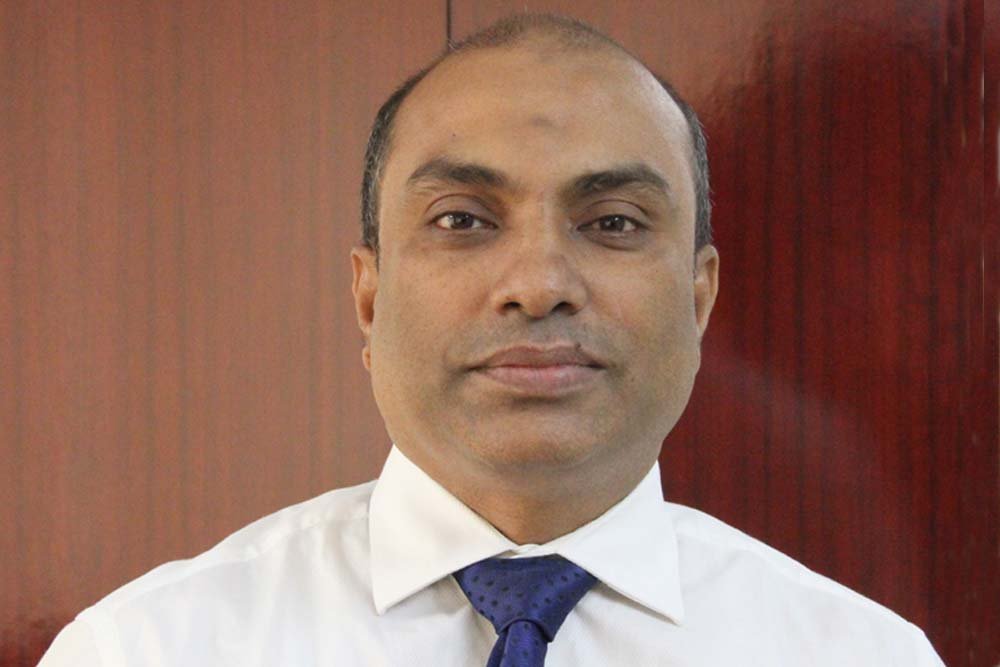
Development of autogas would be extremely challenging in the country without government incentives, particularly after maintaining CNG supply as usual. CEO BM Energy (BD) Limited Mohammad Nurul Alam observed, saying that LPG would bring 25% savings compared to Octane. On the other hand, savings with CNG is 50%. Hence no major success should be expected in autogas without government incentives or special policy guidelines.
Alam, who has been working in different organizations of LPG industry for over a decade, said these in an exclusive interview with Energy & Power Editor Mollah Amzad Hossain.
EP: LPG is being used in Bangladesh for a long time. Autogas has come into discussion off late. What are your views about its prospect?
MNA:Please note that it took over two decades for CNG to get popularity as automotive fuel. Even then the government had to provide tax relief and various other incentives. Use of CNG as automotive fuel brought about 50% savings over liquid fuel. That made people interested for using CNG.
Before autogas came into discussion, there were talks about suspending gas supply to the CNG fueling stations in phases. That means, CNG stations would be gradually closed down. These would be replaced with environment-friendly LPG. We in the LPG industry started working with autogas based on that assurance. But the government has not yet initiated any incentive for autogas. Now 1 litre of octane is selling at Tk 90. The same volume of LPG can be available at Tk 50. But the CNG will be cheaper if sold at present price. The users would not get the interest in LPG.
The savings over fuel oil in using autogas in Bangladesh would be 25%. It is 60% in Turkey and 40% in Thailand. The scope of CNG use is there in 21 districts covered under national gas grid. There is scope for extensive works with autogas outside gas franchise in other districts.
EP: What are the plans of BM Energy with autogas? Have you already started working?
MNA:We have plans for setting up of 100 autogas stations in different districts, including the 21 districts already having the coverage of gas grid. These will be either owned by us or through franchise investment. We have already started working on 20 autogas stations inclusive of conversion workshops. Four of these would be owned and operated by ourselves and rest sixteen would be run by the franchise. The first station in Barisal would start soon. Some Tk 50-55 lakh is required for a station of 20,000-litre capacity.
The conversion workshop will also start working along with the first station. We expect that by end 2018, 100 stations would come into operation.
EP: Why users will be interested in autogas?
MNA:The essence is that no major breakthrough would be achieved until the government phases out CNG stations. But autogas is much more user friendly than CNG. One full 60-kg cylinder of CNG can take a sedan car to 60-70 KM while a similar capacity autogas cylinder can drive the same car to 400 KM.
The conversion cost of autogas is also cheaper than CNG. It will be Tk 20,000 for three wheeler and Tk 30,000 for cars.
EP: Use of LPG for cooking has expanded significantly over the past 3-4 years. What can be the trend in future?
MNA:There is no such official survey done so far. But every companies engaged in the business have their own surveys. The LPG market has doubled over the past 3 years. Some 58,000 tonnes of LPG were imported in October 2017. At this rate, the annual import in the current fiscal year would be 600,000 tonnes. It may grow to 800,000 tonnes in 2019 and about 1 million tones in 2020.
The government has taken a policy decision that there would be no more pipeline gas supply for domestic use. What kind of demand you are getting from domestic users?
We consider this a very timely decision. The domestic use of LPG is on the increase for this. As per official information, about 4.1 million apartments are under construction in Dhaka and elsewhere. There is no other option but LPG for them. However, there is no centralized arrangement yet for LPG network though owners are using it in isolation. Some are still waiting for pipeline gas supply.
But income generation in rural areas has made them interested for LPG use. Four million families are now using LPG. By 2030, this may exceed 12 million.
EP: Excepting few foreign companies, almost all local companies are also manufacturing LPG Cylinders alongside marketing LPG. At the same time for meeting the market demand, import of cylinder is also not insignificant. Why then high tax on import of cylinders?
MNA:Though import duty and tax are a bit higher, yet in the last budget it has been reduced to 10%. On the other hand, local factories have capacity for meeting the entire demand. These are of international standard. But local investment has come under challenge for reducing import duty. The government should give tax and other fiscal incentives to local factories.
EP: The government has given special tax benefit for import of composite plastic cylinders. It is being told that being light weight and easier in transportation, it would gain popularity. You are involved in this business for a while. What is your opinion?
MNA:Composite plastic cylinders are used in many countries. But the use in Asian countries is still very limited. But these are by no means a competitor to steel cylinders. It cannot compete with steel cylinders in Bangladesh market.
On top of all, there exist credible risks in transportation. In Bangladesh various cylinders are transported together. Our experience is that if plastic cylinders are transported together with steel cylinders, the top of soft plastic cylinders breaks. This is why plastic cylinders cannot make breakthroughs in Bangladesh.
EP: The safety of LPG use including cylinder is a major issue identified in Bangladesh. Some recent accidents have created panic already. Relevant stakeholders are observing that this may have adverse impacts on LPG use if not addressed immediately. How do you look at it?
MNA:Safety is a critical aspect here. Safety needs to be ensured over the entire value chain: LPG import, storage, bottling, transportation, marketing and use. We are working on safety at end users level. Safety of cylinder is of prime importance. All cylinders must be retested after 10 years use. This may ensure safety.
There have been some accidents during unauthorized refilling. The government has to regulate this.
EP: It was discussed that LPG used for cooking in apartments would be done through reticulation system. But not much progress is visible. Where is the problem?
MNA:Actually the LPG use is increasing in private apartments. But large apartments and complexes have not yet shown much interest for it. Possibly many are expecting that pipeline supply of gas may resume again following introduction of imported LNG in gas grid. The government should clarify this.
We had few meetings with REHAB. But no progress has been achieved for centralized supply of LPG for apartment complexes. No progress can be made here without active assistance of the government.
EP: There are talks at different level about use of LPG in industry. How much is actually used? Can industries retain competitiveness with LPG?
MNA:Look, the main fuel for industries is natural gas supplied from the gas grid. But for deficits, industries are not getting supply as per the demand. LPG is being used for meeting the deficit. LPG is mostly used for boilers. But for this, industrialists have to make additional investment. Most entrepreneurs are taking time to invest. They are rather waiting for LNG. They won’t invest for LPG if they get uninterrupted gas supply following injection of LNG in gas grid. But outside national gas grid, use of LPG is increasing in food and other industries.
EP: There are also talks about LPG based power generation. Will it be feasible and competitive?
MNA:LPG should not be considered as an option of fuel mix for power generation. Only propane can be an option for that. It may not compete with other options, but it can very well be considered as a replacement fuel of diesel based generation.