1. Preamble
Embroidery is a term deeply woven into Bangladesh's cultural heritage, evoking the timeless artistry of the Nakshi Kantha. This traditional craft interlaces threads of different colors and textures into a single, durable fabric that reflects identity, tells stories, and embodies patience, creativity, and care. Today, Bangladesh's concept of national security has evolved in much the same way—into the careful weaving of multiple dimensions into a strong and cohesive whole known as comprehensive security.
Comprehensive security is a holistic approach that integrates people, processes, and technology into a unified, layered system of protection. It extends beyond the traditional focus on territorial defense to address a broad range of challenges, including economic, energy, environmental, and technological threats. This approach recognizes that a nation's strength is measured not only by its military capability but also by its ability to safeguard its economy, sovereignty, and social stability. For Bangladesh, comprehensive security means protecting its people from hunger, poverty, and environmental degradation just as effectively as it protects them from external aggression.
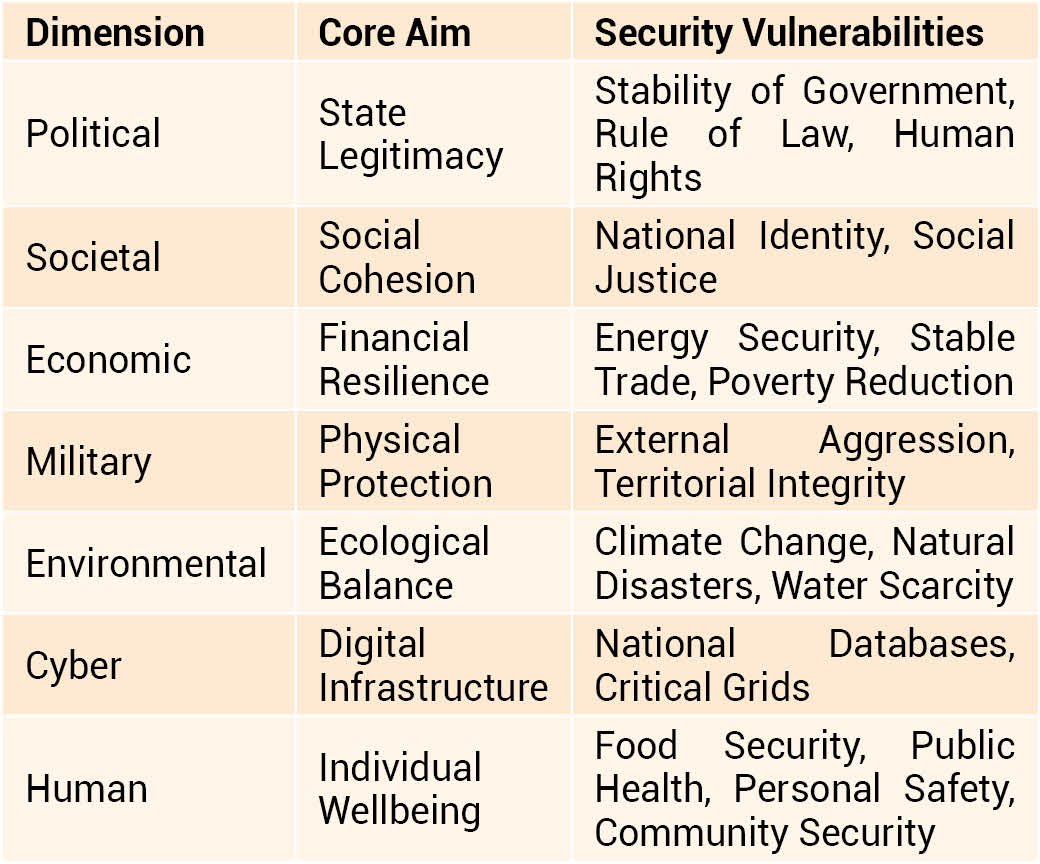
2. Multi-dimensional Network of Comprehensive Security
In 21 century, comprehensive security defines an interconnected network of dimensions rather than isolated forts. A failure in one area often triggers a Domino Effect across others. For instance, environmental factors like drought can lead to crop failure, causing economic strain and societal unrest. This phenomenon could also be true due to the energy crisis.
3. Energy Security: The Central Nervous System
Energy security is defined as the continuous availability of energy sources at an affordable price. It acts as the central nervous system of the nation, because all systems of 21 century depend on its flow. In Bangladesh, energy is a vital resource that connects other dimensions of security.
3.1 Engine of Economic Prosperity
The energy crisis in Bangladesh is driven by high dependence on imported fossil fuels. This affects foreign exchange (shortages) and geopolitical tensions, significantly hindering economic growth. It also accelerates inflationary pressure, increases the cost of doing business, and disrupts manufacturing and agricultural sectors.
The Ready-made Garment (RMG) sector, which provides over 80% of total export earnings, relies heavily on stable electricity. By early 2026, energy shortages will have already reduced 25-30% drop in factory production capacity. Furthermore, grid failures force factories to use expensive diesel generators, significantly increasing operational costs. The interrupted power for RMG cannot meet export deadlines and ensure competitive operational costs.
Over-reliance on imported fossil fuels and underdeveloped renewable energy sources leaves the economy vulnerable to global market shocks, such as the ongoing conflict in the Middle East. Chronic power shortages are discouraging new investment, both domestic and foreign.
3.2 Social Contract and Political Stability
The social contract relies on the state authority providing essential services (rights, security, services, etc.) and price stability in exchange for social order. Energy is a primary determinant in this balance.
Agriculture and Food Security: Agriculture depends on diesel for irrigation. Scarcity of diesel and erratic power supply for irrigation pumps threatens agriculture, particularly during key farming seasons, raising risks of reduced food production. Shortages of natural gas have led to the shutdown of domestic fertilizer factories, creating high dependence on costly imports. When diesel prices rose to Tk 115 in April 2026, the price of rice increased to Tk 66-70/kg. By mid-2026, Bangladesh’s food security maybe severely impacted by a compounded energy and economic crisis, with rice prices in Dhaka rising by 8-10% as of May 2026 due to soaring fuel costs. High inflation reaching 9.04% in April 2026, combined with reduced agricultural production, has significantly lowered food affordability and increased malnutrition risks for low-income populations.
Transportation: Energy security involves shifting toward a sustainable, integrated system that prioritizes public transportwith safety, affordable economic participation, and inclusion of marginalized groups. In April 2026, Bangladesh's transportation sector is experiencing severe disruption due to an energy crisis fueled by global oil price surges (over US$ 110/barrel) due to regional conflict (Iran versus the USA-Israel). It leads to severe diesel shortages, higher freight charges, and reduced operations, with bus fares rising to Tk 2.53/km for metropolitan areas and Tk 2.23/km for inter-districts. Diesel shortages have caused long queues at filling stations, with dealers reporting receiving only a fraction of the requested fuel, which has forced many to close. Transport operators are increasing freight charges, with truck fares for vegetables rising by up to Tk 10,000, impacting supply chains and raising commodity prices.
Supply of Electricity: As of April 2026, Bangladesh is facing a severe energy crisis, leading to frequent and prolonged electricity shortages, especially during a sweltering heatwave. The crisis is driven by a massive dependence on imported fuel (LNG,coal,and HFO), which has been severely disrupted by geopolitical tensions in the Middle East. Power shortages have exceeded 2,000 MW, with rural areas experiencing 5-7 hours of outages daily and urban areas facing 2-3 hours. The energy shortage has led to reduced productivity in energy-intensive industries like textiles and slowed agricultural irrigation. The Government is actively proposing a 17-21% increase in electricity tariffs to manage the high generation costs.
Household Costs: By April 2026, energy and transport costs rose to 18-22% of urban household budgets, compared to 10-12% in 2010.
Infrastructure Risks: Coastal network assets are susceptible to environmental disasters (like cyclones) coupled with maritime threats, which increase the risk of massive energy supply failures.
Public Order and Political Stability: High inflation and power cuts often trigger protests that challenge political stability. Bangladesh's inflation accelerated to 9.04% in April 2026from 8.71% in March2026. The higher fuel costs continue to pressure household spending, according to the latest data released by the Bangladesh Bureau of Statistics (BBS). High inflation in Bangladesh, hovering since 2022, severely strains public order by reducing purchasing power, increasing poverty, and eroding real income, leading to social distress, potential unrest, and increased pressure on low-income groups. This sustained crisis triggers protests, fuels income inequality, and complicates Government efforts to maintain stability.
3.3 Silent Fuel of Defense
Energy security is a silent partner in military readiness. Fuel shortages can paralyze training and patrols, rendering expensive hardware like tanks and jets immobile. Modern defense also requires constant electricity for digital warfare, including radars and communication networks. A hacked or failing grid effectively leaves the military blind.
The 2015-16 Nepal energy blockade by India serves as a critical case study. When fuel supplies were restrictedthrough the Indian land supplyroute, Nepal's economy lost US$ 5 billion, and its military mobility was paralyzed. This taught a vital lesson: energy is a weapon. Landlocked Nepal responded by diversifying its supply lines and investing in hydroelectricity to reduce dependence on India.
4. Strategic Autonomy and Global Shocks
Bangladesh may face a growing risk to its sovereignty due to a heavy reliance on imported energy. In 2010, nearly 90% of electricity was generated from domestic gas. By 2025, the country was forced to import approximately 25-30% of its gas as LNG.
This reliance creates geopolitical vulnerability. For example, the Iran versus USA-Israel conflict directly threatens Bangladesh, because much of its imported fuel passes through the Strait of Hormuz. A blockade in this narrow waterway could entirely halt the flow of oil and gas. Additionally, the dollar crunch exacerbates this issue; paying for energy in US dollars drains foreign exchange reserves.
Disruption of Sea Lines of Communication (SLOC) in the Bay of Bengal may severely threaten Bangladesh's energy security by cutting off the maritime routes that facilitate nearly 100% of its fuel imports. A disruption could immediately halt the flow of imported coal, LNG, and petroleum, leading to widespread power outages, economic shutdowns, and a collapse of energy-dependent logistics, as the nation is highly reliant on imported energy rather than domestic reserves and renewable energy.
5. Geopolitical Intersection: Iran versus USA-Israel Conflict (2026) and the Security of Bangladesh
The ongoing conflict involving Iran versus USA-Israel creates a direct and sophisticated threat to the comprehensive security of Bangladesh. This vulnerability stems from the nation's heavy reliance on energy supply chains originating in the Middle East.
5.1 Vulnerability of Maritime Supply Routes
The primary physical threat lies in the potential disruption of maritime trade routes. Bangladesh depends significantly on imported LNG and refined petroleum, much of which must pass through the Strait of Hormuz. Because Iran maintains control over this narrow waterway, any escalation in regional hostilities could lead to a blockade, halting the flow of essential fuels to Asian markets. Even in the absence of a total blockade, rising tensions have already forced the Government to consider alternative, more expensive shipping routes, such as traveling around the Cape of Good Hope.
5.2 Foreign Exchange Impact
Bangladesh’s foreign exchange reserves strengthened in early 2026, though rising global energy prices could threaten the gains, according to a report by the General Economics Division (GED) of the Planning Commission. However, it warned that the global energy crisis is likely to accelerate the drawdown of reserves, as higher fuel import costs (a major component of Bangladesh’s imports) require more foreign currency. This could place downward pressure on the exchange rate and potentially lead to currency depreciation if not carefully managed. Because energy purchases are paid in US dollars, these price hikes drain the nation's shrinking foreign exchange reserves.
5.3 Financial Sovereignty
To pay for expensive fuel, the nation is often forced to seek external loans, such as the recent request for a US$ 4.7 billion IMF loan. These financial agreements often come with mandates that affect domestic policy and subsidies, further impacting national sovereignty.
5.4 Mapping of Geopolitical Alignment in 2026
The theoretical links of comprehensive security are currently manifesting in real-time challenges for Bangladesh.
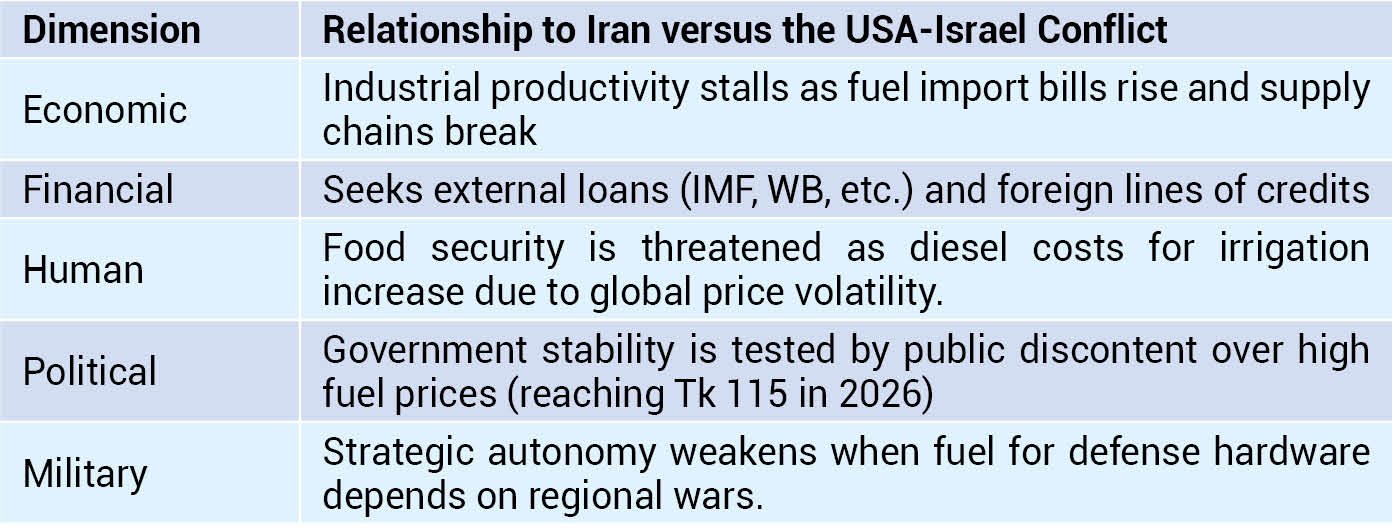
This conflict creates a critical dependency on energy security, navigating the dimensions of comprehensive security. A fuel crisis leads to industrial shutdowns, which cause job losses and inflation, eventually resulting in anti-government protests and state fragility. A vulnerability in energy creates a dangerous flowchart:
Energy Crisis → Industrial Shutdown → Job Losses/Inflation → Anti-Government Protests → State Fragility
7. Conclusion: The Path to Sovereignty
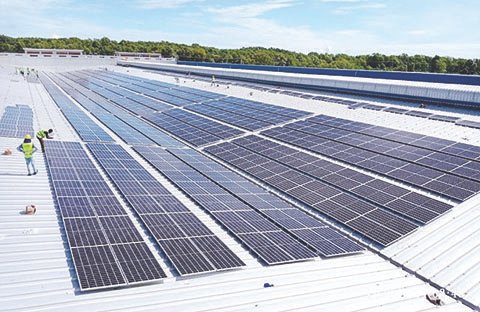
To achieve a middle-income future, Bangladesh must resolve the 30% production gap caused by energy instability. True security lies in an internal energy transitionof shifting from fossil-based systems of energy production and consumption, including oil, natural gas, and coal, to renewable energy sources like wind, tidal, and solar, to achieve zero carbon emissions by 2050. To break the chain of dependence, the nation must pursue three primary goals:
· Increase Domestic Exploration: Accelerate gas exploration in the Bay of Bengal.
· Invest in Renewables: Meet the target of 4,100 MW of clean energy by 2030.
· Build Strategic Reserves: Increase storage capacity to survive short-term supply shocks.
By securing its energy, Bangladesh ensures that its embroidery of resilience remains strong and its people remain safe in an uncertain world of 21 century.
Colonel (Retd.) Engineer A R Mohammad Parvez Mazumder, afwc, psc
Download Special Article As PDF/userfiles/EP_24_02_SA_Parvez.pdf