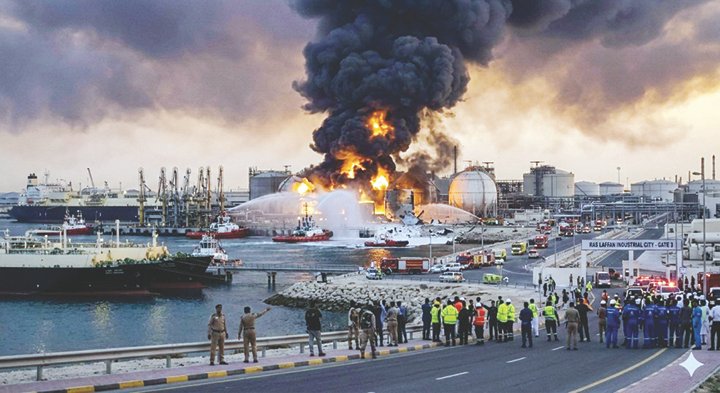
The military conflict involving the United States, Israel, and Iran has triggered an immediate global energy crisis, pushing the world economy closer to recession. The disruption of the Strait of Hormuz, a critical artery for global energy trade, is at the center of this shock. The US-Iran war is shaking energy markets worldwide, affecting even major producers such as Canada and the United States. The International Monetary Fund (IMF) has already downgraded its global growth forecasts in response to these developments.
Immediate Energy Market Disruption
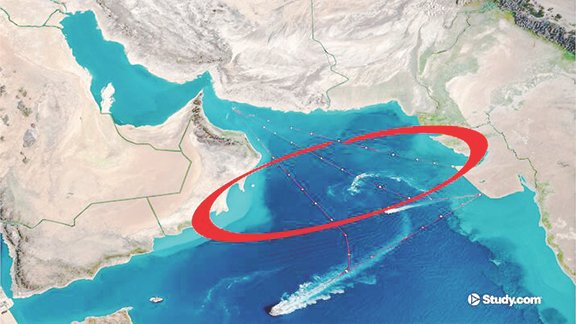
The conflict has effectively choked the Strait of Hormuz, through which about 20% of global oil supply flows. This has led to:
Price spikes:Oil prices have surged to around $100 per barrel, creating immediate inflationary pressure.
Supply disruption:The IMF estimates regional output could fall by 4.9 million barrels per day.
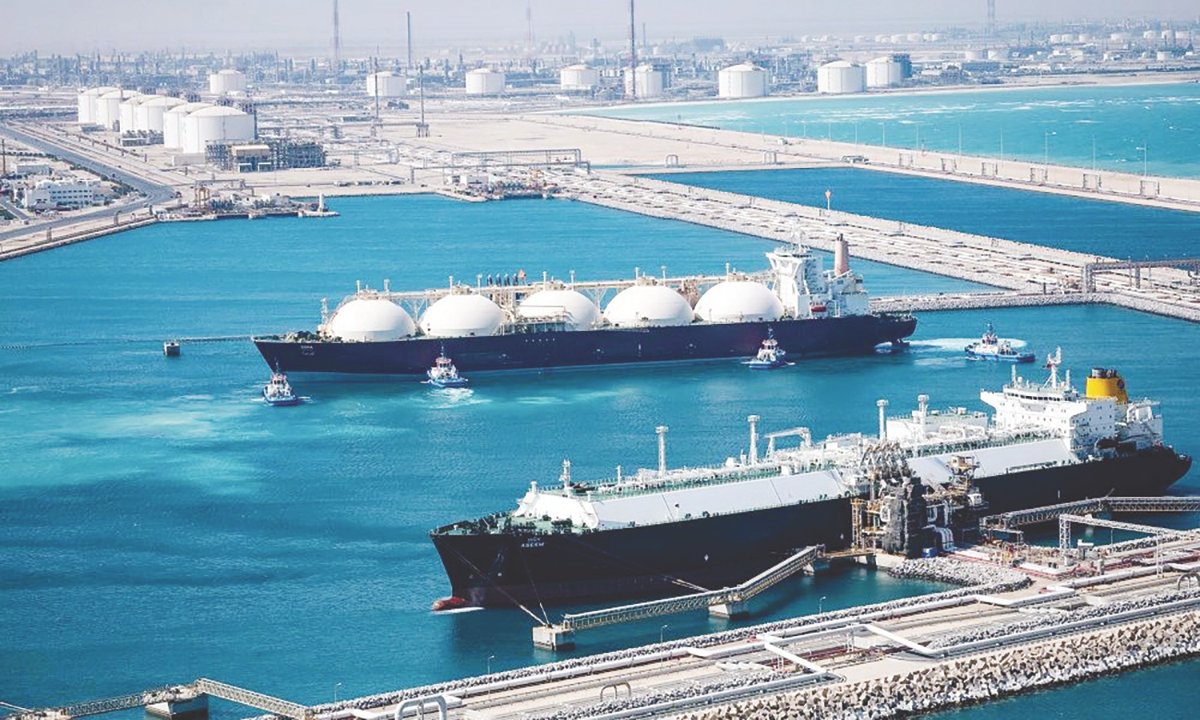
LNG impact:Key facilities in Qatar, which supply about 20% of global LNG, have been struck, severely disrupting natural gas supplies.
Iran’s blockade of tanker traffic has created one of the largest energy supply disruptions in modern history. Like a clogged artery, the conflict has restricted the flow of energy to the global economy. Even if a fragile ceasefire holds, recovery could take months or even years.
On February 28, energy strategists across London, New York, Toronto, and Singapore quickly convened to assess the impact of the attacks. Their early view was that both West Texas Intermediate (WTI) and Brent crude prices would likely remain above $90 per barrel.
Crucially, analysts emphasized that the ability to transport oil had become more important than production itself. With oil already above $90 per barrel, prolonged disruption could push prices toward $150, eventually triggering demand destruction.
Global Economic Forecast
The IMF warns that the crisis could erase trillions of dollars from global GDP:
Severe scenario (prolonged conflict):Oil at $110–$125 per barrel could reduce global growth to 2% and push inflation to 6%.
Baseline scenario (quick resolution):Markets stabilize by mid-year, with global growth slowing to 3.1%.
Regional contraction: Iran’s economy could shrink by 6.1%, while Qatar’s could contract by 8.6%.
Broader Economic Consequences
Beyond oil, the effects are spreading across multiple sectors:
Industrial metals:Aluminum prices are rising as production in the Middle East (7% of global supply) is disrupted.
Food security:Around 33% of global fertilizer shipments are affected, increasing the risk of higher food prices.
Monetary policy:Central banks may be forced to raise interest rates to combat inflation, raising recession risks.
Other commodities transported through the Strait of Hormuz—such as aluminum and fertilizer—are also becoming more expensive, pushing up the cost of manufactured goods and food. These higher costs are expected to filter through the global economy over the next three to nine months.
Uncertainty surrounding geopolitical developments, including potential US-Iran negotiations, continues to cloud energy markets and maritime logistics. Normalization of supply chains will likely take months, not weeks. Analysts increasingly view $90 per barrel as the new baseline for Brent crude this year.
While the immediate pain is being felt across economies, prolonged disruption will deepen the damage. Fertilizer prices, for instance, have already surged by about 50% in early March due to supply disruptions.
Farmers worldwide are feeling the impact. In Canada’s Prairie provinces—Alberta, Saskatchewan, and Manitoba—producers are facing higher fertilizer costs, threatening profit margins in a sector that contributes around $20 billion in exports.
A Bangladesh-Canadian farmer near Saskatoon noted that rising fertilizer and fuel costs are creating significant uncertainty for the 2026 growing season. Gasoline prices jumped by about 29% in March alone.
Higher costs are also affecting air travel, agricultural spraying, and equipment procurement. Airlines and logistics companies are passing on increased fuel costs through surcharges, ultimately raising prices for consumers.
For many households, the crisis is becoming increasingly visible. Rising fuel and food costs are forcing people to reassess spending, affecting everything from daily commutes to travel plans.
The oil sector remains central not only to energy supply but also to employment, investment, and broader economic activity. External shocks to this sector have significant implications for economic growth and national budgets, particularly in countries like Canada.
Before the conflict, global oil markets were expecting relatively weak prices in 2026 due to oversupply. However, the war has dramatically altered this outlook, highlighting the fragility of global supply systems.
For North American energy producers, especially in Western Canada, higher prices are creating incentives to increase investment and drilling activity. From Alberta’s oil sands to British Columbia’s export terminals, the impact of the conflict is being closely watched.
Global Impact by Region
The economic fallout varies across regions:
United States
• Inflation risk: Oil at $120–$150/barrel would push gasoline above $5/gallon.
• Raising headline inflation to 6–9%. The Fed would be forced to raise rates sharply, causing a recession.
• Defense spending: This military conflict added $500B–$1T to U.S. debt, straining fiscal budgets.
China
• Manufacturing shock: As the world’s largest oil importer (over 10 million b/d), a Hormuz closure would cut supplies by 30–40%. Industrial output could fall 5–10%, with GDP growth dropping below 3%.
• Trade routes: 80% of China’s Middle East crude transits Hormuz. Alternative routes (e.g., Pakistan’s Gwadar port) lack capacity.
European Union
• Energy rationing: Already recovering from Russian gas cuts, the EU would lose remaining LNG from Qatar (20% of supply). Germany would likely face industrial shutdowns and recession.
• Inflation spike: Energy prices accelerate to 8–10%, forcing the ECB to hike rates despite economic contraction.
India
• Currency crisis: Oil imports 85% at $120+ would widen deficit, triggering depreciation and capital outflows.
• Food inflation: Fertilizer prices would double, raising food costs by 15–20%, hitting poor households hardest.
Japan & South Korea
• Trade deficit blowout: Both are almost entirely dependent on Middle East oil. Japan’s trade deficit could exceed 5% of GDP, forcing yen intervention.
• Industrial output: Auto and electronics manufacturing slowed sharply due to energy costs.
Iran
• Complete economic collapse: Oil exports (already sanctioned) would stop entirely. The rial would hyperinflate (500%+), and GDP could contract by 20–30% within months.
• Humanitarian crisis: Food and medicine imports would halt, risking famine and mass displacement.
Emerging Markets(e.g., Turkey, Egypt, Pakistan, Bangladesh)
• Debt defaults: Higher oil import bills would deplete foreign reserves. Pakistan, Bangladesh, and Egypt (already with IMF programs) would likely default.
• Social unrest: Food and fuel subsidy cuts would trigger protests, as seen in Sri Lanka (2022).
Russia & Venezuela
• As oil prices spike, Russia could earn $300B+ extra annually, partially offsetting sanctions.
• Venezuela would see temporary cash inflows, but production can’t scale up quickly.
Saudi Arabia & UAE
Short-term gain, long-term risk:
• Higher oil revenue (perhaps $200B extra) is offset by potential attacks on their own facilities.
• The Gulf stock markets would crash due to war risk.
UAE-Dubai
The impact of the US-Israeli conflict with Iran on the UAE is severe and multi-dimensional, representing one of the most significant economic shocks in decades.
Financial & Economic Collapse: The UAE’s economic model, heavily reliant on the stock market, has wiped out over $120 billion. Stock index plunged by 16-20%, with real estate, banking, and retail sectors suffering the steepest declines.
Tourism & Aviation: Dubai’s status as a global tourism hub has been shattered, with airports damaged and shut down. Dubai Hotel Collapse, occupancy plummeted to 16% (down from the usual 90%).
Energy & Trade
The UAE has some infrastructure to bypass the Strait of Hormuz; its energy sector is still struggling. Despite surging oil prices, losses were over $174 million due to lower volumes.
Food Security
The UAE relies on imports for approximately 85% of its food supply. Closure of the Strait of Hormuz has choked off food and fertilizer shipments. The UAE was a major exporter of fertilizers, but trade has now fallen to "almost zero”.
Government Response & Vulnerability
The government is taking desperate measures to stabilize the economy. Requested financial assistance from the US.
GDP Warning: Analysts at Goldman Sachs have warned that a prolonged closure of the Strait of Hormuz could reduce the UAE’s GDP by as much as 6% in a single month.
Dubai's Maritime Economy
The conflict has brought Dubai's maritime economy to a critical juncture, exposing its deep vulnerability as a logistics hub. The Siege of Jebel Ali is the "engine" of Dubai, accounting for roughly 36% of Dubai's GDP. The Strait of Hormuz closure has cut off its supply lines.
Traffic Collapse: Daily vessel traffic through the strait has dropped from 138 ships to just 3 in two weeks.
Volume Loss: The port, which handled 15.6 million TEUs last year, is struggling as major shipping lines (Maersk, MSC) have suspended Gulf voyages.
Insurance Nightmare: Even when ships can move, the costs are prohibitive, creating a financial blockade. War risk insurance rates have surged from 0.125% to 0.4% of vessel value, adding over $4 million per passage.
Freight Spikes: Container shipping rates have skyrocketed, with war risk surcharges rising 30-fold (from ~$100 to $3,000 per container). The blockade is inflicting real economic pain on businesses tied to the port and Stranded Cargo.
Business Disruption: The port's free zone (hosting 7,000+ companies) is under strain. The port is currently unable to fulfill its role as a global hub due to the blockade. Till reopening of the Strait of Hormuz, the current rerouting strategies cannot sustain Dubai's $100+ billion maritime economy indefinitely.
Canada
Canada, even being an oil and gas exporter, has soaring energy prices that have other ramifications in Alberta/Saskatchewan/BC, from consumers at the gasoline pumps to farmers facing higher input costs. It’s not comfortable for farmers, who are planning to put less nitrogen fertilizer on their fields this year due to higher costs. They grow wheat, canola, lentils, and flax, and are planning to put less nitrogen fertilizer on their fields this year due to higher costs, although it could limit the upside potential of crops, depending on the weather. Yet, it also means higher energy expenses, higher fuel bill. Big tractors burn lots of diesel fuel, so this is going to be impactful.
Capital Market, Investment Risks vs. Reward
Investment companies in charge of both investing and risk management gathered for a series of top-level meetings as soon as it became clear that attacks on Iran would have a dramatic effect on oil supplies. The first thing these teams began to do as oil prices soared was to run stress tests on a billion-dollar portfolio. Stress-testing and modelling different scenarios allows them to rethink risk and rebalance portfolios to protect against the fallout from the worst possible outcomes and take advantage of potential opportunities. Disruption in credit markets and inflation will pass the initial shock on oil prices and hit consumers at the gas pump.
Middle Eastern oil and gas facilities, shut down by the war, can’t be turned back on with the flick of a switch. The process can take months. It could take years to repair damaged infrastructure in the region. Even after news of the U.S.-Iran ceasefire, Brent crude prices would average US$100 a barrel next year.
The war in Iran choked off supplies at the Strait of Hormuz, where a fifth of the world’s liquefied natural gas once flowed. Among the biggest concerns is the reported extensive damage to the world’s largest LNG production facility, Qatar’s Ras Laffan LNG complex. All of this is driving increased interest in Canadian LNG export projects.
LNG Canada
A tanker loads a cargo of liquefied natural gas at Canada’s Largest LNG facility in Kitimat, B.C. The market is calling for more of those products from the West Coast. Next LNG Plant,” Woodfibre LNG “is set to become Canada’s second LNG export facility when it begins operating next year. The project’s massive gas liquefaction unit in the current geopolitical situation is a reminder of the importance of a diverse and stable supply from Woodfibre.
With the current conflict stranding a significant portion of the world’s production of oil and gas, it reinforces the value of Canadian energy that can reach across the Pacific Ocean to help supply foreign markets. The upshot, according to analysts, is that Canadian energy export projects are looking increasingly viable. With the conflict in Iran, we suspect many Asian/European buyers are rethinking the reliability of energy supply chains, and we think Canadian LNG is set to benefit from that theme.
Bangladesh: A Triple Shock
Bangladesh is among the most vulnerable countries, facing a “triple shock” of energy shortages, economic strain, and food security risks.
Energy Crisis: Supply Cuts & Soaring Costs
The conflict has triggered both a physical shortage of fuel and a spike in prices.
• Refinery Shutdown: The country’s only state-owned refinery, Eastern Refinery, has suspended operations due to a halt in crude oil imports from the Middle East over the last two months.
• Expensive Emergency Purchases: With contracted LNG supplies blocked at Hormuz, Bangladesh was forced to buy 11 cargoes on the spot market. It paid an average double the pre-war price.
• Power Dependency: The country now gets 60% of its power from imported gas and coal, making the grid highly susceptible to fuel shortages.
Economic Fallout: Growth Slows & Inflation Bites
The World Bank projects a significant economic slowdown as the crisis compounds existing weaknesses.
• GDP Growth Slows: Growth is projected to drop to 3.9% in FY26. S&P Global Ratings warns of "stagflation-like conditions" (slower growth combined with rising prices).
• Macroeconomic Pressure: Persistent inflation remains high at 8.5%. The government has already sought $2 billion in external financing just to manage fuel imports and has been forced to trim public spending.
• Poverty Impact: The national poverty rate has increased to 21.4% (up from 18.7% in 2022). Due to the conflict, 1.2 million fewer people will escape poverty this year than previously projected.
Food Security: Fertilizer & Agricultural Threats
A hidden but dangerous impact is on food production, driven by fertilizer shortages.
• Import Disruption: About 30-35% of global fertilizer shipments pass through the Strait of Hormuz. With supply lines choked, a serious urea shortage is looming.
• Domestic Production Collapse: Five state-owned fertilizer factories running under capacity due to gas shortages, leaving farmers facing higher black-market prices.
• Food Supply Risk: Officials warn this could hurt the production of Aman rice (the second-largest rice crop), threatening food security if not resolved quickly.
The Root Vulnerability: Weak Resilience
International institutions note that Bangladesh lacks the buffer to absorb these shocks.
• Fragile Banking Sector: The non-performing loan ratio stands at a critical 30.6%, limiting the government's ability to finance emergency imports.
• Low Reserves: With thin foreign exchange buffers, the country has limited capacity to weather a prolonged crisis compared to neighbors who invested in renewables (like Pakistan).
The Way Forward
Experts emphasize the need for Bangladesh to diversify energy sources and secure alternative supply routes for fuel and fertilizer. In the current geopolitical environment, resilience depends on building a more diversified and stable energy supply system. Canadian LNG, among other alternatives, could play a role in this diversification strategy.
Download Article As PDF/userfiles/EP_23_22_Article.pdf
Zainul Abedin PEng, Oil and Gas Engineering Consultant, Alta Power & Energy/Al Petro, Alberta, (Explorer/Royalty Owner of Oil & Gas wells)