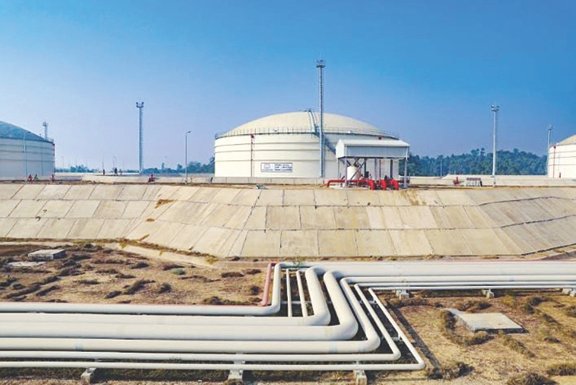
Bangladesh is currently facing a severe fuel supply disruption amid the ongoing global energy shock triggered by the 2026 Iran conflict involving the United States and Israel. The escalation of hostilities has significantly disrupted crude oil and refined product flows through critical maritime routes, leading to sharp increases in international fuel prices and tightening global supply chains. As a highly import-dependent country, meeting energy needs from external sources, Bangladesh has been directly affected by these developments, resulting in fuel shortages, long queues at filling stations, periodic rationing, and supply instability across the country.
The crisis has exposed structural vulnerabilities in the national energy system, particularly its heavy reliance on imported petroleum and limited flexibility in storage and refining. Rising import costs and logistical constraints have further strained foreign exchange reserves and intensified pressure on domestic fuel distribution systems. As a result, the energy sector is experiencing heightened volatility, underscoring the urgent need for accelerated infrastructure development, supply diversification, and enhanced strategic resilience.
Bangladesh’s energy sector is undergoing a critical transformation as the country moves from a fragmented, import-dependent fuel supply system toward an integrated, infrastructure-driven energy security framework. Strategic investments in key infrastructure projects like the Single Point Mooring (SPM), Eastern Refinery Limited (ERL)-2 expansion, and India-Bangladesh Friendship Pipeline offer a strategic pathway to mitigate shortages and build long-term resilience.
These initiatives are not standalone measures; together, they constitute an integrated framework to modernize fuel handling, enhance domestic refining capacity, and ensure diversified and resilient supply chains. Collectively, they aim to reduce operational inefficiencies, lower import costs, and strengthen national capacity to withstand global energy market volatility. However, the success of this transformation depends not only on infrastructure completion but also on timely operationalization, sound governance, and effective coordination among key stakeholders.
Fuel Supply Scenario
Bangladesh’s fuel supply relies heavily on imports, primarily from Saudi Arabia and the UAE, with BPC importing crude oil under annual agreements and procuring finished petroleum products through G-to-G contracts and international tenders. In FY 2024-25, BPC imported 1.51 million tons of crude oil for processing at ERL, complemented by 0.6 million tons of domestic gas condensate, producing 1.5 million tons of petroleum products, close to ERL’s 1.57-million-tonne refining capacity. Additionally, 6.2 million tonnes of petroleum products were imported to meet national demand, highlighting the sector’s continued reliance on imports to ensure energy security.
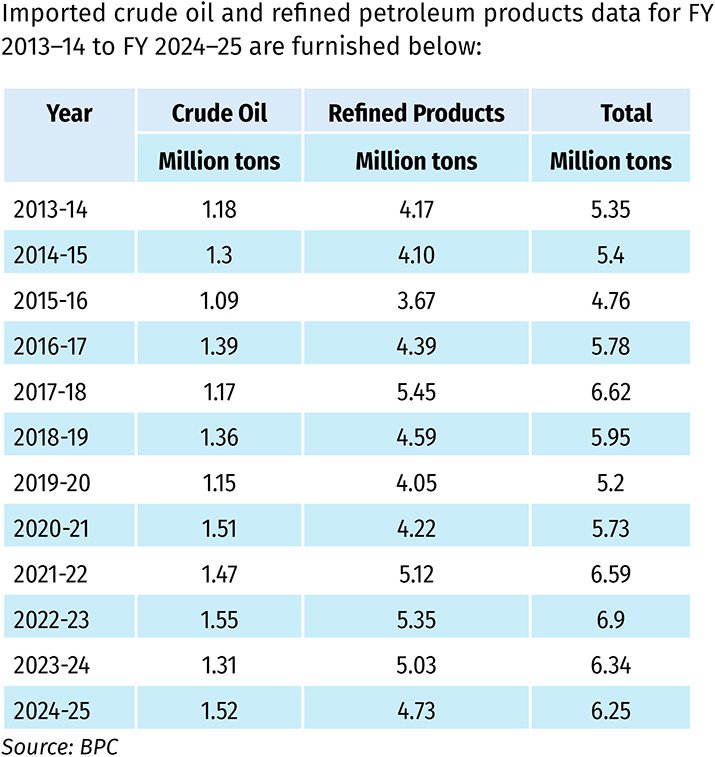
Between 2013–14 and 2024–25, Bangladesh’s petroleum imports showed steady fluctuations in crude oil and refined products. Crude oil volumes ranged from 1.09 million tons in 2015–16 to a peak of 1.55 million tons in 2022–23, while refined product imports varied between 3.67 million tons in 2015–16 and 5.45 million tons in 2017–18. Overall totals moved from 5.35 million tons in 2013–14 to 6.25 million tons in 2024–25, with the highest intake recorded at 6.90 million tons in 2022–23. This trend reflects both growing demand and periodic adjustments in sourcing strategies, balancing crude imports with refined product inflows to meet national energy needs.
Imported crude oil and refined petroleum products data for FY 2013–14 to FY 2024–25 are furnished below:
Single Point Mooring with Double Pipeline
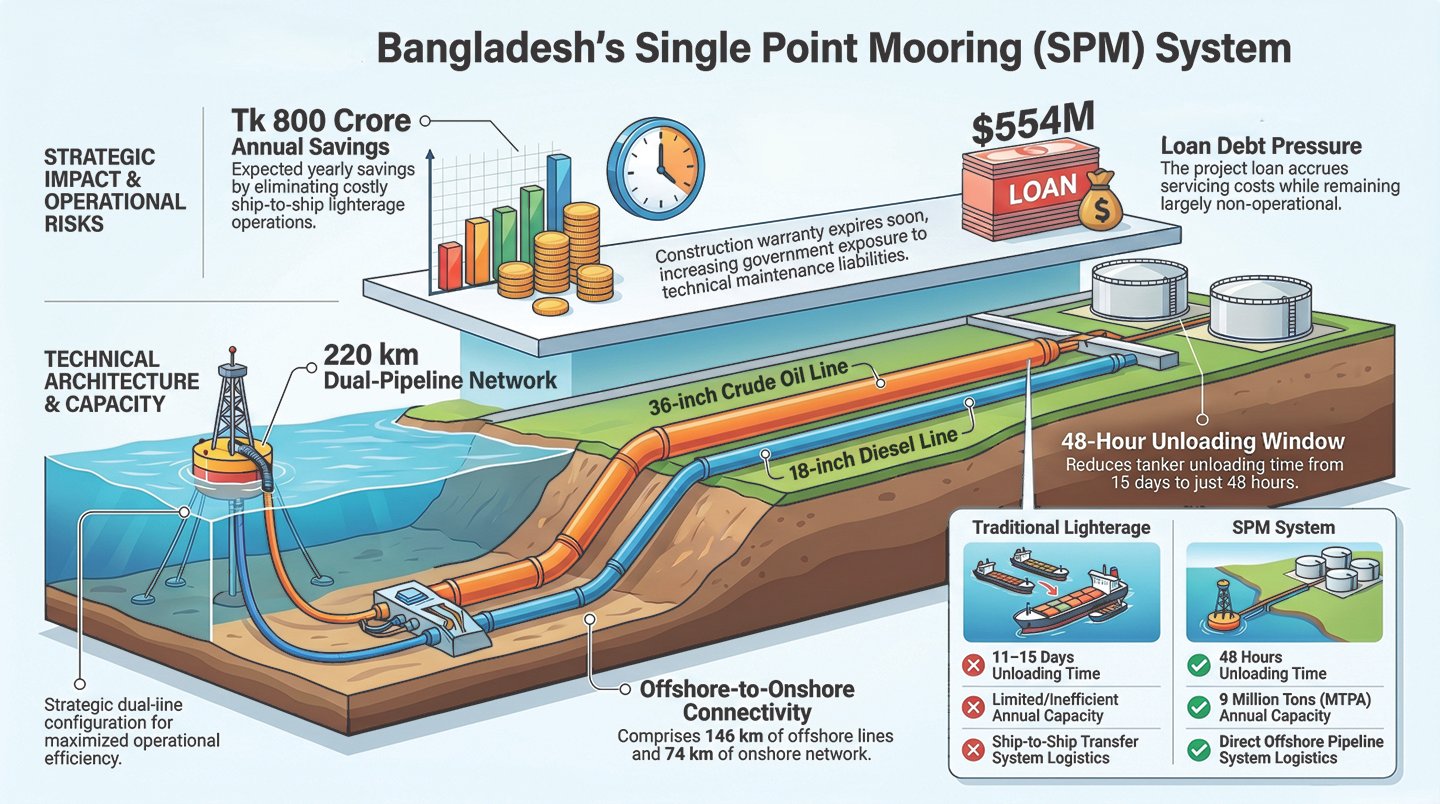
The Single Point Mooring with Double Pipeline project was developed as a structural solution to the draft limitations of Chattogram Port, which historically prevented large crude carriers from docking. To overcome this constraint, the Government and BPC initiated the establishment of a modern offshore unloading system, constructed by China Petroleum Pipeline Engineering Co. Ltd. (CPPEC). This system marks a fundamental shift in Bangladesh’s fuel logistics by enabling direct offshore-to-onshore transfer of petroleum, eliminating the need for costly and inefficient lighterage operations. As a result, it serves as a critical enabler for the expansion of Eastern Refinery Limited and strengthens the country’s long-term energy resilience.
Technically, the SPM is designed to handle up to 9 million tons per annum (MTPA) through a 220 km double pipeline network, including a 36-inch crude oil line and an 18-inch diesel line. The offshore segment extends 146 km, featuring an 11 km Horizontal Directional Drilling section, while the onshore network spans 74 km. At Maheshkhali, the system is supported by modern storage facilities with dedicated crude and diesel tanks. This infrastructure significantly improves operational efficiency, reducing unloading time from 11–15 days to just 48 hours for large tankers.
The dual pipeline configuration allows simultaneous transfer of crude oil and refined products, enhancing throughput and supply reliability. However, a pipeline disruption during a trial run in early 2024 highlighted the importance of rigorous commissioning and professional operational oversight.
Economic Significance and Strategic Role
The economic rationale for the SPM is compelling. By replacing the traditional lighterage system, the project is expected to reduce annual unloading and transportation costs by approximately Tk 800 crore, with long-term savings potentially reaching Tk 80 billion through improved efficiency and scale. More importantly, the SPM functions as a vital “forward linkage” for the ERL-2 expansion. The planned increase in national refining capacity to 4.5 million tons per year depends heavily on the SPM’s ability to ensure uninterrupted and high-volume crude supply.
Operational Challenges and Bottlenecks
Despite its strategic importance, the SPM facility has remained largely non-operational for nearly two years, creating financial and operational risks. The primary constraint has been the failure to appoint a qualified Operation and Maintenance contractor. The initial tender process collapsed when the sole bidder, PT Pertamina, quoted US$ 117 million for a five-year contract, significantly higher than the allocated budget of US$ 88 million. This led to re-tendering delays and prolonged inactivity.
Additionally, the issuance of the Taking-Over Certificate to CPPEC has triggered the countdown of the warranty period. With the guarantee expiring in February 2026, the government now faces increased exposure to technical risks and maintenance liabilities. Meanwhile, the US$ 554 million project loan continues to accrue servicing costs without generating operational returns, placing pressure on public finances. Further delays have been linked to incomplete trial performance, unresolved technical issues, and reported resistance from vested interest groups benefiting from the continuation of lighterage operations.
To safeguard this strategic investment, immediate action is required. The government should prioritize the rapid appointment of a competent O&M operator while considering an interim arrangement with CPPEC to maintain system integrity. Accelerating coordination with the ERL-2 expansion is equally essential to ensure optimal utilization of the facility. Timely operationalization of the SPM is critical not only to prevent financial losses but also to unlock its full potential as a cornerstone of Bangladesh’s modern energy supply chain and long-term energy security.
Expansion of ERL-2
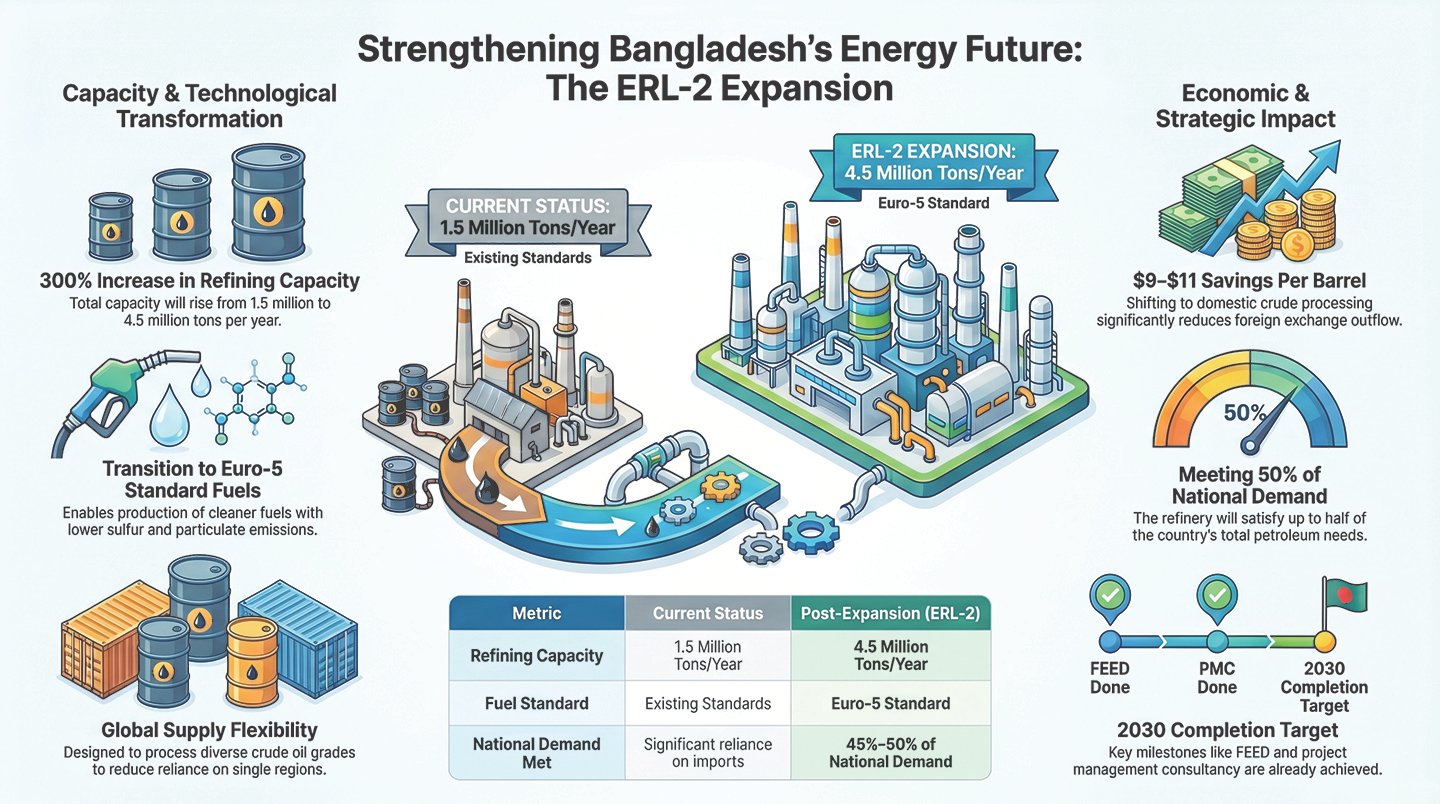
The expansion of Eastern Refinery Limited (ERL-2) represents a critical step in strengthening Bangladesh’s energy security amid global fuel market volatility. The ERL-2 project aims to increase total refining capacity from 1.5 million to 4.5 million tons per year by establishing a new 3-million-tonne unit. Beyond capacity enhancement, the project introduces a major technological upgrade, enabling production of Euro-5 standard fuels. Euro-5 fuels represent a major step toward cleaner energy use, reducing sulfur and particulate emissions while improving air quality and engine efficiency. It is designed to process diverse crude oil grades from global sources, reducing dependence on a single supply region and enhancing supply flexibility.
Economically, ERL-2 is a transformative initiative. With a revised cost of approximately Tk 31,000 crore (US$2.5 billion), financed through a 60:40 government and BPC/ERL contribution, the project prioritizes national ownership. By shifting from imported refined fuels to domestic crude processing, it is expected to save US$ 9-11 per barrel and significantly reduce foreign exchange outflow. The refinery will meet up to 45–50% of national petroleum demand and optimize the use of the SPM facility, which can handle 4.5 million tons of crude annually. Once operational, ERL-2 will diversify product output, including diesel, gasoline, jet fuel, furnace oil, LPG, and lube base oil, while upgrading existing production to Euro-5 standards. This will not only improve supply reliability but also enhance the country’s competitiveness in the energy sector.
Recently, key preparatory milestones have been achieved, including approval of the DPP, completion of Front-End Engineering Design (FEED) by Technip (France), and appointment of Engineers India Limited as Project Management Consultant. The project is targeted for completion by 2030. ERL-2 is not merely an expansion project; it is a cornerstone of Bangladesh’s long-term energy strategy, enabling greater self-reliance, cost efficiency, and environmental sustainability.
India-Bangladesh Friendship Pipeline
The India-Bangladesh Friendship Pipeline marks a significant milestone in regional energy cooperation and cross-border infrastructure development. This project was designed to ensure a reliable and cost-effective supply of fuel oil to Bangladesh, reducing dependence on traditional modes of transportation such as rail and road, which are often subject to delays, higher costs, and logistical challenges.
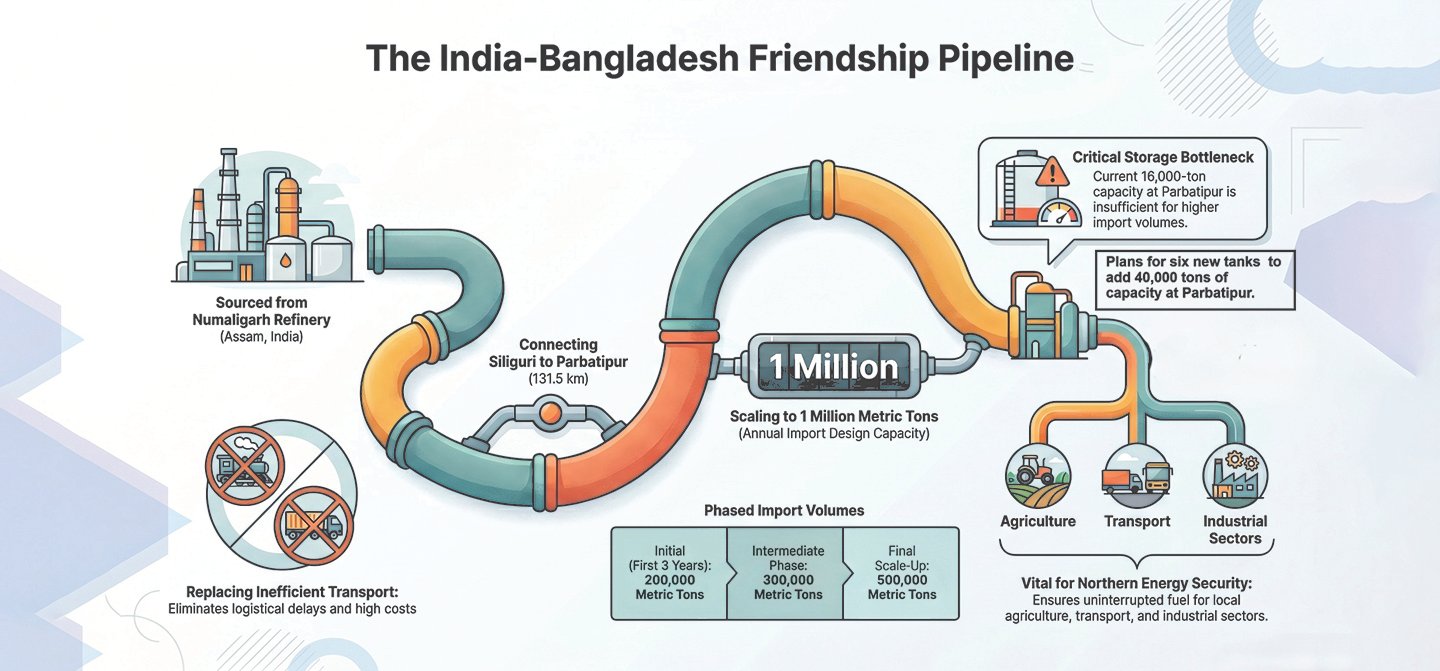
The 131.5 km India–Bangladesh Friendship Pipeline, commissioned in March 2023, establishes a direct energy corridor from Siliguri in West Bengal, India, to the Parbatipur Depot in Dinajpur, Bangladesh, with only about 5 km of the pipeline located within Indian territories. Supplied by the Numaligarh Refinery in Assam, the system provides a seamless, secure, and efficient channel for cross-border fuel transfer.
Under the bilateral framework, Bangladesh is entitled to import up to 1 million metric tons of high-speed diesel annually through a phased approach. Initial supply volumes are set at 200,000 tons per year for the first three years, followed by 300,000 tons annually in the subsequent phase, and eventually scaling up to 500,000 tons per year. This gradual increase is designed to align infrastructure readiness with demand growth and operational capacity.
Despite its strategic potential, the pipeline’s full utilization is currently constrained by limited downstream storage capacity. Existing facilities at Parbatipur can accommodate approximately 16,000 tons, which is insufficient to support higher import volumes. Earlier plans to construct six additional storage tanks, each with a capacity of 6,761 tons (totaling over 40,000 tons), remain pending and require urgent implementation.
From a strategic perspective, the pipeline plays a critical role in enhancing energy security in northern Bangladesh by ensuring an uninterrupted fuel supply to agriculture, transport, and industry. It also reduces logistical pressure on Chattogram port and complements national infrastructure such as the SPM system and the ERL-2 expansion.
To fully realize the benefits of this infrastructure, a coordinated policy and investment approach is essential. The Bangladesh Petroleum Corporation should prioritize the expansion of storage facilities at Parbatipur to enable higher throughput and operational flexibility. Simultaneously, proactive engagement with Indian counterparts is necessary to optimize import volumes in line with national demand growth. Strengthening downstream infrastructure, ensuring policy continuity, and enhancing regional cooperation will be key to transforming the pipeline into a cornerstone of Bangladesh’s integrated energy supply system.
Conclusion
The combined implementation of the SPM facility, ERL-2 expansion, and the India-Bangladesh Friendship Pipeline represents a comprehensive roadmap toward achieving long-term energy security for Bangladesh. While each project individually delivers significant technical and economic benefits, their true strategic value lies in their integration, linking offshore crude handling, domestic refining, and regional fuel supply into a cohesive and efficient system.
However, persistent delays in commissioning critical infrastructure, particularly the SPM, highlight systemic governance and operational challenges that must be urgently addressed. Idle assets, rising debt obligations, and exposure to vested interests risk undermining the very objectives these projects are designed to achieve. Without decisive action, the anticipated economic gains and efficiency improvements may remain unrealized.
To fully harness the potential of these investments, Bangladesh must prioritize transparent governance, expedite operational readiness, and ensure alignment between infrastructure development and policy execution. If effectively synchronized, these initiatives can significantly reduce import dependence, conserve foreign exchange, and position Bangladesh as a more resilient and strategically integrated energy economy.
Mortuza Ahmad Faruque, Energy Specialist and former Managing Director of BAPEX
Download Analysis As PDF/userfiles/EP_23_22_Analysis.pdf