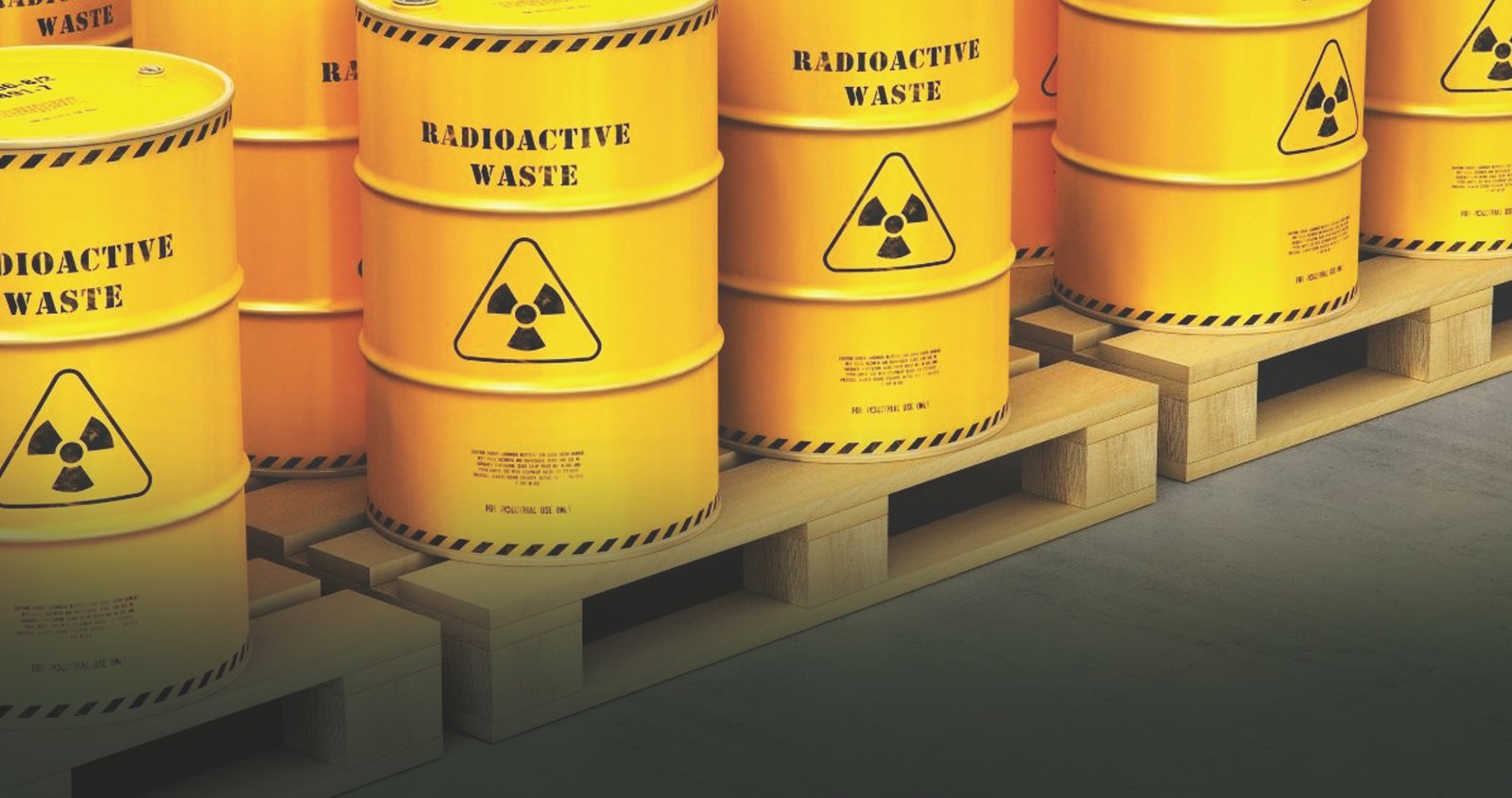
Nuclear energy in Bangladesh
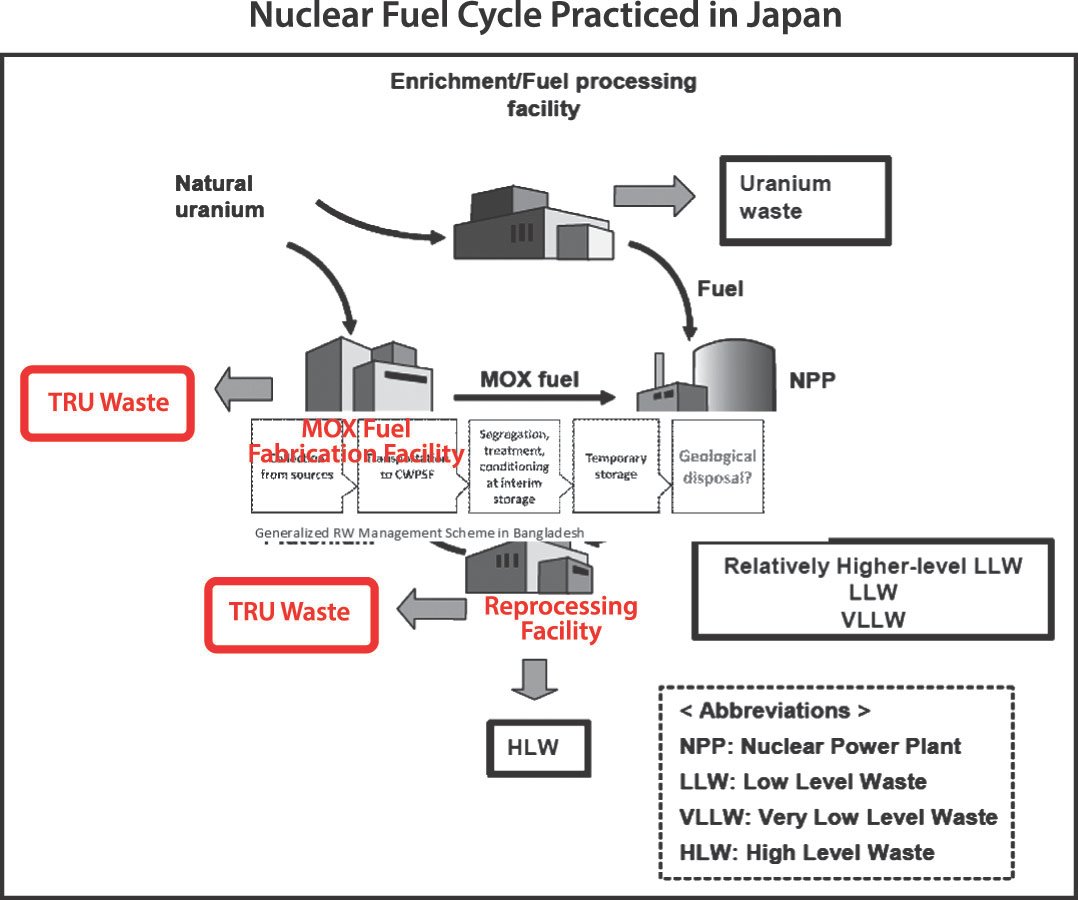
Recently, Bangladesh entered into the nuclear power program by implementing the first nuclear power plant at Rooppur, Pabna (RNPP project) in history, which is expected to add 2,400 MW to the national grid by 2025. Bangladesh Atomic Energy Commission (BAEC) is implementing this project with the help of the Ministry of Science and Technology (MOST) while the Russian State Energy Commission (ROSATOM) is providing the financial, technological, and technical support1. Meanwhile, the government has taken all the necessary initiatives to train manpower for safe operations, build proper infrastructures, and establish legal institutions to ensure maximum safety for human beings and the environment. In addition, a high-power research reactor (RR) at AERE premise will be installed soon for training and research purpose. However, there are several challenges to achieving a sustainable nuclear program where the safe and sustainable management of radioactive wastes (RW) is one of the main concerns. Since its inception in the 1950s, around 30 countries are using nuclear power to meet their energy demand. About 445 reactors around the world provide 10% of the world's energy and 50 more reactors are under construction equating to 15% of existing capacity. 50 countries have small-scale reactors for medical isotope production and training purposes. In Japan, about one-third of electricity production depends on nuclear energy amidst the limited mineral resources. However, about 400,000 tonnes of used fuel have been discharged worldwide and 25-30 tonnes are produced from a large reactor every year. Recycling of nuclear fuel has been adopted as the basic policy in Japan for the effective utilization of nuclear energy where the reusable uranium and plutonium are recovered from reprocessing of spent fuel. As a result, the transuranic (TRU) low-level radioactive wastes with long-lived actinide nuclides are generated in addition to the high-level radioactive wastes (HLW). According to the Nuclear Waste Management Organization (NUMO), a total of 18,100 m3 of TRU wastes and HLW wastes are required to be disposed of in a sustainable manner2,3.
Nuclear fuel cycle and radioactive wastes
Uranium exists in most rocks and soils and the natural water of rivers, lakes, and seas. Their concentration in granite is about 4 ppm, whereas in fertilizers can be as high as 400 ppm, and in some coal deposits is 100 ppm. However, only 0.7% of naturally occurring uranium-235 is fissionable, and the remainder is uranium-238. Therefore, the fissile U-235 needs to be enriched between 3.5% and 5% to be used as fuel in a nuclear reactor. U-235 isotope disintegrated by a chain reaction and produced a lot of heat in the reactor core to drive a turbine and an electric generator.
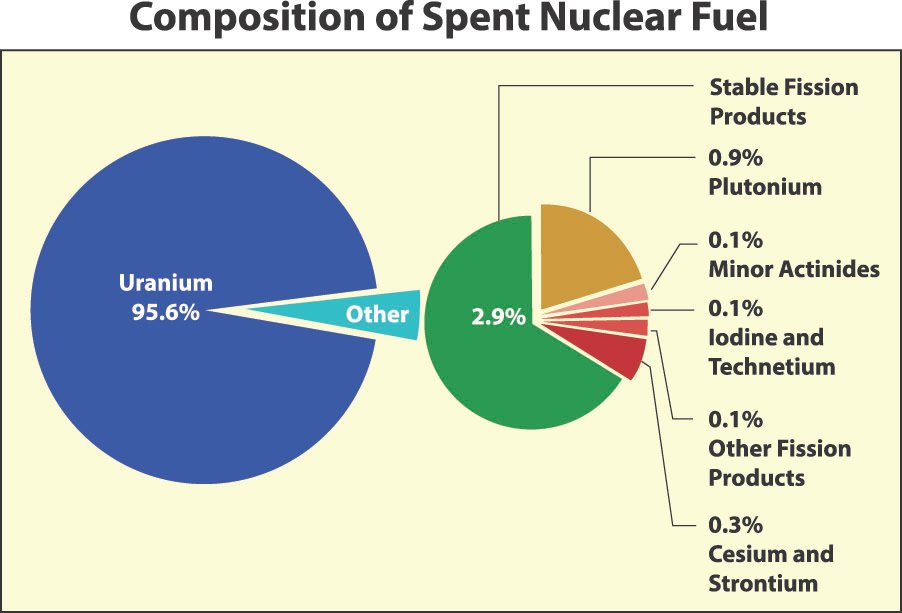
Although the uranium used for nuclear power generation is a depleted source, the possibility of recycling it by reprocessing brings a huge advantage for securing it as a sustainable energy source. The nuclear fuel cycle is the chain of several processes that starts with the mining of uranium and ends with the disposal of nuclear waste. In the front-end cycle, uranium undergoes the steps of mining and milling, conversion, enrichment, and fuel fabrication whereas the back-end comprises storage, reprocessing, and recycling before the waste is disposed of.
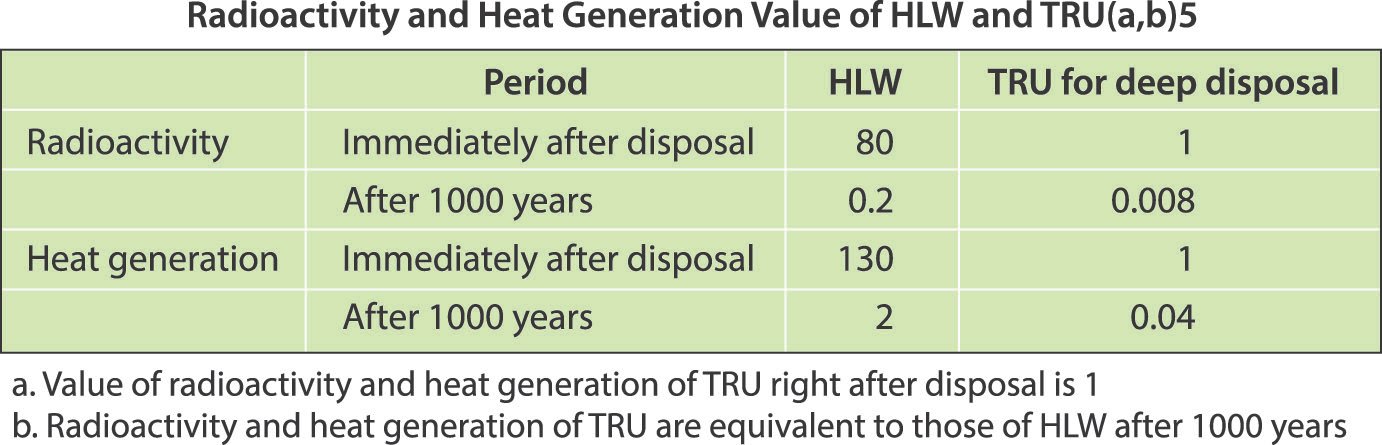
After irradiation, the spent fuel rods filled with UO2 generated highly radioactive elements i.e. actinides and fission products. Then, the HLW wastes produced from the reprocessing of spent fuel rods to recover residual U and Pu which can be used as MOX. The major hazardous isotopes are the short-lived (90Sr and 137Cs) the long-lived fission products (129I and 99Tc) and the actinide elements (U, Np, Pu, and Am). Besides, 226Ra and 210Pb are the important isotopes generated by the decay of actinides in the waste with a half-life of thousands of years4.
The TRU wastes are produced during nuclear weapons research and production and during the reprocessing of spent nuclear fuel. The waste generally consists of emission filters, hulls, and ends in the fuel assembly, combustible and incombustible wastes i.e. rubber gloves, paper, protective clothing, tools, and equipment used in these processes. It consists of alpha-emitting radionuclides i.e. Pu-239 and Np-237 of atomic numbers greater than 92, having 20 years half-life with concentrations greater than 100 nanocuries per gram. The TRU waste is considered as LILW and many countries are considering the co-disposal with HLW in the same repository field6.
Radioactive wastes management policy in Bangladesh
In Bangladesh, currently, low and intermediate-level (LILW) wastes are being generated. The wastes are produced from the operation, repair, and maintenance of a 3 MW TRIGA MARK-II research reactor, radioisotope production laboratory, 14 MeV neutron generator, and research and commercial irradiators. Only the Center for Waste Processing and Storage Facilities (CWSPF), BAEC has the capabilities to treat radioactive waste in the forms of liquid, spent resin, combustible waste, and sealed radioactive sources. Solid wastes containing only short-lived radionuclides are managed by delay-and-decay storage and released into the environment. There are no reprocessing or fuel fabrication plants that can produce HLW and TRU wastes in Bangladesh.
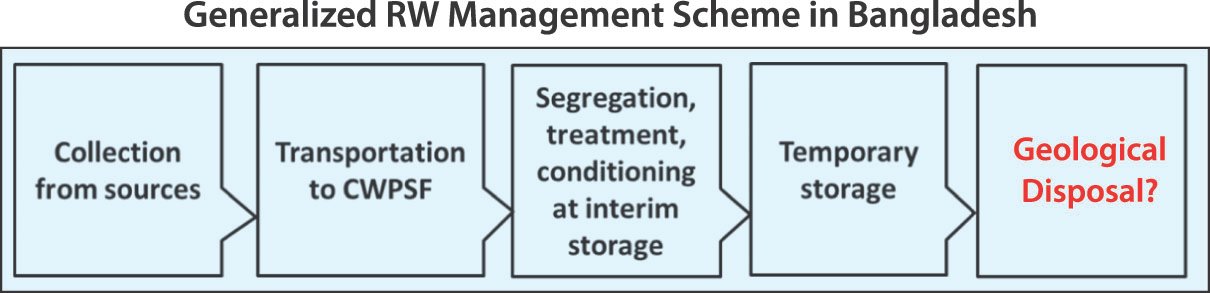
It is customary that the spent fuel and/or HLW are disposed of in the territory where it is generated. Even in the case of SF reprocessed in another country, the residual waste is generally returned to the originating country for long-term management7. A national policy has been approved by the Bangladesh government to set up the goals and requirements for the safe management of all kinds of present and future radioactive wastes following the IAEA safety principles8. Under these policies, BAEC will develop and implement strategies or solutions for the long-term management of radioactive wastes and spent fuel in a safe and sustainable manner. The spent fuel from the existing research reactor (RR) will be sent back to the fuel supplier. As per the general agreement, spent fuel generated from the RNPP will also be sent back to Russia, however; a great concern still lies in the management of wastes; particularly HLW other than spent fuel which will be generated during the operation and decommissioning of NPP/RR. Besides, there is no clear statement regarding the management of reprocessed wastes after returning from Russia, which may produce the HLW. Moreover, the current and future LILW also needed to be disposed of safely within the Bangladesh territory. Consequently, the management of radioactive wastes will be a major issue of national concern in the near future.
Several alternatives have been proposed for radioactive waste disposal where deep geological disposal was considered a safe and sustainable option especially for spent fuel and HLW8. In addition, the TRU waste produced by reprocessing and mixed oxide fuel (MOX) fabrication, remains radioactive for very long periods and thus needs to be disposed in a deep underground9. Finland (granitic rock), Germany (rock salt and granite), Belgium (Boom Clay), and Switzerland (Opalinus Clay) are well ahead of implementing geological disposal of radioactive wastes deep underground.
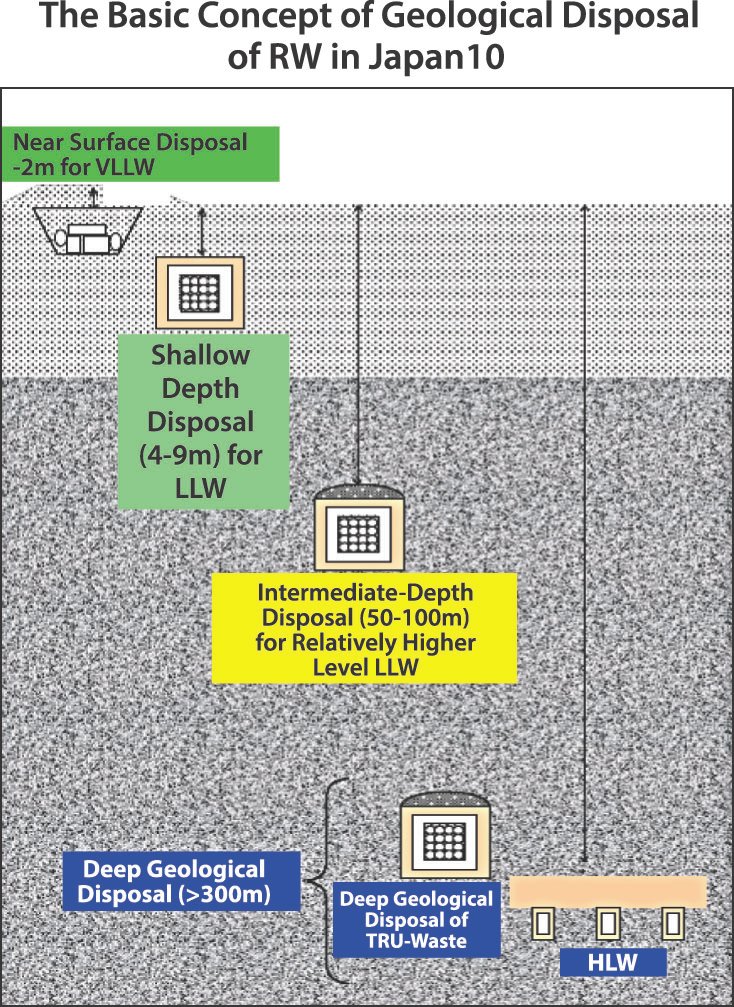
However, the disposed waste matrix in a geologic repository might be breached somehow after several tens of thousands of years and could interact with groundwater. Then most radionuclides are transported along migration pathways to the environment or may be adsorbed onto rock surfaces. Therefore, it is important to select suitable rocks to host those radioactive wastes.
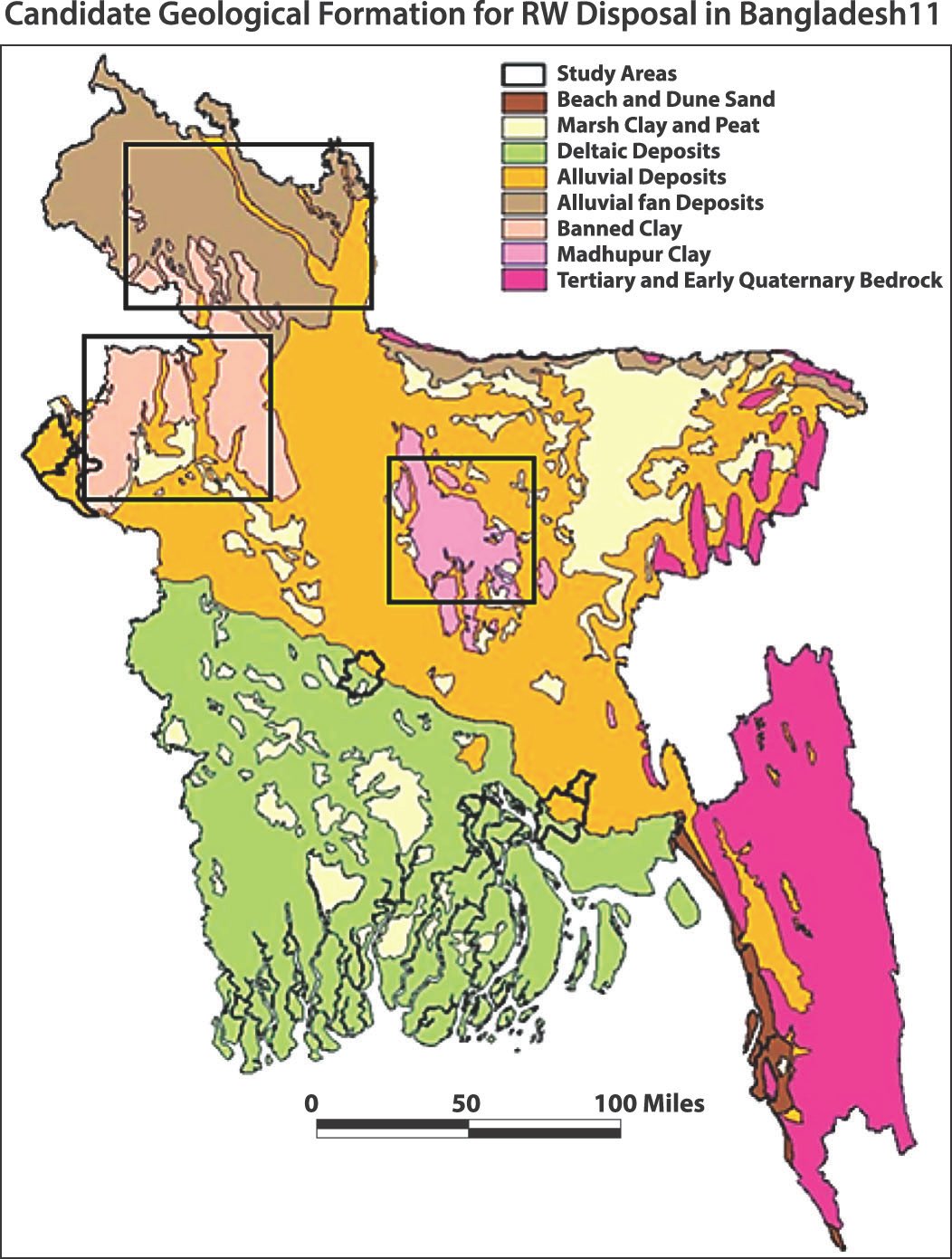
Although radioactive wastes are currently limited to low and intermediate-level wastes, nevertheless, Bangladesh will need similar considerations for a sustainable fuel cycle which has been followed worldwide. Archean basement rock i.e. hard rock found at the depth of 130 – 300 m in the northwestern part of Bangladesh is thought to be one of the candidate host rocks due to their wide distribution and availability to provide enough space, good heat conductivity, suitable mechanical properties, and so on. Besides, Madhupur clay in the central part might also be a candidate host rock. However, there is very little data on the geological and geotechnical characterization of those rocks considered repositories in Bangladesh. Moreover, there is no research available for the performance demonstration of those candidate host rocks. Hence, site characterization of suitable host rocks, selection, and the safety assessment of the radioactive waste disposal and management should be one of the important areas of research interest in universities and other research organizations.
Dr. Md. Moniruzzaman Sumon, Principal Geologist, Institute of Nuclear Minerals Atomic Energy Research Establishment, Bangladesh Atomic Energy Commission Email: sumonda_du@yahoo.com
References:
1. R. Karim, M.E. Karim, F.M Sukki et. Al., Nuclear energy development in Bangladesh: A study of opportunities and challenges, Energies, Vol. 11, 1672, 2018.
2. Nuclear Power in the world today, World Nuclear Association Report, June 2021.
3. Geological disposal of TRU waste, Nuclear waste management organization of Japan, September 2008.
4. L. Matthew. Wald, A long, long road to recycling nuclear fuel, New York Times, November 2016.
5. Geological disposal of TRU waste, Nuclear waste management organization of Japan, September 2008.
6. Second progress report on research and development for TRU waste disposal in Japan, JAEA Review 2007-010, FEPC TRU-TR2-2007-01, March 2007.
7. Status and trends in spent fuel and radioactive waste management, IAEA Nuclear Energy series, No. NW-T-1.14, 2018.
8. A. Larsson, State of the art report on radioactive waste disposal, IAEA Bulletin, 4, 1989
9. Geological disposal through global collaboration, Nuclear waste management organization of Japan, November 2016.
10. B. Yildiz, H.N. Erten and M.Kis, The sorption behavior of Cs ions on clay minerals and zeolite in radioactive waste management: sorption kinetics and thermodynamics, J. Radioanal. Nucl.Chem, 288, 475-483, 2011.
11. M. Rajib, G. Rasul et al., Background of assessing geological materials for a potential low and intermediate level radioactive waste repository in Bangladesh, JpGU-AGU Joint Meeting 2017.
Download Article As PDF/userfiles/EP_22_19_ Article_RNPP.pdf