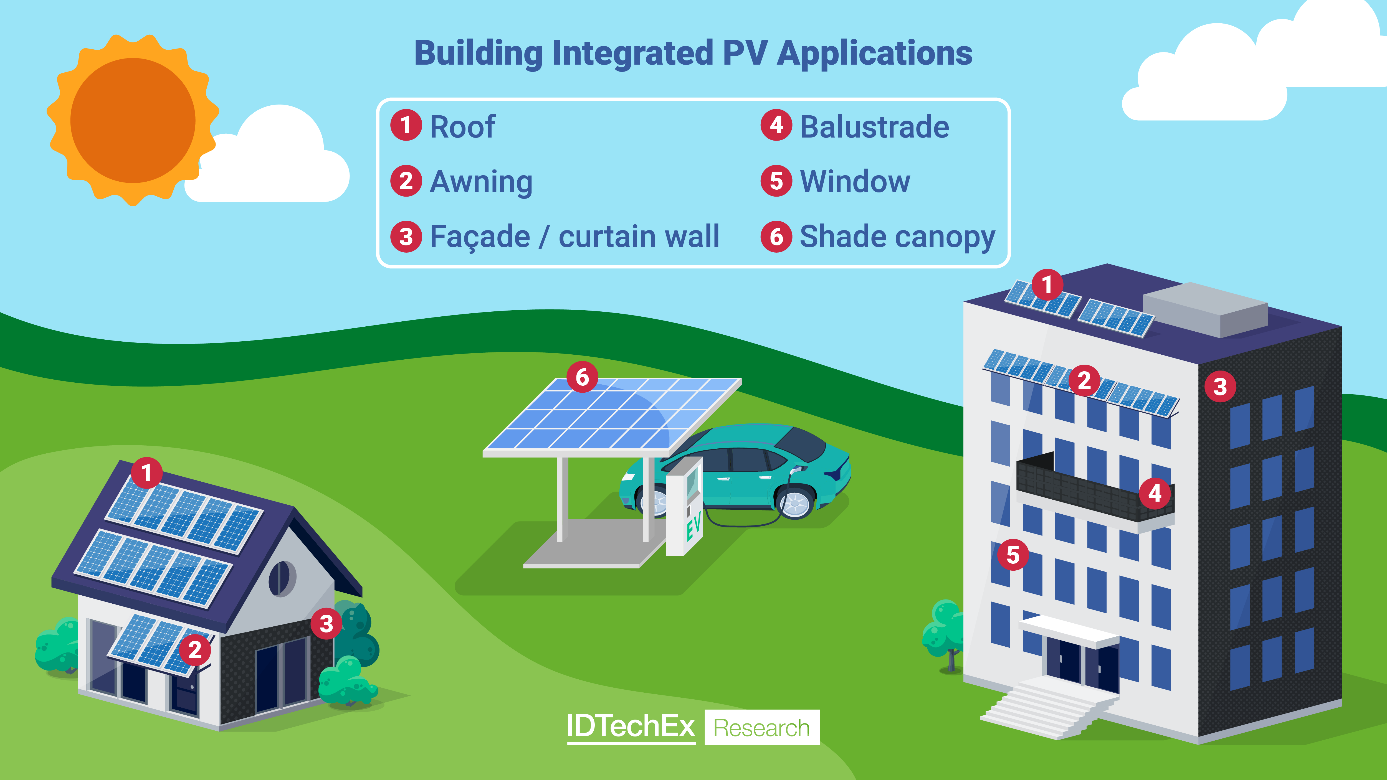
CAMBRIDGE, UK, October 23, 2026 (PR) - Perovskite photovoltaic (PV) technology is opening new opportunities for solar power beyond conventional rooftops and utility-scale projects, offering lightweight, flexible and semi-transparent solutions for buildings, vehicles, agriculture and smart electronics, according to IDTechEx.
Traditional silicon solar panels are relatively heavy and rigid, limiting their use on structures that cannot support additional loads. Perovskite solar cells can be fabricated on lightweight plastics or glass, while their transparency can be adjusted for different applications, potentially turning previously unsuitable surfaces into electricity-generating systems.
IDTechEx’s report, Perovskite Photovoltaics 2027–2037: Technologies, Markets & Trends, examines emerging markets for single-junction and flexible perovskite technologies alongside perovskite-silicon tandem cells, which have attracted attention for their high conversion efficiencies.
Building-integrated photovoltaics (BIPV) and lightweight commercial roofing are promising applications, particularly for industrial warehouses and other facilities where conventional solar installations may be constrained by roof load limits.
Other potential applications include agrivoltaics, where semi-transparent panels can help regulate sunlight reaching crops; vehicle-integrated photovoltaics; and solar-powered roadside noise barriers. Indoor perovskite cells could also power Internet of Things (IoT) sensors and smart electronic devices, reducing dependence on disposable batteries.
According to IDTechEx, commercial success will depend on matching specific perovskite designs with suitable applications rather than competing with silicon solely on efficiency. Manufacturing costs, material development, durability and the ability to scale production will remain important factors in market development.
The report assesses technology advances, manufacturing trends, costs and industry activities, alongside market value and capacity forecasts across nine application sectors.
The findings suggest that perovskite PV could broaden the range of surfaces suitable for solar generation, although its long-term market growth will depend on overcoming commercialization and reliability challenges.