Bangladesh’s energy crisis is growing worse with each passing year. The most pressing concern lies in the widening gap between the demand and supply of natural gas, the country’s primary fuel for industry and power generation. For years, policymakers and industry leaders had hoped the situation would improve. Instead, the opposite has happened. With gas supplies falling short, the power sector can now operate barely half of its installed capacity. Fertilizer factories are getting only about half the gas they need, while manufacturing industries struggle to run their captive power plants and production lines. The result has been a 20–40 percent fall in output across many sectors.
To keep production going, many factories have been forced to switch to costly alternative fuels, further driving up operating expenses. Yet, unreliable electricity supplies continue to prevent industries from moving away from captive generation altogether. Even after importing over 1,000 million cubic feet of LNG per day, the country still faces a deficit of another 1,200–1,300 MMCFD.
Coal-fired power plants, once seen as a viable substitute for gas-based generation, are also running below potential. More than 7,000 megawatts of installed coal power remain underutilized due to inadequate coal imports. To fill the gap and keep the national grid stable, Bangladesh has had to fall back on expensive furnace oil–based generation.
The country now imports a mix of fuels, including electricity, which sometimes exceeds 2,500 MW, alongside LNG and LPG. Altogether, around 65 percent of Bangladesh’s energy supply depends on imports, up from 55 percent just a year ago. This growing dependence on external sources has left the economy more vulnerable to price shocks and supply disruptions.
A review of government actions over the past five years shows little progress in addressing the root causes of this dependence. Despite repeated discussions and policy commitments, there has been no comprehensive plan to stabilize the energy supply or reduce import reliance.
.jpg)
After the fall of the Awami League government, many had hoped the interim administration would move swiftly to reform the sector – by tapping domestic gas and coal reserves, scaling up renewables, improving efficiency, and investing in better infrastructure. But analysts say those hopes have largely gone unmet. With other urgent reforms competing for attention, the power and energy sector has once again slipped down the priority list.
Energy sector analyst Engineer Khondker Abdus Saleque remarked that due to the failure to properly utilize domestic energy resources, a “silent energy famine” has persisted in the country for the past seven to eight years, hindering the expected expansion of the industrial sector.
He added that the lack of an integrated plan to attract domestic and foreign investment in gas and coal exploration and extraction, as well as in renewable energy generation, has now turned the “silent famine” into an open and visible crisis.
He warned, “It is undeniable that the country is now rapidly heading toward a full-fledged energy famine. Without urgent action, no new industrialization will take place, and many existing industries will shut down, leading to a severe employment crisis.”
Therefore, he emphasized that before the upcoming national election, all major political parties must reach a national consensus on “what must be done in the energy and power sector” to overcome the crisis.
A Long-Brewing Crisis, Not a Sudden Shock
One might ask whether Bangladesh has suddenly fallen into this energy crisis. The answer is no.
At a roundtable organized by Energy & Power in 2009, energy expert and Vice Chancellor of Independent University, Bangladesh, Professor M. Tamim, warned the newly elected Awami League–led government that if it failed to prioritize domestic gas and coal extraction, Bangladesh would become 90 percent import-dependent by 2030.
He also stressed the need to develop renewable resources, warning that otherwise, the country’s energy security would be at risk and economic development would be disrupted.
Although the government initially gave importance to domestic resource development in its first three years, it could not sustain that focus. Consequently, gas- and coal-based power plants were built without securing adequate fuel supply.
While the government prioritized importing coal and LNG to meet the deficit, it failed to develop the infrastructure necessary to support these imports. As a result, Bangladesh’s dependence on imported energy continues to rise.
Domestic Natural Gas and LNG
Bangladesh’s proven natural gas reserves currently stand at about 8.5 trillion cubic feet (TCF). Without discoveries, these reserves will be depleted by 2031.
Over the past six to seven years, domestic gas production has steadily declined—from about 2,700 MMCFD to 1,800 MMCFD. According to Energy Adviser Dr. Fouzul Kabir Khan, domestic production is decreasing by about 200 MMCFD per year.
The previous Awami League government launched a bidding round for offshore oil and gas exploration, with a deadline of December 10, 2024. Yet no foreign company submitted bids. More than nine months have passed, and no new initiative has been taken. Although Petrobangla has sent several recommendations to the Energy Division to update the Offshore Production Sharing Contract (PSC), these remain unapproved.
It is now certain that no new offshore exploration tenders will be invited before the upcoming parliamentary election in February. Similarly, a draft PSC for onshore exploration, including in the Chittagong Hill Tracts, remains pending with the Energy Division. Hence, no progress is expected before the election either.
The ousted Awami League government had launched a program to drill 46 wells, including 16 exploratory ones, to maintain domestic production at 2,000 MMCFD. The plan was later expanded to 50 wells, including 18 exploratory wells, targeting completion by 2025 and the addition of 618 MMCFD to the system.
However, as in the past, Petrobangla has failed to meet this target. So far, 18 wells have been completed, while others are in progress. Petrobangla hopes to complete all 50 by 2026. Although 294 MMCFD of gas has been produced under this program, only 74 MMCFD has actually been added to the national grid – far below expectations.
Murtaza Ahmed Faruque, former managing director of BAPEX, expressed doubt that the entire program could be completed by 2026.
Meanwhile, during implementation of the 50-well program, the previous government also approved a 100-well drilling plan, including 69 exploration wells, to be completed by 2028, with a target of adding 1,400 MMCFD. Petrobangla has started work on the first phase involving 19 wells, with field operations expected to begin in July next year.
Although the interim government has continued both projects, it has repealed the Quick Enhancement of Electricity and Energy Supply (Special Provisions) Act and cancelled most of the contracts under it, inviting new tenders instead. This has delayed the 50-well project.
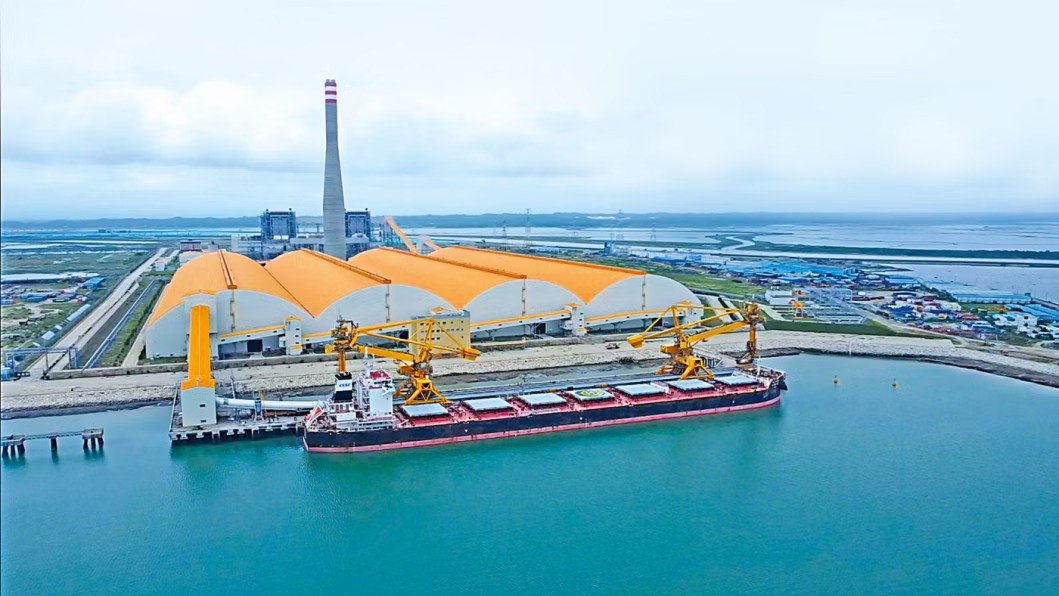
Moreover, the agreement with Summit to set up the third FSRU (Floating Storage and Regasification Unit)—scheduled to begin operation by the end of 2026—has been cancelled. Similarly, negotiations with Excelerate Energy to construct another FSRU at Kuakata have been terminated, even after a term sheet was signed under the special law.
Uncertainty over RLNG Imports and LNG Infrastructure Expansion
Negotiations on two proposed projects to import RLNG from India via pipeline have been cancelled. While preparations for the fourth FSRU are underway, no tender has yet been invited. It also remains uncertain whether the Kuakata project will be developed as an FSRU or a land-based terminal.
In contrast, an initiative has been taken to implement a land-based LNG terminal at Matarbari under a public-private partnership (PPP). Consequently, the country’s LNG import infrastructure is unlikely to expand before 2028 or 2029.
As mentioned earlier, current gas demand stands at least at 4,000 MMCFD, while combined domestic production and LNG imports total only about 2,800 MMCFD. This means the deficit will continue to widen in the coming years as domestic output declines.
Professor Tamim observed, “It would be unrealistic to expect any improvement in gas supply before 2030. Domestic production will continue to fall, and it is uncertain when new LNG import infrastructure will come online. As a result, shortages in industry, power generation, and fertilizer production will worsen. Ongoing exploration is unlikely to yield any major success. To overcome this crisis, the next elected government must attract foreign direct investment in exploration and accelerate LNG infrastructure construction.”
LPG as a Temporary Solution for Industrial Gas Shortages
Many industry stakeholders believe that LPG (liquefied petroleum gas) is the only short-term option to address industrial gas shortages. They acknowledge that LPG is more expensive than natural gas but argue that efficient use could help sustain production. Domestic operators, they note, have sufficient capacity to meet industrial demand.
Engineer Razeeb Haider, Director of BTMA and Chairman of its Energy Standing Committee, said: “If industries are forced to run captive power plants on LPG, we will not be able to remain competitive. However, if VAT and tax exemptions are offered on industrial LPG, it could become viable.”
Md. Abdur Razzaq, Managing Director of JMI Group, said: “The cost of funds in the LPG sector is very high—we are paying 14% interest on loans. If Bangladesh Bank allows low-interest financing under its Green Fund, it would greatly help industries cope with the gas shortage.”
Professor Tamim added, “Gas will not be available, so there is no alternative to LPG for running industries in the coming years. As a stopgap fuel, LPG can play a supportive role in keeping industries operational.”
Challenges in Coal Resource Utilization
Since its independence, Bangladesh has failed to utilize its domestic energy resources. The country’s coal-based generation capacity exceeds 7,000 MW, but except for 525 MW at Barapukuria, the rest relies entirely on imported coal.
Operating these plants at full capacity requires importing 18 million tonnes of coal annually—another source of dependence. Experts believe that if the government takes a political decision to extract domestic coal, imports could begin to be replaced within three years. Because local coal is of higher quality, about 30% less would be needed, potentially cutting generation costs by up to 40%.
Geologist Badiuzzaman said: “All feasibility studies for the Phulbari mine have already been completed. If the government gives the green light, production could begin within 24 to 30 months.”
Professor Tamim noted: “Coal extraction poses environmental challenges, but we have no alternative. The GCM Resources study on Phulbari should be re-evaluated, and if findings are positive, the government should not delay.”
Mining engineer Dr. Mushfiqur Rahman said, “Given global shifts, attracting coal investment is difficult, but we have no choice but to face this challenge. Therefore, an urgent political decision is necessary.”
Dr. Masrur Riaz, Chairman of Policy Exchange Bangladesh, added: “Coal is polluting, but we are already importing it to generate electricity, and will continue doing so for another 20 years. To ensure affordable power and reduce import dependence, there is no alternative to using domestic coal.”
Overinvestment in Power Generation and the Energy Transition Challenge
Over the past 16 years, Bangladesh’s power sector—especially in generation capacity—has suffered from overinvestment. The government built numerous plants without securing adequate gas and coal supplies.
While capacity rose, grid infrastructure did not improve, and distribution remains unreliable. Industrial consumption of grid power has stagnated at around 28–29% for six years, while residential use climbed to 56%, straining finances.
Due to unreliable grid power, industries still depend on captive generation. New investors continue to seek gas connections, though supply remains uncertain.
Bangladesh’s grid-connected generation capacity now exceeds 27,000 MW. With the addition of the first 1,200 MW unit of the Rooppur Nuclear Power Plant this December, capacity will increase further, and another 1,200 MW unit will follow in 2027, bringing total capacity to about 30,000 MW. Yet national demand has not reached 18,000 MW, worsening inefficiency.
Between FY2010–11 and FY2024–25, the government spent Tk 236,000 crore in power subsidies, Tk 62,000 crore last year alone. The current budget allocates Tk 37,000 crore. According to the National White Paper Committee, at least 10% of funds invested in the power sector projects over the past 15 years were misappropriated.
Committee member Professor Tamim told Energy & Power: “Many projects were unnecessary, implemented without proper planning. Some plants have operated at less than 10% capacity. According to government estimates, Tk 120,000 crore has been paid as capacity charges, of which Tk 38,000–40,000 crore were unnecessary.”
The current government plans to cut power-sector spending by 10% this fiscal year. Reducing the service charge on private fuel imports from 9% to 5% will save Tk 470 crore annually. Tariffs for seven state-owned plants, including Matarbari, have been reduced, and seven furnace oil plants have been shut down, saving Tk 3,000 crore. Additional tariff adjustments are expected to save Tk 2,630 crore. These measures are expected to start reducing generation costs this year.
Fossil Fuel Focus Left Renewable Energy Behind
Although the Awami League government aggressively pursued fossil fuel–based projects, it neglected renewable energy. As a result, the target of generating electricity from renewables by 2020 was missed.
Currently, excluding hydropower, total grid-connected renewable capacity, mainly wind and solar, stands at about 800 MW. The National Renewable Energy Policy 2025 aims to generate 20% of total electricity from renewables by 2030 and 30% by 2040. But the key question remains: at what cost?
So far, the average cost of electricity supplied to the grid is about 13 US cents per unit. During the Awami League’s tenure, Letters of Intent were issued to 37 companies for 5,000 MW of solar plants at tariffs of 10–12 US cents per unit. The interim government later cancelled those LOIs and initiated a tender process, where bids came in at 8–9 US cents.
Alongside grid-scale solar, rooftop solar projects under the net-metering scheme are gaining traction. However, a major concern remains – while solar is available during the day, what will provide peaking power in the evening? Gas could fill that role, but the country faces acute shortages. Furnace oil plants are costly. Thus, the key challenge is determining how much renewable energy the grid can absorb while maintaining stability. Nevertheless, expanding renewables will help reduce dependence on imported fuels.
Success in Paying Off Energy Sector Debts
When the interim government took office, unpaid debts in the power and energy sectors totaled about Tk 70,000 crore – Tk 27,000 crore in the energy sector and Tk 45,000 crore in power. Both Petrobangla and the BPDB have since paid off a significant portion.
However, payments to domestic power producers are again being delayed. Public-sector firms are not receiving payments regularly but must keep generating electricity. Private producers are being paid for only about half of their monthly supply, leaving 50% unpaid, and the backlog is rising.
To address this, the Power Division has sought an additional Tk 23 billion subsidy. A BPDB official, speaking anonymously, said the corporation currently loses Tk 4.5 per unit of electricity sold. To reduce losses, either bulk tariffs must rise or subsidies must increase.
Even so, repayment of outstanding dues has been one of the interim government’s notable achievements. Its efforts to reduce unnecessary expenses are commendable. But with a budget allocation of Tk 37,000 crore and an additional Tk 8,000 crore in LNG subsidies, maintaining the financial health of the sector remains difficult.
Reforms and Anti-Corruption Measures
The demand for reforms to ensure good governance and curb corruption in the energy sector is longstanding. After every change in government, the new ruling party accuses the previous one of corruption, but investigations seldom progress.
After the fall of the Awami League’s 16-year rule, the public expected transparency and accountability in the power and energy sectors. The National White Paper Committee highlighted major corruption allegations and recommended detailed investigations, accountability measures, and corrective action.
However, despite the formation of several committees, little progress has been made in the past 14 months. Although the boards of public-sector companies were restructured, results remain limited.
Still, repealing the Quick Enhancement of Electricity and Energy Supply (Special Provisions) Act, 2010, and restoring the Bangladesh Energy Regulatory Commission’s authority to set energy prices have been widely praised.
Conclusion
Bangladesh’s power and energy sectors are trapped in a long-standing dilemma, a lack of political will to explore its own gas and coal reserves or to fully embrace renewable energy. That indecision has now left the country perilously dependent on imports for nearly two-thirds of its total energy supply.
Experts warn that this growing import dependence is not just unsustainable but also dangerous. Bangladesh is expected to spend between $22 billion and $24 billion every year on energy imports, an enormous financial strain for an economy already under pressure. Relying so heavily on international markets also means greater exposure to global price swings and supply disruptions.
Even if the country could afford these imports, it simply doesn’t have the infrastructure to manage them efficiently. Since 2018, Bangladesh has spent about $18 billion on imported LNG, yet total investment in local gas exploration over the past five decades has been less than $1.0 billion. The story is no better for coal: the country imports about 18 million tonnes annually to keep its power plants running, but has not made a political decision in over 20 years to mine its own reserves—despite the potential to reduce power generation costs by up to 40 percent.
While land and transmission facilities have been made available for private investment in fossil fuel–based plants, renewables have largely been left behind. The result is an energy system that is increasingly costly, unreliable, and poorly prepared for future demand.
Experts fear that, beginning next year, shortages of primary energy, particularly natural gas, could worsen further. This would deal a heavy blow to industrial output, employment, and export competitiveness, putting the country’s economic resilience at risk.
If political leaders continue to postpone decisions on domestic resource development, Bangladesh could soon face what many are calling an “energy famine.” The only way to avert that crisis, analysts say, is through a national consensus and firm political commitment to explore and utilize the country’s own gas, coal, and renewable resources. Without such resolve, the dream of energy security may remain just that—a dream.
Mollah Amzad Hossain, Editor, Energy & Power & Afroza Akther Pervin, Managing Editor, Energy & Power
Download Cover As PDF/userfiles/EP_23_09_Anni_Cover.pdf