Creating 15 million jobs within the next 18 months is the government’s top priority. To achieve this, it must ensure reliable infrastructure support, especially quality electricity and gas supply, for both the service and manufacturing sectors. However, the country is not currently in that position. Strengthening the fragile power and energy sector to meet this demand is therefore one of the government’s biggest challenges. While the task is not easy, coordinated and timely action is essential.
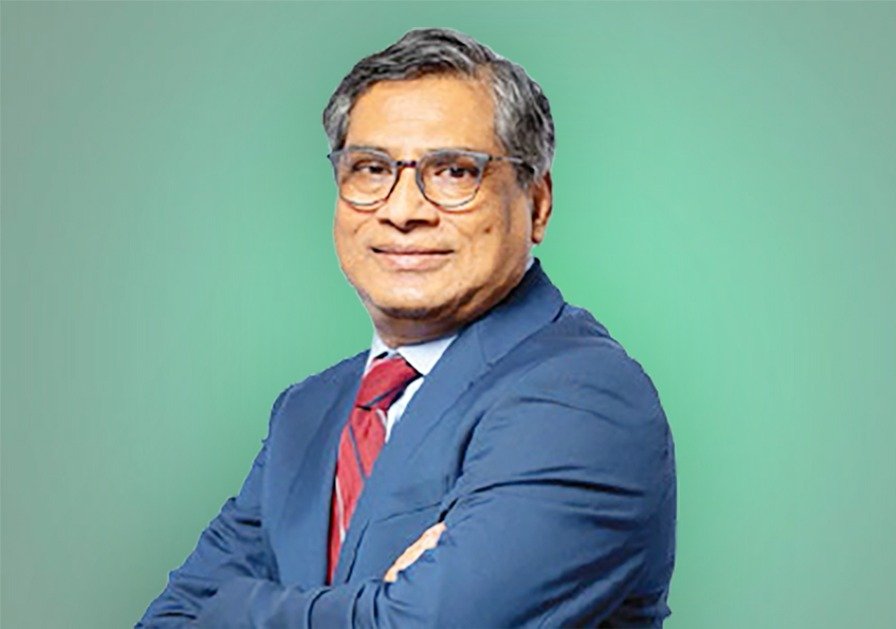
These remarks were made by Humayun Rashid, President of the Bangladesh-Philippines Chamber of Commerce and Industry and CEO of Energypac, in a conversation with Energy & Power Editor Mollah Amzad Hossain.
The new BNP government has begun its journey with a fragile power and energy sector. There is installed power generation capacity, but the fuel supply is insufficient. Meanwhile, the Bangladesh Power Development Board (BPDB) is struggling to pay massive outstanding dues to power producers, and the sector is facing huge deficits. What urgent steps should the new government take?
Restoring the health of the power and energy sector means restoring its financial viability. But before taking corrective measures, it is necessary to analyze how the current situation emerged. In my view, flawed policies, mismanagement, lack of transparency, and inefficiency in project selection and implementation have led to today’s crisis.
For example, under special legal provisions, many power plants were installed bypassing competitive processes, but fuel supply for those plants was not ensured. As a result, plants remained idle while capacity charges had to be paid, increasing financial liabilities and raising generation costs. The sector must quickly move away from excess generation capacity while ensuring fuel supply for efficient plants.
At present, generation and fuel supply costs are high, yet there is no guarantee of quality and uninterrupted electricity supply. In recent years, industries have experienced 25–35 percent production losses due to inadequate gas supply. On one hand, unreliable supply has disrupted industrial output; on the other, higher production costs have increased subsidies. Even after repeated tariff hikes, subsidies remain necessary. There is no immediate alternative.
The government must therefore ensure efficiency at every level of the power and energy sector and reduce production and supply costs through sound management. A one-year action plan should be introduced to ensure an uninterrupted quality electricity supply. A separate three-year plan may be adopted to guarantee adequate fuel, especially gas, supply. However, these programs must be implemented competitively, transparently, and free from corruption.
Outstanding dues in the power and energy sector now stand at Tk 56,000 crore. Around $2 billion per month is needed to cover fuel imports and debt servicing. The government, however, does not want to raise prices. How can financial discipline be restored?
The energy minister has said that electricity and fuel prices will not be increased in the coming years, which is commendable. However, a clear roadmap is needed to achieve this. BPDB and Petrobangla lack the capacity to clear outstanding dues at once. Yet without settling arrears, uninterrupted supply cannot be ensured.
A negotiated roadmap should be finalized with all stakeholders to clear dues within six months, while simultaneously maintaining supply stability. At the same time, steps must be taken to prevent the accumulation of new arrears by gradually reducing generation and supply costs, promoting efficient energy use, and ensuring conservation. If necessary, rationing may be introduced in non-industrial sectors. Losses and wastage at all levels must be eliminated.
Gas shortages currently range between 1,300–1,400 MMCFD. Domestic production is declining, and LNG imports cannot significantly increase over the next three years. Yet industrialization requires gas. What should be done?
We cannot rely solely on gas. Domestic production is declining by around 150 MMCFD per year. Petrobangla’s ongoing efforts have yet to deliver major success. While optimism has been expressed for the next three years, I remain cautious.
Domestic exploration must be intensified alongside attracting foreign investment to boost reserves through 2035. We have learned of significant reserves in Bhola, so pipeline infrastructure should be installed without delay to connect Bhola to the national grid.
Nevertheless, LNG imports remain unavoidable. New infrastructure, including land-based terminals, must be developed. Cross-border gas import opportunities should also be assessed and utilized if feasible. However, it is unlikely that the government will quickly be able to meet total gas demand in full.
Gas should no longer bear the sole burden as the country’s primary energy source. To reduce overdependence on gas, work must begin on the exploration, extraction, and utilization of domestic coal resources. Although the BNP initiated efforts to extract local coal during its previous term, those initiatives were not successful. This time, however, it is essential to begin work from the outset.
Above all, a clear and specific policy framework must be finalized to eliminate inefficient gas use across all sectors.
Currently, more than 56 percent of the country’s power and energy supply depends on imports. As a result, fuel supply costs are tied to volatile global market prices. There is no alternative to reducing import dependence. What steps should the government take regarding domestic gas and coal exploration?
Significant success in this sector cannot be achieved within the government’s 180-day program. However, the action plan during this period must include a coordinated strategy to reduce import dependence by accelerating domestic gas and coal exploration and utilization. At the same time, urgent measures must be taken to expand renewable energy development.
We must remember that our domestic energy resources are not unlimited, so imports will remain necessary. However, by prioritizing the maximum use of local resources, we can at least slow the growth of import dependence.
Countries such as India, Pakistan, and Vietnam have achieved notable success by expanding renewable energy. Bangladesh has yet to achieve the desired expansion. What should the new government do?
Over the past several years, Bangladesh has not achieved significant success in renewable energy. Reaching 20 percent renewable electricity capacity by 2030 will therefore be challenging. Although there was an opportunity to advance renewable projects over the past 18 months, the interim government did not make progress. Instead, it canceled 37 Letters of Intent (LOIs), which undermined investor confidence. The new government must restore investor confidence in this sector.
Land scarcity is a major challenge for renewable expansion. Therefore, both rooftop and grid-scale projects must move forward simultaneously. A year-round implementation plan should be adopted, along with appropriate strategies to attract both domestic and foreign investment. Furthermore, the government should take initiatives to secure carbon credits from renewable energy projects.
The BNP’s election manifesto promises to create 15 million jobs within 18 months. Industrialization is essential for that, and a reliable energy supply is critical. What should the government do?
Job creation is one of the greatest challenges for any country. While the government plays a role, the private sector is the largest contributor to employment generation. However, in Bangladesh, the cost of doing business remains high. Policy complexities and infrastructure weaknesses create barriers for investors.
The BNP’s job creation program is commendable. Now that it has formed the government with a strong mandate, it must first restore investor confidence. Policies and strategies must be developed to attract investment in both the service and manufacturing sectors. The cost of doing business must be reduced. Most importantly, like other competitive economies, Bangladesh must ensure an uninterrupted electricity and fuel supply at competitive prices. Long-term policies for pricing and supply stability are essential.
There are widespread allegations of irregularities and corruption in the power and energy sector. What should be done to build a people-oriented and transparent sector?
Whenever a new government takes office, allegations of corruption against the previous administration surface, often leading to political debate. However, impartial investigations are rarely conducted, and accountability is seldom ensured.
After the fall of the Awami League government, numerous allegations of corruption and irregularities emerged in the power and energy sector. Although the interim government discussed these issues over the past 18 months, it did not clearly define the allegations or determine accountability.
It is now the responsibility of the current government to address these matters. To build a corruption-free and people-friendly power and energy sector, each allegation must be investigated impartially. Responsibility must be clearly established, and those found guilty must be brought to justice.
Download Interview As PDF/userfiles/EP_23_18_Interview.pdf