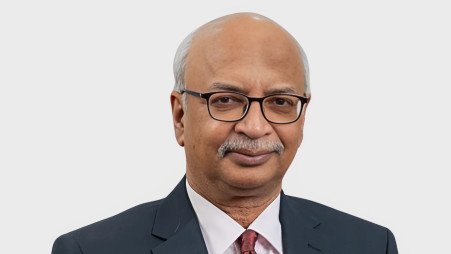
From the perspective of energy security, Bangladesh is now facing one of its most serious risks. To overcome this crisis, the next government must make clear political decisions to promote domestic oil and gas exploration, coal extraction, and renewable energy development. The primary objective should be to create an enabling investment environment, restore investor confidence, and formulate policies that make projects bankable. Failure to do so will only deepen the crisis, pushing the country toward a state of energy famine.
Professor Dr. M. Tamim, Vice Chancellor of Independent University, Bangladesh, made these observations in an interview with Mollah Amzad Hossain, Editor of Energy & Power.
Ensuring the primary energy supply has become the biggest challenge in Bangladesh. Many are describing the current situation as an “energy famine.” How do you see it?
To assess the primary energy supply situation, we must first look at domestic sources—what we can supply from our own resources. At one point, Bangladesh was entirely dependent on gas. The country’s only approved National Energy Policy of 1996 clearly stated that to reduce dependence on gas, coal reserves in the northern region must be developed and utilized. At that time, energy supply disparities between the eastern and western parts of the country were significant, and they still exist to some extent today.
However, this key policy recommendation has never been implemented. We are extracting coal only from Barapukuria. When coal development was recommended, environmental concerns were not as stringent as they are today. While environmental risks are a reality—both globally and in Bangladesh—we have nevertheless built 7,000 MW of coal-fired power plants entirely dependent on imported coal.
We also know that proven domestic gas reserves are steadily declining, and efforts to maintain supply have not delivered the desired results. Beyond gas and coal, the remaining option is renewable energy. Although renewables have potential, they also face significant limitations. We need smart grids, battery storage, and other enabling technologies.
A wind power project is in operation, but its prospects are not promising. Satellite-based studies conducted in the United States once identified nine potential wind sites in Bangladesh, but in reality, these have not proven very effective. Solar rooftop systems, solar irrigation, and solar battery charging can help expand renewable use. However, the dense, high-quality energy required for industrial use cannot realistically be supplied through variable renewable energy alone.
Then what are our options for energy security? Is import dependence the only solution?
Broadly speaking, all three domestic energy sources—gas, coal, and renewables—have limitations at present. We must therefore assess the extent of our import dependence.
Oil is 100 percent imported. Our existing 7,000 MW of coal-fired power plants require around 70,000 tonnes of coal per day, and even that demand cannot always be fully met through imports. Moreover, these plants are not operating at full capacity. Two more coal-fired power plants are expected to come online, which will increase daily coal demand to 100,000 tonnes, meaning total reliance on imported coal.
We are also importing LNG, but the major constraint here is infrastructure. Under the current infrastructure, Bangladesh can import a maximum of 1,100 MMCFD of LNG, equivalent to about 108–109 LNG cargoes per year. This allows us to inject at most 1,000 MMCFD of gas into the national grid.
Domestic gas supply is currently around 1,700 MMCFD, bringing total availability to about 2,700 MMCFD, while demand is close to 4,000 MMCFD. This means there is already a shortfall of 1,300–1,500 MMCFD.
The question is how we will address the worsening crisis ahead. This energy deficit cannot be solved by importing oil alone, as oil-based power generation is very expensive.
At present, Bangladesh has over 11,000 MW of gas-based power plants. Of these, the 800 MW Rupsha plant has never operated, and another 350 MW plant in Khulna remains idle due to gas shortages. With the available 1,000 MMCFD of gas, we can generate only 5,500–6,000 MW of electricity. As a result, plants built with massive investments remain idle, yet capacity payments must still be made.
Reducing gas use in other sectors could allow more gas to be diverted to power generation. Currently, 11 percent of gas (about 275 MMCFD) is used in the residential sector, 120–150 MMCFD is lost through gas theft, 5 percent is used in the CNG sector, and 18 percent is used for industrial process heat.
Under the current circumstances, there is no alternative option to any of the local sources except renewable solar energy. That is also time consuming but I believe if government facilitates, at least 4000 MW grid tied solar power can be added within two to three year period in addition to the rooftop solar expansion. This will reduce day time oil based power production. Full utilization of coal power will keep the production cost lower. Unfortunately, we may have to revert to oil based power production and import dependency cannot be reduced in the near future.
Can renewable actually help?
To overcome fuel price and supply constraints in power generation, we must place strong emphasis on expanding renewable energy, particularly solar. However, the level of investment, enabling investment climate, and policy support required for this expansion is still lacking. Another major constraint is land availability, which is why rooftop solar is currently being promoted.
Rooftop solar is more cost-effective than grid electricity, which has created strong interest in the industrial sector. Many industries are now investing in rooftop solar systems. However, a clear policy decision is urgently needed on whether these rooftop systems will be grid-connected or standalone, because if a large amount of capacity is added without proper planning, system operation could become difficult.
In discussions with PGCB, I have learned that the grid can currently absorb a maximum of 4,000 MW of renewable energy, though this too comes with several challenges. Renewable energy cannot meet evening peak demand without storage. If we consider 4,000 MW of renewables with battery storage, the cost would be close to that of oil-based power generation, although it is expected to decline in the future.
You have outlined the challenges of renewable energy development. But within current gas usage, is there any scope to save gas and divert it to power generation?
As I mentioned earlier, about 5 percent of gas is used in the transport sector as CNG, which can be replaced with LPG. The main barrier is pricing. Currently, the import cost of LNG is about BDT 55 per cubic meter, while CNG is priced at BDT 43 per cubic meter. If CNG prices are adjusted to reflect import parity, it would become competitive with LPG.
It should be noted that LPG is the only fuel in Bangladesh that receives no subsidy. Its price is set monthly by BERC based on international market trends. Similarly, BERC could be assigned the responsibility of setting market-based prices for CNG.
Cooking gas supplied through meters is currently priced at BDT 18 per cubic meter. If residential gas prices are fully de-subsidized with meter, consumers would have the option to choose between natural gas and LPG. For many households, LPG would become more economical, as there are no supply constraints on LPG. By contrast, LNG imports are currently capped at around 1,100 MMCFD.
Therefore, to conserve natural gas, initiatives must be taken to increase LPG use in cooking, transport, and selected industries, while simultaneously prioritizing renewable energy wherever feasible.
You are suggesting LPG use in industries, but wouldn’t industrial costs rise significantly compared to piped natural gas?
There is no alternative. Regardless of cost, the government cannot supply industries with the gas they require. The current gas shortfall in the industrial sector is around 700 MMCFD. If even 30 percent of this demand is replaced with LPG, that would amount to about 200 MMCFD.
In sectors such as ceramics, cement, and industrial boilers, LPG can be supplied via pipelines and used as Synthetic Natural Gas (SNG). At present, the government provides a subsidy of BDT 30 per cubic meter for industrial process gas. Expanding LPG use would reduce this subsidy burden.
Ideally, supplying cheaper gas would be preferable. But when that is not possible—and when the crisis is likely to worsen in the coming years—LPG becomes a viable alternative. In such circumstances, price will not be the primary barrier. Market may push this transition but policy support is essential for industries to survive competition.
You have warned that the gas crisis will intensify. Does this mean that new gas import infrastructure cannot be built by 2030?
I believe the supply gap will widen further. Establishing a new FSRU would take at least three years, while a land-based LNG terminal would take even longer. Two FSRUs were expected to become operational by 2027–2028, but the interim government cancelled the contract for the third FSRU and another ongoing negotiation, losing that opportunity.
As a result, there is no scope to expand LNG import infrastructure before 2028 provided we find another provider by the first half of 2026. If the country enters an energy emergency, the only option will be to import large volumes of oil. Using oil as a substitute for gas in industries would require substantial investment, not only due to higher fuel costs but also for equipment conversion. By contrast, using LPG as a crisis-mitigation option would be far more economical.
Currently, 56 percent of industrial energy demand—including captive and process use—is gas-dependent. A sudden shortage would force factories to shut down. Even at higher prices, LPG can help maintain production continuity but it will definitely hamper production and may shut down several factories. High energy intensive plants will not be able to sustain LPG price.
The 50-well drilling program is ongoing, and plans are in place to begin a 100-well program from next July. Petrobangla claims these could add 1,200–1,400 MMCFD of gas. Will this yield results by 2028? Meanwhile, production at Bibiyana continues to decline.
Of the country’s total domestic gas production of around 1,700 MMCFD, Bibiyana alone contributes about 1,000 MMCFD. Although Bibiyana still has approximately 1 TCF of reserves, reservoir pressure is declining. It may be able to sustain current production for another three years.
From the wells drilled under Petrobangla’s 50-well program so far, only about 70 MMCFD has been added to the grid, while overall production declined by about 200 MMCFD during the same period, resulting in a net decline of 130–150 MMCFD. Even if all wells are completed by 2028, I do not expect a breakthrough.
Consider this comparison: of the country’s total recoverable reserves of roughly 7 TCF, about 1.5 TCF is in Bibiyana, Moulvibazar, and Jalalabad, from which Chevron produces 1,100–1,200 MMCFD. Meanwhile, Petrobangla’s fields contain around 5 TCF, yet produce only 700 MMCFD. This clearly demonstrates the difference in technical expertise, operational efficiency, and investment capacity between international and domestic operators.
Petrobangla lacks the skills, technology, and financial capacity required for production optimization—a fact that has already been proven. Therefore, international companies can be engaged as third-party operators or consultants. With an investment of just USD 15–20 million for expert help, it would be possible to unlock billions of dollars’ worth of gas, while simultaneously enhancing the experience and capacity of local professionals.
If we appoint contractors to increase exploration and production, the high-risk investment will have to come from domestic sources. However, in the long term, offshore and onshore oil and gas exploration must be opened to international companies under PSCs. This would ensure that if no new gas is discovered, the government would not have to bear the investment risk.
At this moment, the country’s biggest challenge is the gas shortage. As for coal, we are entirely dependent on imports.
You took initiatives in the past to start domestic coal mining, but those efforts did not succeed. Coal extraction is now even more challenging. However, it is said that all feasibility studies for the Phulbari coal mine are complete. If this mine is developed and domestic coal is used, power generation costs could be reduced by up to 40 percent. What is your view?
The biggest challenge for coal mining today is environmental concerns. Despite the investment risks, many companies worldwide are still willing to invest in new coal mines. Our coal seams lie below the groundwater table, which means coal must be extracted by managing large volumes of water.
It has already been proven that the Barapukuria underground mine is largely a failed project. Only a small amount of coal is being extracted, while land subsidence continues. Contrary to claims that open-pit mining destroys more land, the underground mine has caused land to subside by 30–40 feet, rendering the land unusable.
In my assessment, land management in open-pit mining is far better than in underground mining. The key issue, however, is water management. According to the feasibility studies conducted by the developer, some of the extracted water would be discharged into rivers, some would be used for irrigation and drinking purposes, and part re-injected underground.
Through open-pit mining, 90–95 percent of total coal reserves can be recovered, whereas underground mining typically allows recovery of only about 10 percent.
We have reviewed the proposal submitted by Asia Energy, but we have not independently assessed whether its water management plan is feasible. Although the Institute of Water Modelling (IWM) conducted a local simulation, the findings have yet to be publicly disclosed. This is the right time to have the Phulbari development scheme reviewed by a neutral and independent institution. Such a review would clarify the environmental risks involved.
It must be remembered that all mega projects involve environmental risks—no project is entirely risk-free. The key question is whether the risks are manageable and economically acceptable.
Then why is coal mining being opposed without completing proper studies or verification?
Extracting coal is not politically viable, especially under the current trend of renewable transition and the devastating effect of greenhouse gas. We speak of coal from technical and economic perspectives, but opposition has been driven primarily by political considerations. In reality, we will be burning almost 100 thousand tons of imported coal daily causing emission for the next 25 years. Despite some opposition, the question that need to be asked is whether we shall use imported coal or local coal?
Ironically, it is foreign investment in the gas sector that has kept us afloat. Therefore, if coal mining is to proceed, political parties or the government must take a clear political decision.
You recently stated in a presentation that import dependence in the power and energy sector is 65 percent, while official figures put it at 56 percent. Which is accurate?
The 65 percent figure applies specifically to the power sector. If we consider the country’s total primary energy demand, I assess that import dependence would be even higher.
What would you recommend to reduce this dependence?
We missed critical opportunities in the past. We failed to give gas exploration the priority it deserved. Now, we must move forward through a coordinated approach combining domestic and foreign initiatives.
We have debated coal extraction for nearly three decades without making a decision. Political decisions are essential for both gas and coal. The third pillar is renewable energy. However, progress in renewables has long been hampered principally by a lack of political will and insufficient technical expertise—and these constraints persist.
I believe that if the government ensures land availability and grid evacuation facilities, it is possible to add 10,000 MW of solar power capacity within the next 10 years. This would attract investment, but investors must be given a guaranteed offtake of generated power through implementation agreements. Without such guarantees, investment will not materialize.
Large-scale onshore and offshore exploration must continue, combining domestic initiatives with foreign investment. However, falling global oil prices have reduced IOCs’ interest in new investments. We must therefore develop strategies to attract investment under these conditions.
Achieving these objectives requires strong political decisions. It must be remembered that there is no alternative to foreign investment if we are to overcome the current crisis. The next government must ensure an enabling environment to make this possible.
Download Interview As PDF/userfiles/EP_23_14_Interview_Tamim.pdf