Few sectors reveal the strengths and weaknesses of governance as starkly as the power and energy sector. Over the past year, Bangladesh’s energy sector has undergone a rare moment of transition, marked by political upheaval, fiscal stress, and an urgent need to stabilize a system that has been stretched beyond its limits for a long time. While load-shedding has eased compared with the crisis peaks of 2022–23, the underlying pressures like gas shortages, rising import dependence, subsidy burdens, and investor uncertainty remain firmly in place.
The past 12–16 months have therefore been less about dramatic breakthroughs and more about difficult trade-offs. The interim government inherited a sector burdened by excess capacity, unpaid bills, controversial contracts, and policy distortions accumulated over more than a decade. Its task was not to build anew, but to stop the bleeding—restore regulatory order, clear arrears, and buy time before the next elected government takes over.
This review looks beyond the headlines of reform and controversy to assess what has actually changed in the power and energy sector during this transitional period—and, more importantly, what has not. By examining developments over the past 16 months, it seeks to identify the immediate challenges that will confront the next government from day one, when decisions delayed today will begin to exact their full economic and political cost.
Assessing success and failure by analyzing time is never easy. Determining future priorities based on such assessments is even more difficult. Yet, year-end reviews remain a long-standing media practice. In that spirit, this article attempts to highlight both past developments and future challenges in the power and energy sector.
However, instead of limiting the assessment to the past 12 months, it is essential to consider the last 16 months. During this period, the responsibility of governing the country has rested with an administration formed through a student-led mass uprising, commonly referred to as the interim government. This government assumed office in August 2024 and is scheduled to conclude its mandate by organizing a national election and referendum on 12 February 2026, followed by the transfer of power to the elected party or coalition.
During its tenure, the interim government has undertaken various reforms and policy decisions. Not all of these fall within the scope of this discussion; the focus here is limited strictly to the power and energy sector.
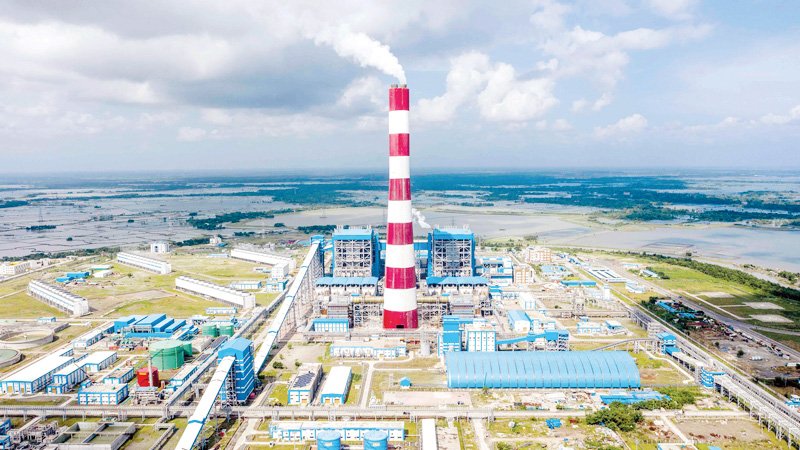
From 2009 to 2024, the now-ousted Awami League government managed and developed the power and energy sector under a particular set of policies and strategies. However, it must be acknowledged that development during these 16 years was not well-coordinated. In particular, the energy sector—more precisely, the supply of primary fuel—was not planned in tandem with expanding power generation capacity.
Although domestic coal and gas exploration and utilization were widely discussed during this period, no effective strategies were adopted or implemented to achieve these goals. Despite having the opportunity to make political decisions regarding coal exploration and extraction, the Awami League government refrained from doing so. Instead, it established coal-fired power plants that relied entirely on imported coal. Similarly, gas-based power plants continued to be built even as gas shortages intensified. Although LNG imports began in 2018, they failed to deliver meaningful relief from the gas deficit.
By the end of 2019, initiatives were taken to revive domestic gas exploration. While the full benefits of these efforts have yet to materialize, work remains ongoing. Meanwhile, LNG imports increased, power imports from India expanded, and coal imports for domestic power plants rose sharply. As a result, import dependence in the power and energy sector climbed from 14 percent in 2018 to 56 percent today.
Another critical issue has been the continuous increase in electricity and fuel prices. Despite repeated price hikes over the past 16 years, the power and gas sectors remain loss-making. The impact of imports on prices has been far greater than anticipated, particularly due to a more than 40 percent depreciation of the taka against the US dollar over the past five years. This significantly raised electricity and gas prices in local currency terms.
Following the COVID-19 period, global energy prices surged sharply. At the same time, the failure to adopt timely austerity measures in the power sector caused outstanding liabilities to rise rapidly. These liabilities continued to accumulate until the fall of the Awami League government, which exited office without settling them.
A major contributor to this financial burden was excess power generation capacity relative to demand. Although the country’s highest-ever power generation stood at 16,477 MW, installed capacity exceeded 26,000 MW at the time and has since increased to around 29,000 MW. Over 15 years of Awami League rule, public and private power plants received a capacity charge totaling BDT 115,000 crore.
According to the report of the White Paper Committee formed after the government’s fall, at least BDT 40,000 crore of the capacity charges paid in the power sector were unnecessary. The report noted that some oil-based power plants never generated more than 5 percent of their installed capacity. It further estimated that at least 10 percent of total investment in the power and energy sector over 16 years involved irregularities, corruption, or waste. The committee recommended that the interim government identify responsibility for these issues with specificity.
The continuation of the Quick Enhancement of Electricity and Energy Supply (Special Act) until the final day of Awami League rule drew intense criticism. Equally controversial was the transfer of tariff-setting authority from BERC to the ministry, effectively weakening the regulator. The most heavily criticized decision, however, was the agreement with Adani to import coal-fired power from India.
Against this backdrop, the interim government assumed responsibility for the power and energy sector. Upon taking office, Chief Adviser Professor Muhammad Yunus appointed Dr. Muhammad Fouzul Kabir Khan as Adviser to the Ministry of Power and Energy. At the time, Dr. Khan was engaged in teaching and research and had previously served as Power Secretary during the military-backed caretaker government.
On his very first day in office, the energy adviser announced to the media that the controversial Special Act would be repealed and that authority over electricity and gas pricing would be returned to BERC. He fulfilled both commitments within a short period. However, the government decided to continue implementing projects that had already been executed or contractually committed under the Special Act.
Toward the end of its tenure, the Awami League government finalized 37 solar power projects with a combined capacity of 3,500 MW and issued Letters of Intent (LoIs) for their implementation. The interim government, disregarding the opinions of various stakeholders, cancelled these LoIs. This decision created a sense of distrust among foreign investors, which continues to persist. Although the policy framework was later amended and new tenders were invited for solar projects, eight proposals have since been finalized with lower tariffs than before. However, questions remain as to whether these projects will ultimately secure financing and be implemented.
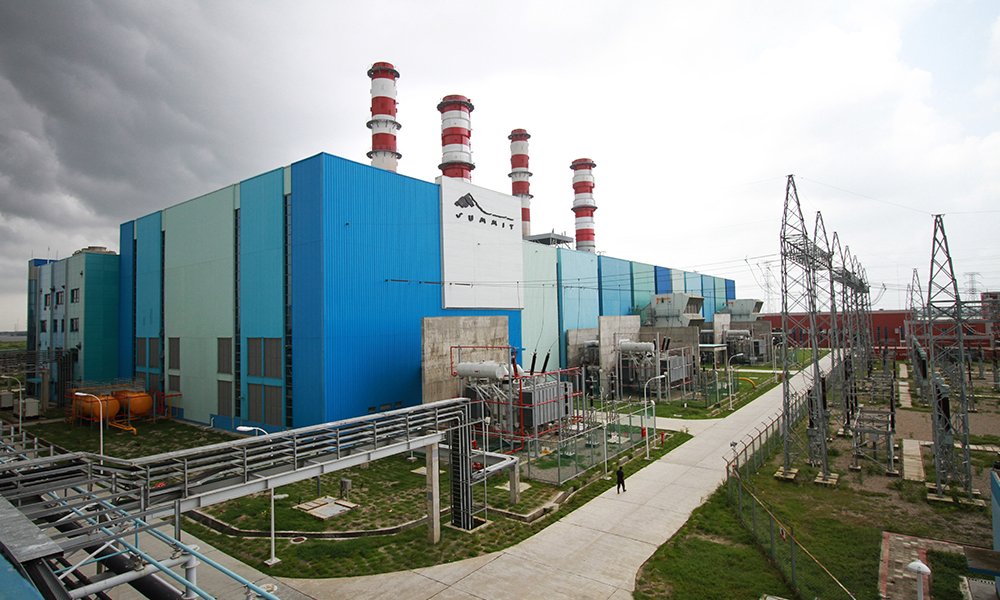
Under the Special Act, contracts for the third FSRU and one LNG supply agreement—all signed with the Summit Group—were cancelled. Summit challenged the government’s decision in court, resulting in a stay order against the cancellation, and the case remains pending. In addition, three LNG import negotiations conducted under the Special Act were cancelled. These included two negotiations for importing RLNG from India and negotiations for establishing an FSRU at Kuakata.
The interim government formed several committees to review power plant contracts and related matters. Based on committee recommendations, the government decided to appoint international consultants to review several contracts, including those with Adani, with a view to possible cancellation. While the government announced plans to initiate negotiations to reduce power tariffs, tariff revisions were carried out only for public sector-owned plants, including the Matarbari coal-fired power plant and eight power plants operated by BR Powergen and RPCL. Although initiatives were later taken to renegotiate tariffs of joint venture companies, progress has stalled due to various complexities. No formal initiative has yet been taken to renegotiate tariffs with Independent Power Producers (IPPs).
At the time the Awami League was removed from power, outstanding dues in the power and energy sectors stood at nearly USD 8.0 billion. Through special initiatives, the interim government reduced this amount to below USD 1 billion. While payments for fuel oil imports, LNG imports, and dues to the International Oil Companies (IOCs) are currently being made on a regular basis, outstanding liabilities in the power sector have again risen to approximately BDT 300 billion. Of this, BDT 100 billion is owed to public sector companies and BDT 200 billion to IPPs. Reducing these arrears remains one of the interim government’s most significant achievements.
Although initiatives taken by the previous government to expand LNG import capacity and implement renewable power projects were cancelled, ongoing offshore and onshore oil and gas exploration tenders, as well as domestically funded exploration projects, were continued. However, on 10 December last year, no company submitted bids for offshore exploration in the Bay of Bengal. Subsequently, Petrobangla updated both the offshore and onshore Production Sharing Contracts (PSCs) based on advice from consulting firms and submitted them to the ministry for approval. Recently, the Energy Division formed a committee headed by Professor Dr. M. Tamim, Vice-Chancellor of Independent University, Bangladesh, to review the two PSCs. The committee has been asked to submit its report by 15 January.
The previous government’s 50-well and 100-well drilling programs have been continued. However, the 50-well program was delayed due to the cancellation of selection for several contractors selected under the Special Act. Once completed, this program is expected to increase domestic gas production capacity by 618 MMCFD. To ensure timely completion, BAPEX and contractors engaged by Petrobangla’s companies are working in parallel. The plan was later revised to include 50 wells, including 18 exploration wells, with an expected production increase of 648 MMCFD if targets are met.
So far, 19 wells have been completed under this program. According to Petrobangla, this has increased domestic gas production capacity by 210 MMCFD, though only 90 MMCFD has been connected to the national gas grid due to isolation constraints. Drilling of seven additional wells under the 50-well plan is ongoing and expected to be completed by January. Of the remaining 23 wells, seven will be drilled by BAPEX and 16 by contractors. Under the 100-well program, which includes 52 exploration wells, project approval has been granted on a priority basis for 20 wells, with drilling scheduled to begin in July 2026. The entire program is expected to be completed by 2030.
Toward the end of its tenure, the government also undertook a project to construct a third gas transmission pipeline from Moheshkhali to the LNG growth center. With an investment of BDT 243.2 billion, the 46-inch pipeline from Moheshkhali to Bakhrabad is expected to take five years to complete. Without this pipeline, even if the fourth FSRU is installed and the land-based LNG terminal at Matarbari is completed, LNG cannot be transported to the national grid.
In the last fiscal year, the government provided approximately BDT 70,000 crore in subsidies, including BDT 62,000 crore for the power sector alone. Although the subsidy allocation has been reduced in the current budget, there are doubts about whether this reduction can be sustained. Consequently, the biggest challenge for the next government will be to reduce subsidies without increasing gas and electricity prices. At the same time, pressure from development partners is increasing to reduce subsidies and make power and energy pricing more market-based.
Although the interim government succeeded in reducing arrears in the power and energy sectors, outstanding dues have once again begun to rise. Once the elected government assumes office, it must urgently settle these arrears. Failure to do so will make it impossible to restore investor confidence.
Gas is Bangladesh’s primary source of energy. To keep the economy running, an uninterrupted gas supply must be ensured through a combination of domestic production and imports. At present, gas demand stands at around 4,200 MMCFD, while the maximum supply, including LNG, is only about 2,800 MMCFD. Even if ongoing domestic exploration initiatives prove successful, it will not be possible to maintain the current domestic production of around 1,800 MMCFD in the long term.
Therefore, the new government must take responsibility for ensuring foreign investment alongside domestic exploration efforts and initiate oil and gas exploration in the Chattogram Hill Tracts and the Bay of Bengal. On the other hand, during the Awami League government’s tenure, plans were in place to add at least 1,000 MMCFD of additional LNG import capacity from 2027 onward. However, these initiatives were cancelled by the interim government. Unless the new government reviews these contracts and resumes work or renegotiations, the gas deficit will worsen further.
At the same time, steps must be taken to rapidly implement the fourth FSRU, and efforts to establish a land-based LNG terminal should be accelerated so that it can become operational by 2030. The isolated island of Bhola must be connected to the national gas grid. This is crucial because production from Bibiyana, the country’s largest gas field, is expected to decline to its lowest level by 2030. Connecting Bhola to the grid must therefore be treated as an urgent priority to help address the impending supply gap. Additionally, the long-pending dispute with Niko must be resolved swiftly to obtain a verdict and begin exploration activities in the Chhatak gas field without delay.
Restoring confidence among foreign investors is particularly important to ensure oil and gas exploration and LNG import infrastructure development. Many believe that establishing an Energy Diplomacy Cell under the Ministry of Foreign Affairs would be an effective step toward this goal.
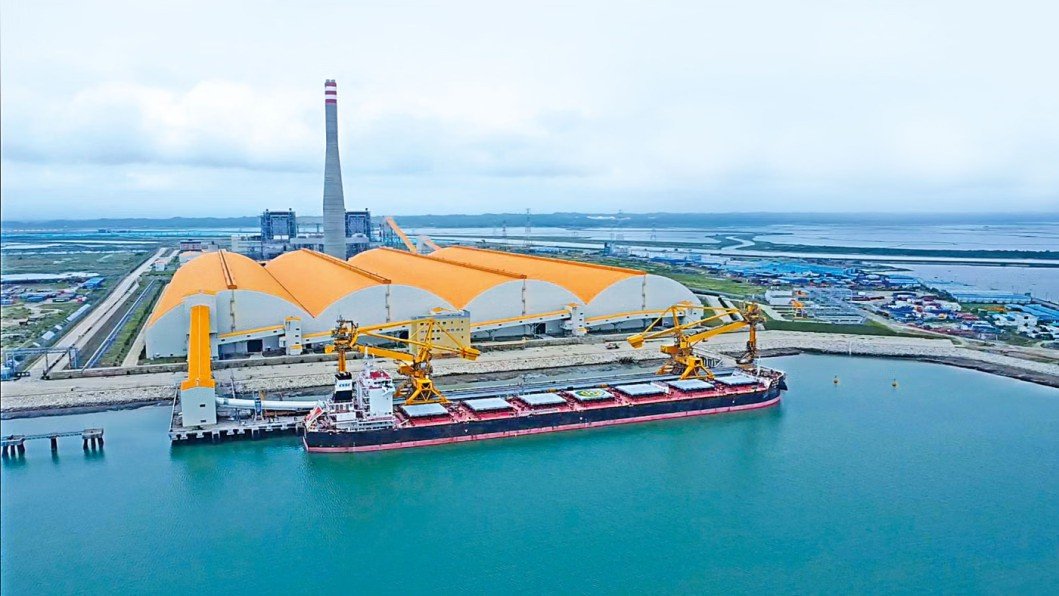
Coal is undoubtedly a controversial energy source. Bangladesh has added around 7,000 MW of power generation capacity, all of which relies on imported coal. This is despite the fact that the country possesses substantial reserves of high-quality coal. Therefore, upon assuming office, the elected government must make a political decision to begin domestic coal extraction. If this is done, the existing proposal for developing the Phulbari coal mine could be evaluated by neutral experts and implemented, enabling coal supply from the mine within three years. Decisions regarding other coal fields should then be taken in phases.
However, securing investment for coal exploration and development remains a major challenge at present. As a result, the government must initiate partnership arrangements with companies. Experts believe that if coal-based power plants can be operated using domestically extracted coal, power generation costs could be reduced by 30–40 percent.
The interim government has finalized the National Renewable Energy Policy 2025, which sets targets of sourcing 20 percent of power generation capacity from renewables by 2030 and 30 percent by 2040. However, the existing policy framework and strategies for renewable energy development must be comprehensively restructured to make them investment-friendly. There is no alternative to adopting targeted strategies to attract both domestic and foreign investment to ensure sectoral growth.
The greatest challenge for the elected government will be restoring good governance in the power and energy sector. The primary objective must be to build a corruption-free, transparent, and people-oriented sector. Investment security must be ensured for investors regardless of political considerations. Public sector companies must be freed from excessive bureaucracy and subjected to effective reforms. To this end, BERC must be further empowered to ensure accountability at every stage—from project approval to implementation.
In conclusion, alongside preparing for elections, the country’s major political parties must finalize their power and energy sector plans and implementation strategies, and highlight their key commitments in their election manifestos. Once elected and in government, work on these plans must begin immediately. Institutions must be strengthened with skilled and competent human resources. Currently, around 56 percent of Bangladesh’s power and energy supply is import-dependent. While it may not be possible to eliminate this dependence, it must be curtailed.
This requires coordinated action on domestic gas exploration, coal development, and renewable energy expansion. At the same time, a climate of confidence must be created to attract both capable local investors and foreign investment. Successful regional examples should be followed. Above all, the country’s largest project—the Rooppur Nuclear Power Plant—must be given the highest state priority to bring it into commercial operation as quickly as possible. Nuclear power is a non-carbon energy source, and based on the experience of Rooppur, new initiatives should be taken to expand nuclear power capacity.
As the country moves toward elections, political parties must clearly articulate their power and energy strategies. Once elected, implementation must begin immediately. Import dependence, now at 56 percent, must be reduced through coordinated action on gas, coal, renewables, and nuclear power.
Above all, the Rooppur Nuclear Power Plant must be commissioned without delay and treated as a national priority. Failure to act decisively from day one will stall industrial growth, weaken employment, and undermine economic stability. The power and energy sector must therefore stand above all other reforms, guided by sound policy, political courage, and institutional discipline.
Download Cover As PDF/userfiles/EP_23_14_Cover(1).pdf
Mollah Amzad Hossain, Editor, Energy & Power and Afroza Akther Pervin, Managing Editor, Energy & Power