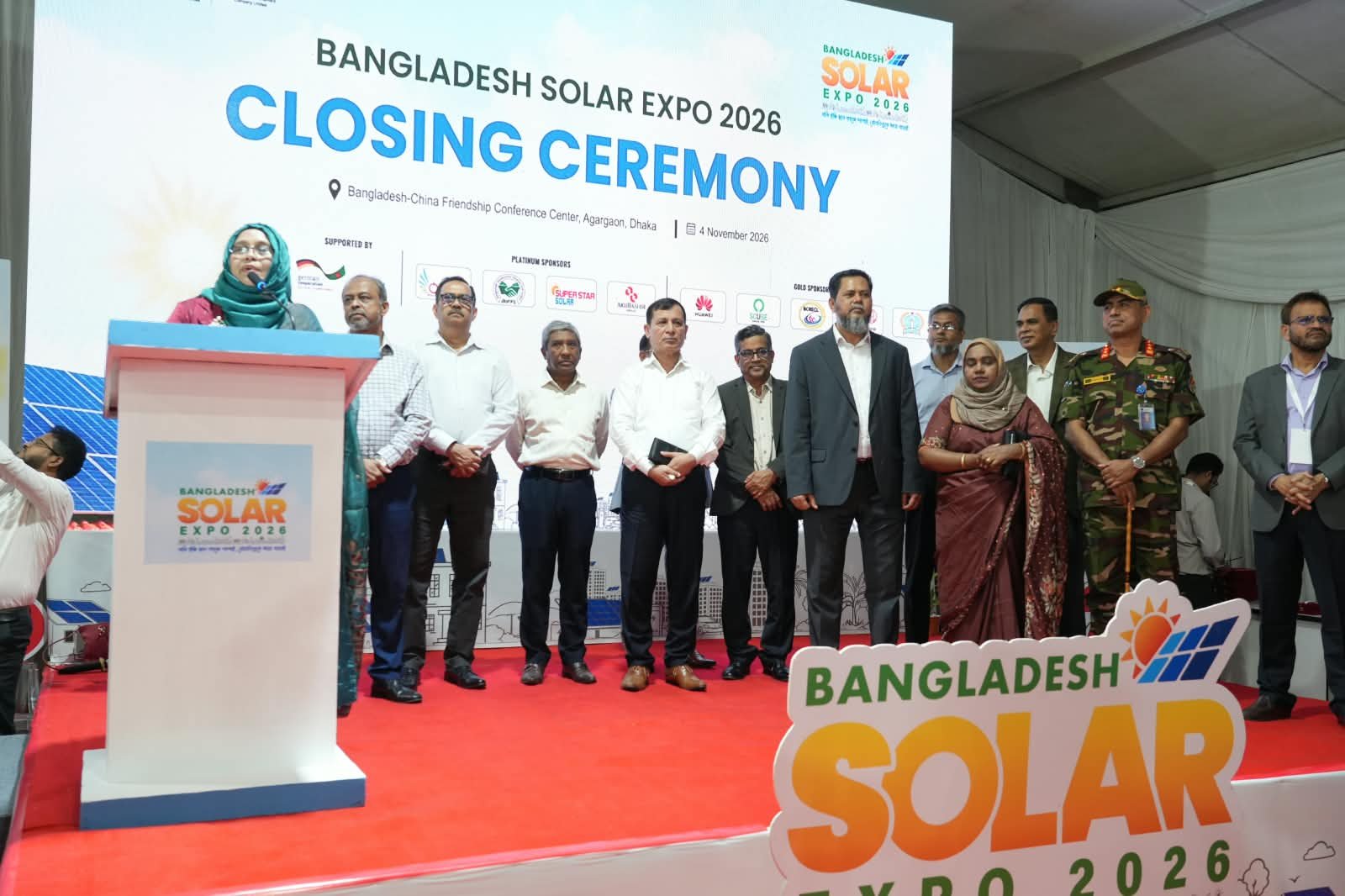
DHAKA, Nov 4, 2026 — Bangladesh is prioritizing accessible financing alongside policy support and incentives to accelerate solar power development and reduce dependence on imported fossil fuels, Power Division Secretary Mirana Mahrook said at the closing of the Bangladesh Solar Expo 2026.
The two-day expo was held on November 3–4 at the Bangladesh-China Friendship Conference Centre. Speaking at a seminar on the final day, Mahrook said the government was committed to removing barriers to solar expansion and would review recommendations made by participants.
The seminars, held under the theme “Policy, People and Capital for Bangladesh’s Solar Revolution,” were jointly organized by the Power Division and Infrastructure Development Company Limited (IDCOL). Policymakers, regulators, financiers, industry leaders, service providers and development partners discussed ways to expand solar power across the country.
Recommendations included effective implementation of the National Renewable Energy Development Strategy 2026–2030, maintaining tax and duty incentives for solar equipment, ensuring quality-certified imports and strengthening grid readiness through battery storage and easier net metering.
Participants also called for structural audits and reliable inventories of public buildings to accelerate rooftop solar installations, alongside long-term payment guarantees to attract private investment under the OPEX model. They stressed transparent procurement, improved technical skills, stronger after-sales services and greater private-sector participation in local manufacturing of solar panels, batteries and inverters.
On financing, discussions highlighted concessional loans, local and foreign investment, green bonds, carbon-credit revenue, easier collateral requirements and measures to manage foreign-exchange risks.
Mahrook thanked participants for their response to the expo and urged stakeholders to build on its momentum to advance solar power in Bangladesh.
The expo featured more than 80 local and international companies and showcased technologies for utility-scale solar, rooftop installations, solar irrigation and energy storage. It aimed to strengthen cooperation among government agencies, investors, technology providers and private-sector entrepreneurs to expand solar power and improve long-term energy security.