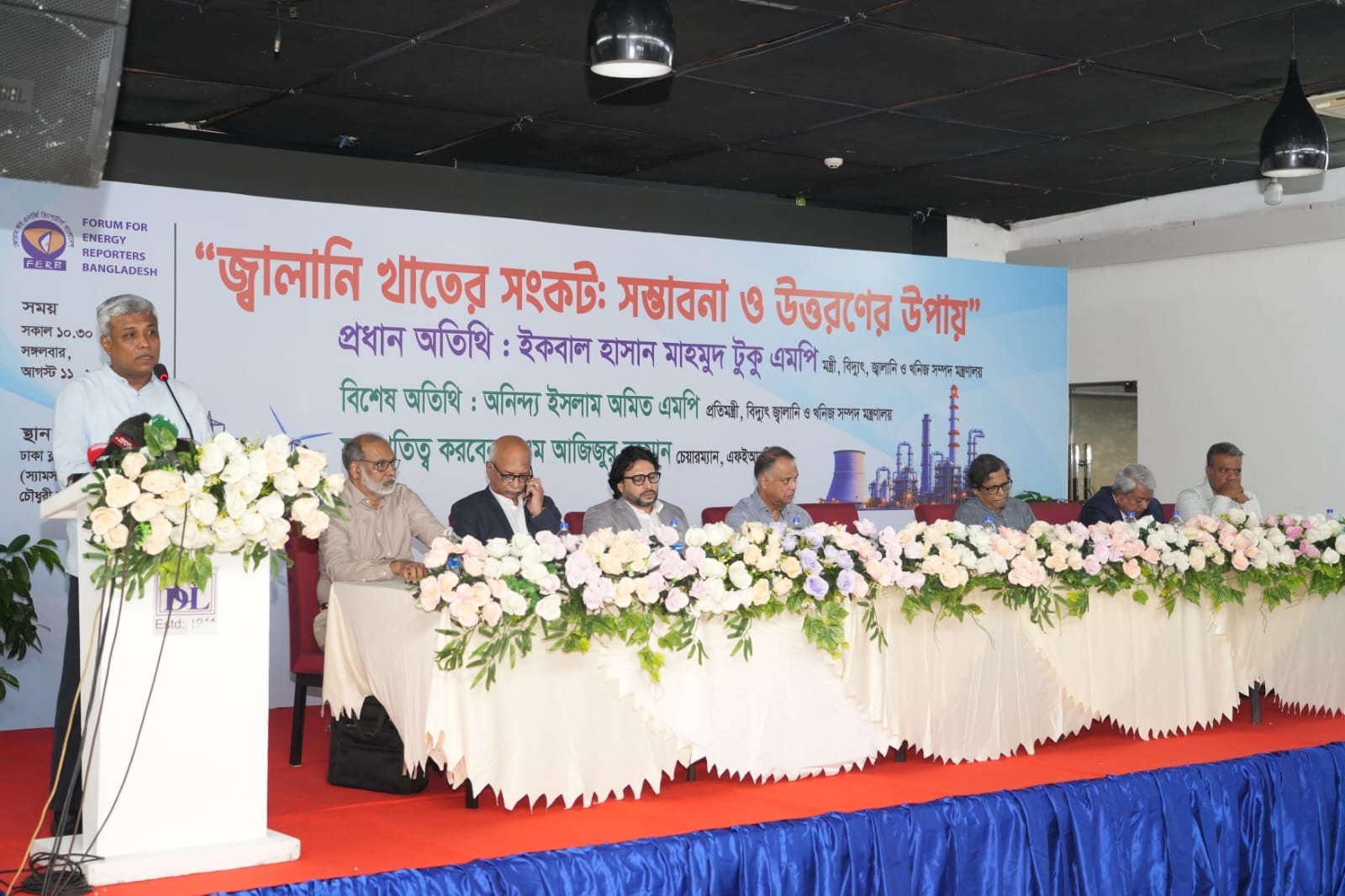
DHAKA, Aug 11, 2026: Bangladesh has called for a coordinated approach to address the ongoing energy crisis, combining higher LNG imports in the short term with accelerated domestic gas exploration and production, expansion of renewable energy and investment in energy infrastructure.
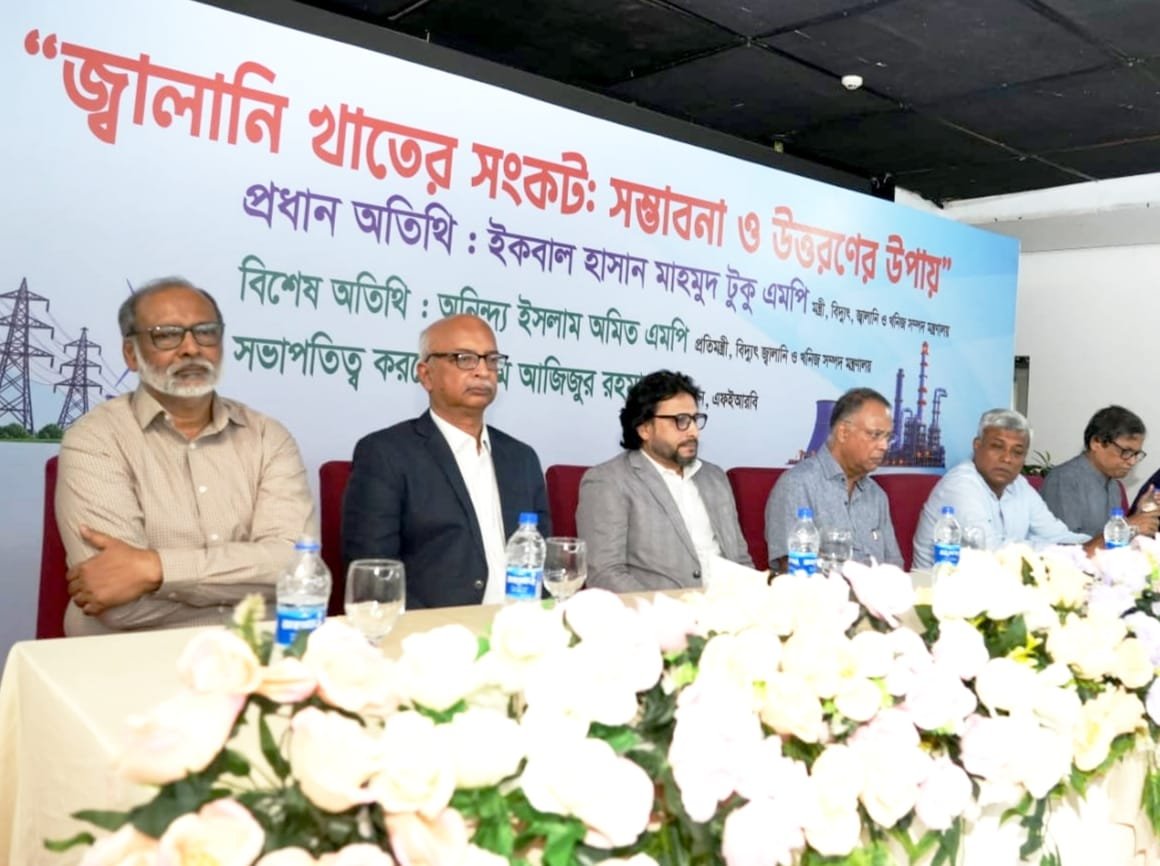
The call came at a seminar titled “Energy Sector Crisis: Prospects and Ways Forward”, organized by the Forum for Energy Reporters Bangladesh (FERB) at Dhaka Club on Tuesday.
Power, Energy and Mineral Resources Minister Iqbal Hasan Mahmud said the government is prioritizing rooftop solar and plans to develop 10,000 MW of solar power, supported by investment-friendly policies and incentives, including a five-year tax holiday.
He said private investment would be encouraged to develop rooftop solar projects across the country under cluster-based and OPEX models. The government is also seeking greater private-sector participation in fuel import and marketing.
On gas exploration, the minister said Bangladesh is moving ahead with offshore oil and gas bidding and plans to engage major international companies during a visit to Houston. He also expressed optimism about cooperation with Malaysia’s Petronas in developing gas resources in Bhola.
State Minister for Power, Energy and Mineral Resources Anindya Islam Amit said Bangladesh has around 30,000 MW of power-generation capacity, but fuel shortages are preventing many plants from operating at full capacity.
He said domestic gas production is declining by around 150 MMCFD annually, while LNG imports cannot be increased overnight because of infrastructure constraints. The government is therefore pursuing additional FSRUs and a land-based LNG terminal at Matarbari.
The government is also preparing to add around 10,000MW of renewable power over the next four and a half years, with rooftop solar expected to account for 40–60% of the capacity.
Presenting the keynote paper, energy expert and former BUET professor Dr Ijaz Hossain said LNG imports and additional FSRUs could provide short-term relief but would not offer a sustainable solution amid Bangladesh’s foreign-exchange constraints. He called for accelerated domestic exploration to maintain gas production at around 2,000 MMCFD, alongside greater deployment of solar power and battery storage.
Energy expert and Independent University Bangladesh Vice Chancellor Professor Dr. M. Tamim Professor M. Tamim said there is no single immediate solution to the crisis. He recommended increasing domestic gas production, importing fuel when necessary, maximizing available coal-fired generation and adding 2,000–3,000MW of solar power rapidly.
He also called for a review of the BAPEX-dependent exploration strategy and greater involvement of international companies to bring advanced technology, expertise and investment into exploration and development of existing fields.
Energy adviser to Consumers Association of Bangladesh (CAB) Shamsul Alam stressed the need for rational energy pricing, greater domestic capacity and transparent investment and power-generation benchmarks.
East Coast Group Chairman Azam J. Chowdhury called for diversification of the energy mix by combining LNG, oil and gas and renewable energy, while expanding private-sector participation. He proposed developing a large land-based LNG terminal at Matarbari, potentially positioning the area as a regional energy hub.
Bangladesh Independent Power Producers Association (BIPPA) President David Hasnat said gas shortages are currently preventing around 7,000MW of power generation. He called for completing a third FSRU within two years and developing a land-based LNG terminal as a long-term solution.
Speakers agreed that Bangladesh needs a balanced energy strategy combining immediate LNG supply, accelerated domestic exploration, renewable energy expansion, infrastructure development, rational pricing and stronger public-private cooperation to improve energy security and support industrial growth.