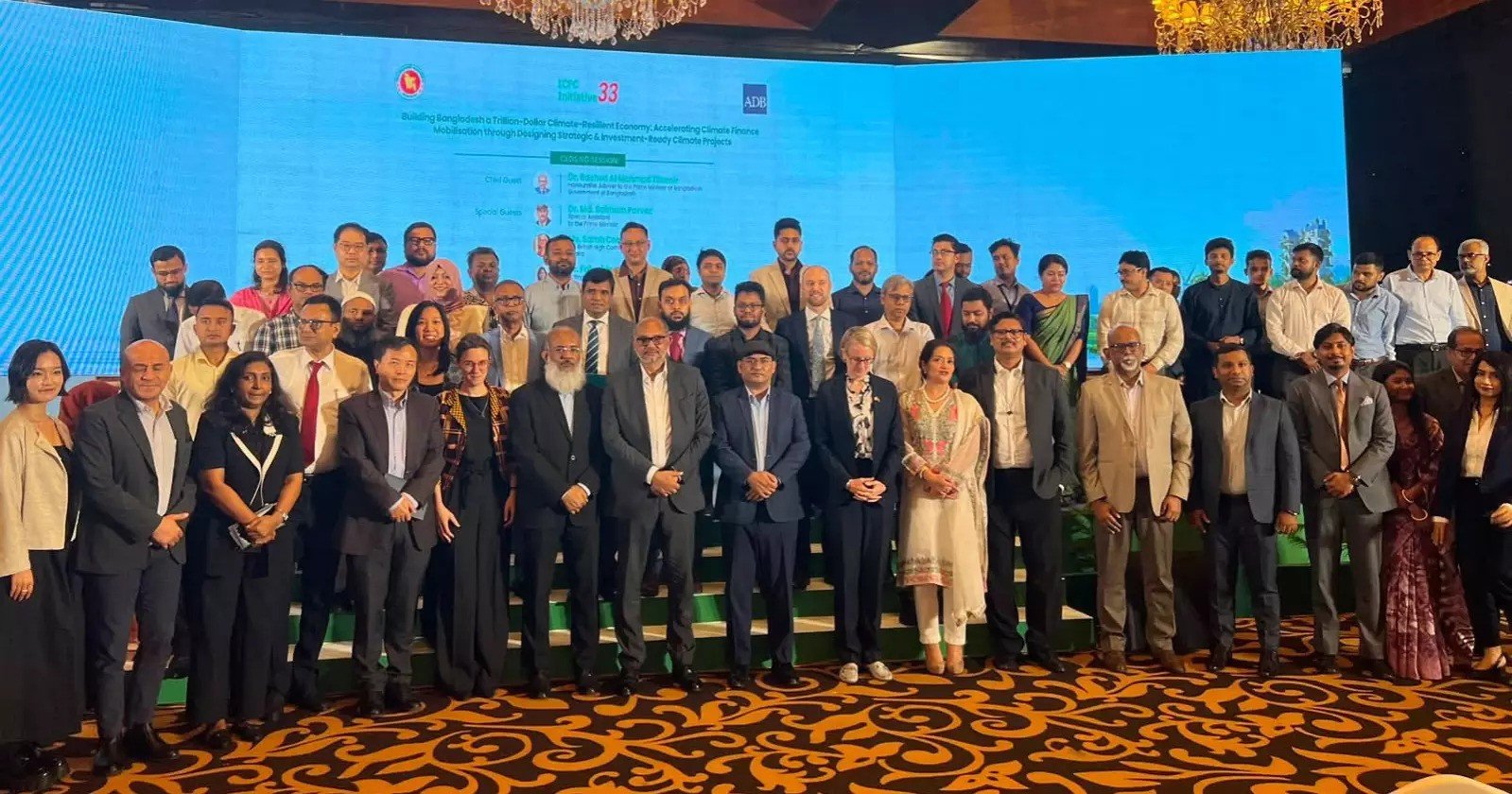
DHAKA, August 7, 2026: Bangladesh is stepping up efforts to mobilise global climate finance by strengthening climate literacy, developing investment-ready projects and expanding partnerships with international financial institutions, experts said at a high-level policy dialogue in Dhaka.
Participants stressed that climate finance should not be measured solely by the amount of money mobilised. Accessibility, transparency, accountability and the extent to which funds reach climate-vulnerable communities are equally important.
The dialogue, titled “Building Bangladesh as a Trillion-Dollar Climate-Resilient Economy: Accelerating Climate Finance Mobilisation Through Strategic and Investment-Ready Climate Project Designs,” was organised by the International Climate Finance Cell (ICFC) of the Economic Relations Division (ERD) under the Bangladesh Climate Development Partnership, with technical support from the Asian Development Bank (ADB).
Experts, policymakers, development partners, financial institutions, academics and private-sector representatives said limited understanding of climate science, financing mechanisms and project preparation remains a major barrier to accessing international climate funds.
Prime Minister’s Adviser on Finance and Planning Dr Rashed Al Mahmud Titumir called for stronger alignment between Bangladesh’s development strategies and global commitments, including the Paris Agreement and the Kunming-Montreal Global Biodiversity Framework. He also urged greater mobilisation of private capital and called for simpler procedures for accessing international climate funds.
AKM Sohel, chief of the UN Wing at ERD, said climate literacy provides a vital link between climate realities and financial feasibility. He stressed the need to develop projects capable of meeting the requirements of international financing mechanisms, including the Green Climate Fund (GCF).
ERD Secretary Md Shahriar Kader Siddiky said Bangladesh has historically faced difficulties in securing adequate international climate finance despite being highly vulnerable to climate change. He emphasised stronger national ownership, institutional capacity, innovative financing and greater private-sector participation.
ADB Country Director Qingfeng Zhang reaffirmed the bank’s commitment to supporting Bangladesh and stressed the importance of developing scalable and financially viable projects capable of attracting international resources.
Speakers also highlighted the need for a just transition, saying climate investments should protect livelihoods, create green jobs and ensure that women, young people, workers and vulnerable communities benefit from the transition to a low-carbon and climate-resilient economy.
The dialogue concluded with a renewed commitment to strengthening climate governance, improving access to global climate finance and accelerating investments that can deliver long-term resilience and sustainable development in Bangladesh.