The Bangladesh Power Development Board (BPDB) has proposed raising wholesale electricity tariffs by Tk 1.20 to Tk 1.50 per unit, a move that implies a 17 percent to 21 percent hike over existing rates. Report UNB
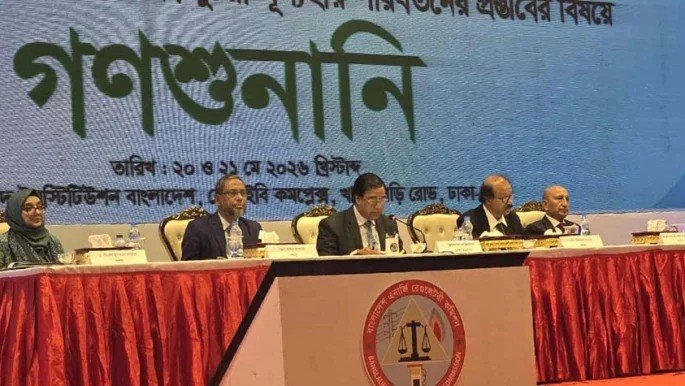
The proposal was formally placed on Wednesday during a public hearing organized by the Bangladesh Energy Regulatory Commission (BERC) at the Krishibid Institution Bangladesh (KIB) auditorium in the capital.
The initiative triggered fierce opposition from an array of stakeholders, including political figures, business leaders, and consumer rights organizations, who warned that the hike will severely impact an already struggling economy.
Defending the proposal, BPDB Chairman Engineer Mohammad Rezaul Karim revealed that the power sector is reeling from massive financial pressure.
He estimated a staggering deficit of Tk 62,000 crore for the current fiscal year, which is projected to climb to Tk 65,000 crore in the next year.
Rezaul Karim warned that the failure to adjust the tariffs will expose the entire sector to "serious risk."
He pointed out that electricity prices were last revised in February 2024. Since then, the costs of gas, coal, and liquid fuels have risen.
Furthermore, because both public and private power producers frequently clear fuel bills in US dollars, the sharp depreciation of the Bangladeshi Taka against the dollar has escalated domestic generation costs.
Dismissing claims that Bangladesh imports 70 percent of its electricity, the BPDB Chairman clarified that only 15 to 16 percent is currently imported from India, with the rest generated domestically – though he admitted local production relies heavily on imported fuel.
He emphasized that the proposed hike is not meant to yield profits but to partially alleviate the government’s immense subsidy burden.
Opposing the move, Advocate Humayun Kabir Bhuiyan, General Secretary of the Consumers Association of Bangladesh (CAB), argued that the timing is entirely wrong. "It will further burden marginal consumers who are already under significant stress," he said.
Other consumer rights activists alleged a lack of transparency and accountability within BERC, claiming that inefficiencies and power theft are routinely passed on to the public under the guise of "system losses."
Prof Dr Syed Miznur Rahman of Daffodil University criticized the process, alleging that many irregularities are executed under legal cover and that BERC’s public hearings have become a mere "eyewash" serving vested interests.
Representing the industrial sector, Mohammad Jamal Uddin Mia, Director of the Bangladesh Knitwear Manufacturers and Exporters Association (BKMEA), termed the tariff-hike proposal "a final blow to an already struggling sector."
He noted that Bangladesh’s export sector is facing a severe downturn, losing its competitive edge in international markets where it once comfortably held the second position behind China.
Ruhin Hossain Prince, former General Secretary of the Communist Party of Bangladesh (CPB), echoed these concerns, stating that higher power tariffs will spike industrial production costs, resulting in severe macroeconomic consequences. He called for the immediate scrapping of the hearing.
Addressing the concerns, BERC Chairman Jalal Ahmed acknowledged that a major reason behind Bangladesh's inflated electricity costs is excess installed generation capacity, which currently sits far above the ideal 20 to 25 percent cushion over actual demand.
He noted that ensuring an uninterrupted power supply could phase out nearly 6,000 MW of inefficient, captive power generation units.
Jalal Ahmed stressed that conventional power generation models must change in step with the global transition toward green energy.
Highlighting international benchmarks, he noted that renewable energy accounts for nearly half of the European Union's electricity, while solar and wind power heavily support grid systems in India and Pakistan.
"If Bangladesh can move further towards solar power, with BPDB playing a supportive role, electricity production costs will fall in the future," Ahmed said, adding that this shift would ultimately shield consumers from persistent financial pressure.
BERC is scheduled to hold another public hearing on Thursday regarding proposed electricity tariff hikes at the retail level before delivering its final verdict.