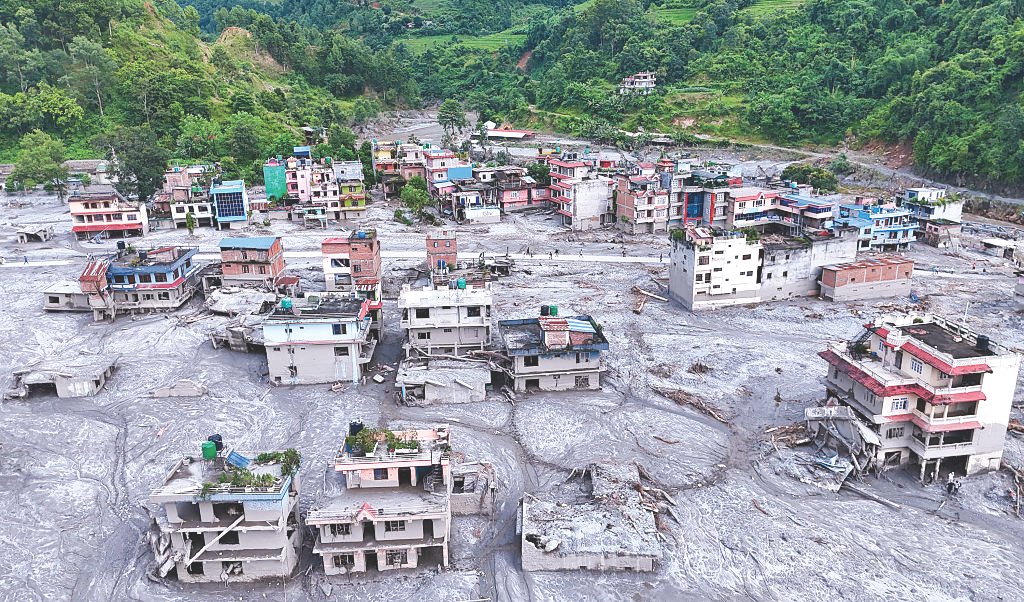
Climate change contributed to the devastating disaster along the Nepal-Tibet border, according to a new analysis by World Weather Attribution, prompting calls for wealthy nations to urgently provide funding for loss and damage.
The study found that decades of warming driven primarily by fossil-fuel use have contributed to glacier retreat and permafrost thaw, weakening Himalayan mountain slopes. Record-high local temperatures in July and August also likely contributed to the collapse.
Climate campaign group 350.org said wealthy countries, including developed nations represented on the board of the Fund for Responding to Loss and Damage (FRLD), should ensure rapid financial support for recovery and affected communities.
Least Developed Countries have called for an emergency FRLD Board meeting after Nepal formally requested emergency financial assistance following the August 26 disaster. However, the request has not yet been approved.
350.org Head of Networks and Campaigns Savio Carvalho said the Loss and Damage Fund was established for situations such as Nepal’s, urging rich countries to provide climate compensation and support recovery.