The power sector may run into serious challenges this month (April) with the rise of ambient temperature though the power load last month (March) has been successfully managed. The government made various preparations in February to manage the power load of irrigation, during Ramadan, and summer. Major plans are increasing the gas supply for power generation, keeping the private sector plants in operation by paying outstanding bills and managing the power demand. However, the gas supply could not be increased as expected – Summit Energy-owned FSRU was supposed to return to its site and start LNG regasification in March after completing overhauling in Singapore but missed the schedule. As a result, the gas supply for power generation remained limited to 800-900 MMCFD. Bangladesh Power Development Board (BPDB) wants 1,300 MMCFD. EMRD expects that RLNG supply to the gas grid may increase to 1,100-1,150 MMCFD when the country’s two FSRUs start operating simultaneously in early April 2024. The total gas availability in the grid will increase to 3,000-3,100 MMCFD. Petrobangla expects to supply up to 1,300 MMCFD gas for power generation in that situation. BPDB expects to generate up to 6,000MW from their gas-based power plants if the pledged gas supply is made available. They also expect to import power at full capacity from across the border. Coal power plants may also run at full capacity. Taking up to 3,000MW of power from liquid fuel-based plants will make it possible to meet up to 17,500MW peak power demand in 2024 summer. This may make it possible to meet the power demands of April, May, June, July, August, and September. There will be no load shedding this summer, barring exceptions.
However, analysts observed lower demand for power in March and attributed it to frequent spells of rain while the irrigation load did not exceed the limit. There was no power load-shedding in the cities and towns though shopping malls continued businesses till midnight. But the exceptions were witnessed in rural areas, particularly in the greater Mymensingh region where 3-5 hours of load shedding were experienced due to 15-25% less supply than demand. The PGCB-provided information suggests that except for a day the power demand did not exceed 12,000MW. The peak demand reached 13,000MW only for a day in March while it often dropped to 9,000MW.
The Power Division projected the highest peak demand at 17,500MW this year. According to the Power System Master Plan, the peak demand may reach 17,800MW. According to the BPDB, the total installed capacity of grid power now is 26,884MW – gas-based 11,890MW, furnace oil 6,492MW, coal 4,491MW, imports 2,656MW, diesel 626MW, hydro 230MW and grid-connected solar 459MW. No diesel-based power plants are now in operation for higher cost of generation.
Engr. Mizanur Rahman, General Secretary of Bangladesh Energy Society and former Member of BERC observed that summer heat waves usually come in April and September when it becomes extremely difficult to meet the peak demands. But looking at nature, it appears that heat waves may not be that much severe this summer. In that situation, it may not be a problem to meet the 15,000-16,000MW peak demand. Subject to Petrobangla ensuring the promised supply of gas, BPDB may not have to rely too much on liquid fuel-based generation. That will help limit the cost of generation.
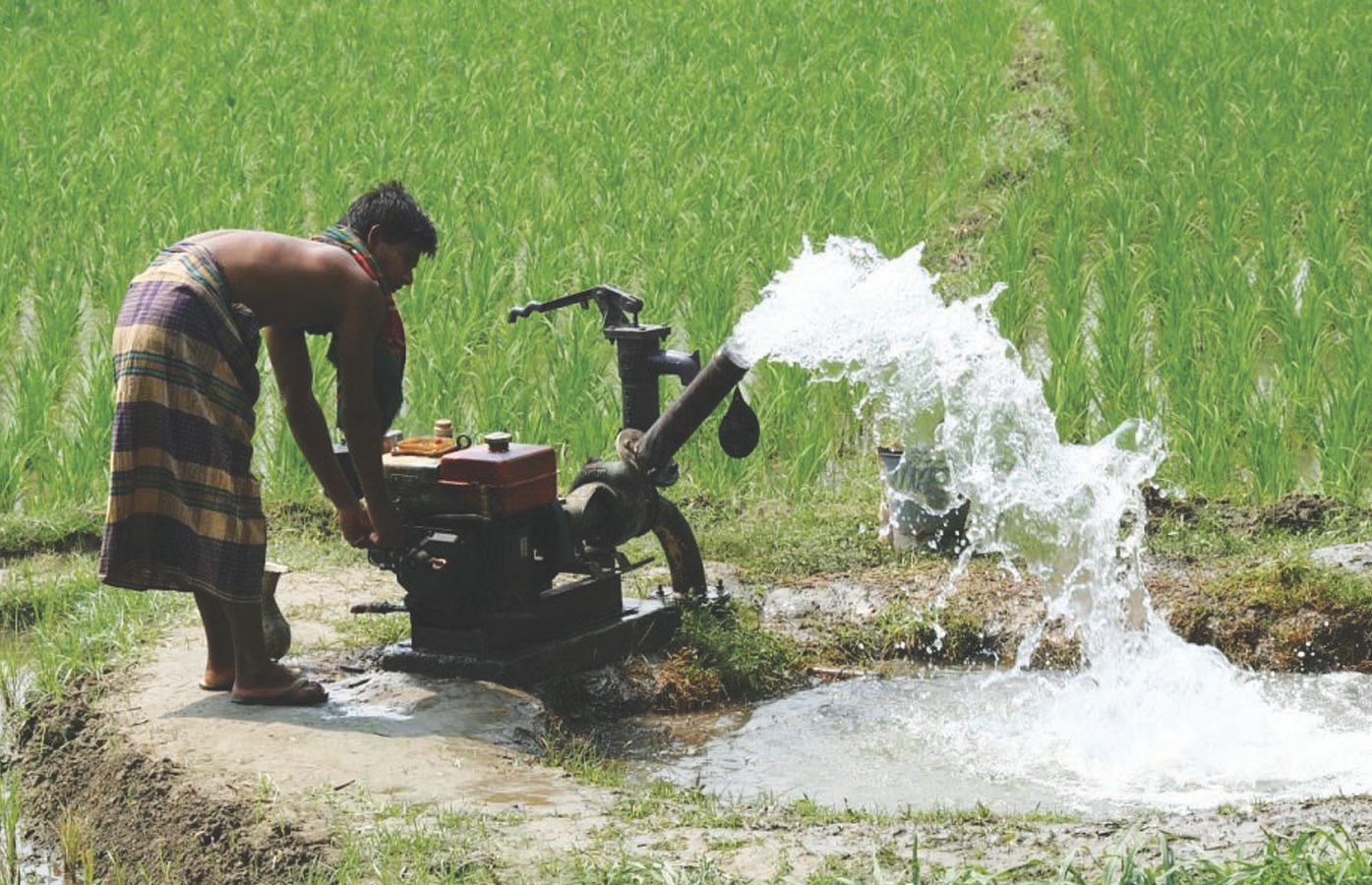
Prof. Dr. Ijaz Hossain, former Dean of BUET and energy analyst, told EP that over the Eid vacation for about 10 days, the power demand will remain much lower. Irrigation load will also start reducing from the end of April. On top of it, nature is also assisting with frequent spells of rain. Hence BPDB may not have to struggle much in meeting the demand in April. Too much reliance on expensive liquid fuel-based generation may also not be required if coal and gas supply for power generation can be ensured at a reasonable level. However, a setback may emerge if there are issues with coal and LNG imports as well as payments against power imports.
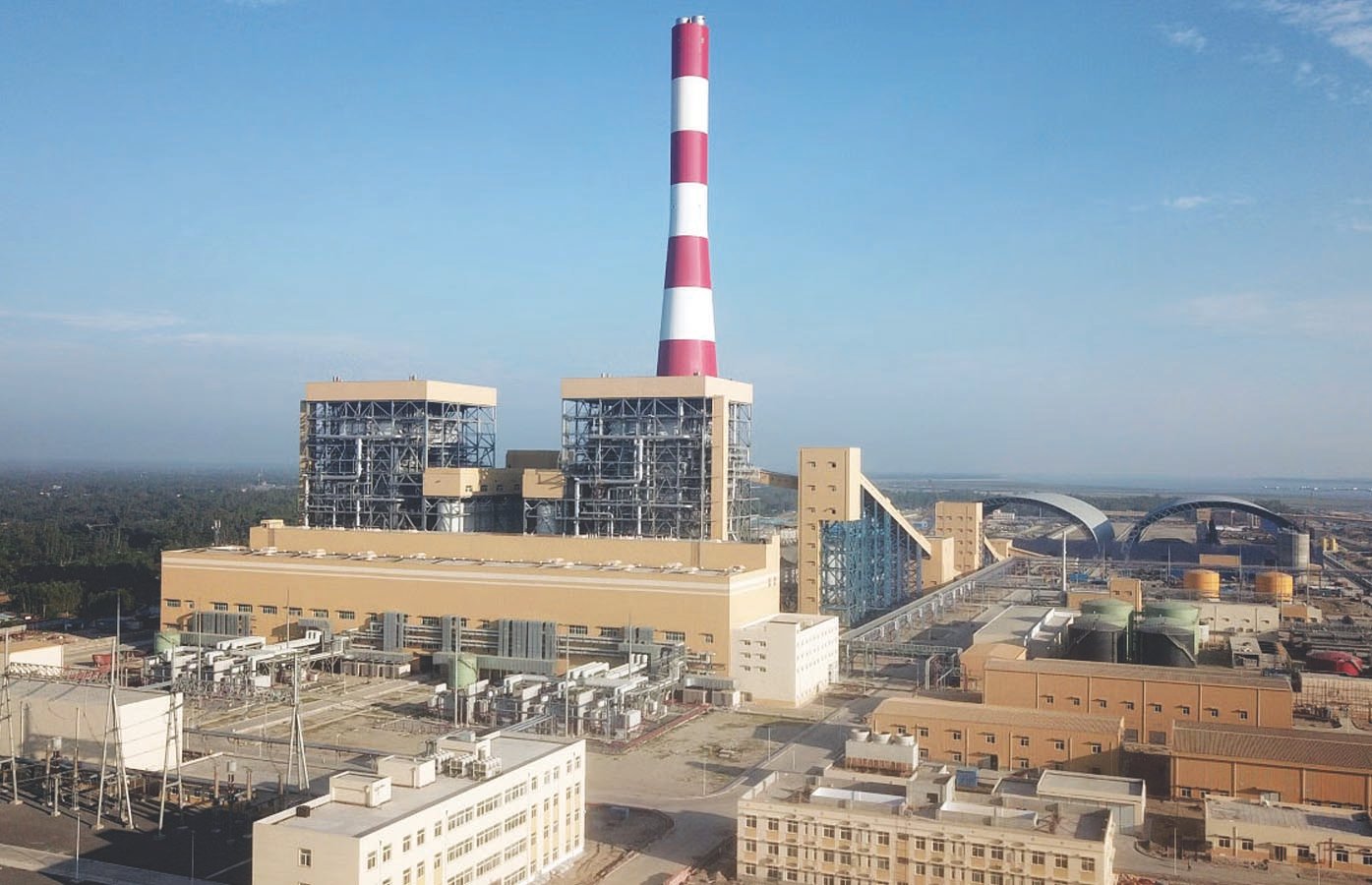
Engr. Md. Mahbubur Rahman, Chairman of BPDB, was confident about meeting the summer demand and explained that 3,000MW liquid fuel-based power capacity would be utilized if necessary. He expected that Petrobangla would be able to supply 1,300 MMMCFD gas for grid power generation. On the other hand, the provision of dollars required for importing coal is under control now. Hence capacity generation from coal power plants, except for technical glitches, will be possible. There should not be any problem with the import of power from India though there exist some issues with payment. However, due to some constraints in the transmission system, at least 1000MW less power than the full-capacity generation of two coal-based power plants at Matarbari and Bashkhali will be evacuated. But by June 2024, this constraint will not be there. Engr. Mahbub also informed that there exist some issues in meeting power demand in the greater Mymensingh region, causing load-shedding. For gas supply shortage, only 70MW generation is possible from the 210MW capacity Sambhuganj power plant. Plans have been made to increase gas supply through rationing. Hence from April, 120MW of power is expected to be available from the Sambhuganj power plant. 150MW capacity BR power plant at Sreepur will start generation in June next. United Group cannot operate two liquid fuel-based power plants at Jamalpur because of fuel import problems. The initiative has been taken to supply fuel by BPC. The BPDB Chairman expects that from June 2024 onwards there should not be any problem with the power supply in the Mymensingh region.
It can be said, on behalf of Private Sector Power Producers, that outstanding bills till September 2023 of most of them have already been paid. But for issues with the opening of the new letters of credit from the banks, the import of furnace oil is being delayed. They informed that they are unable to supply power per demand unless their outstanding bills up to December 2023 are paid. However, BPDB has planned for the supply of furnace oil to several such plants from Bangladesh Petroleum Corporation (BPC). A B M Azad, Chairman of BPC, confirmed this and mentioned that BPC has prepared to supply furnace oil to select power plants as per the recommendation of BPDB.
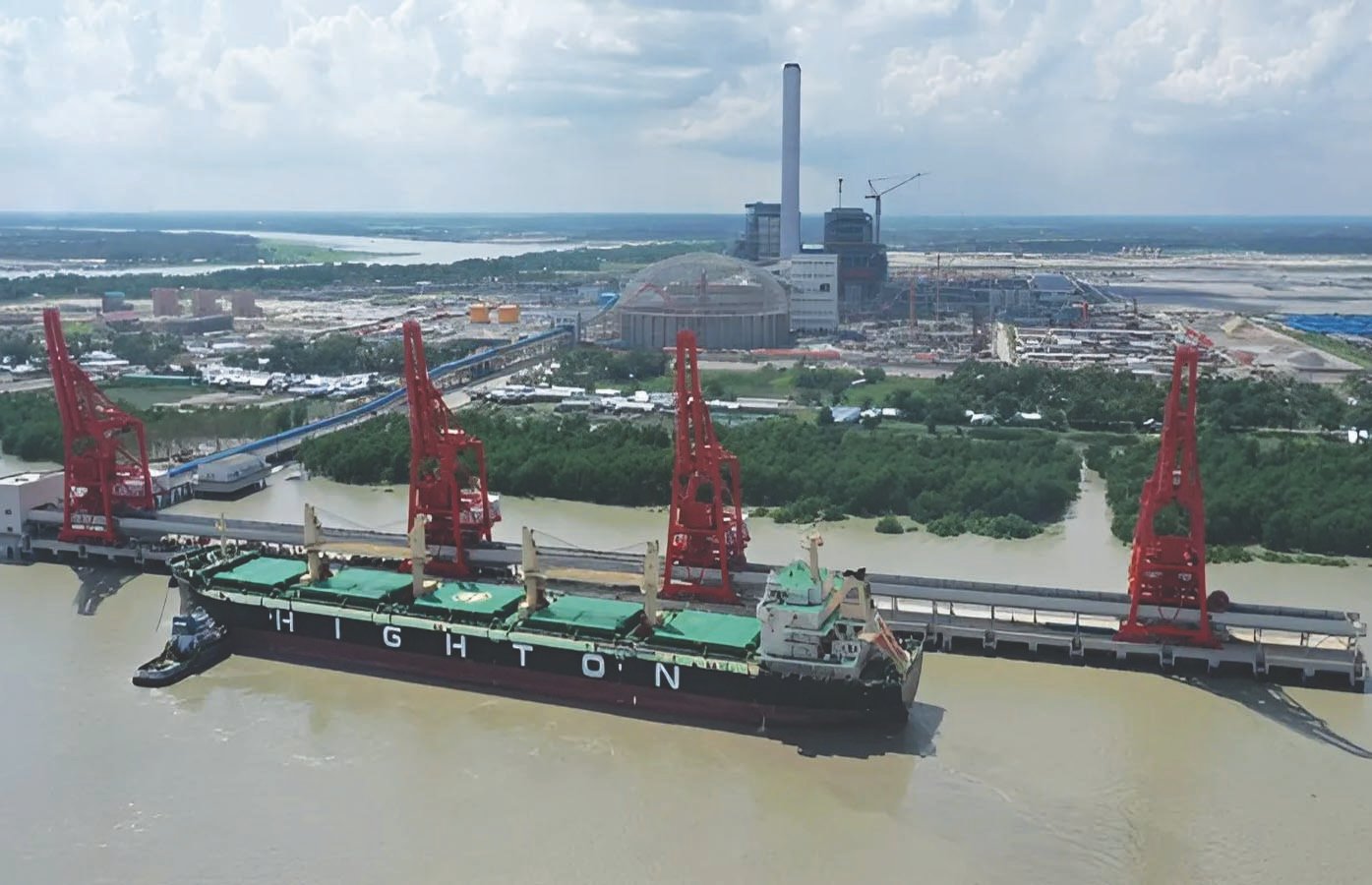
There are some issues with coal-based power plants as well. A US$600 million payment has been accrued for coal imported till February 2024. Preparation has been taken to pay US$80-90 million this month. Around US$160 million is required every month to import coal for the four large, imported coal power plants. Payra power plant could pay for coal till June 2023. The SA Group-owned plant at Bashkhali has not received any payment since it started commercial operation. Payment remains outstanding for the Rampal and Matarbari power plants as well. These payments need to be realized to keep all coal power plants in operation until September. BPDB has no resources for making payments unless they get a special grant or subsidy from the government.
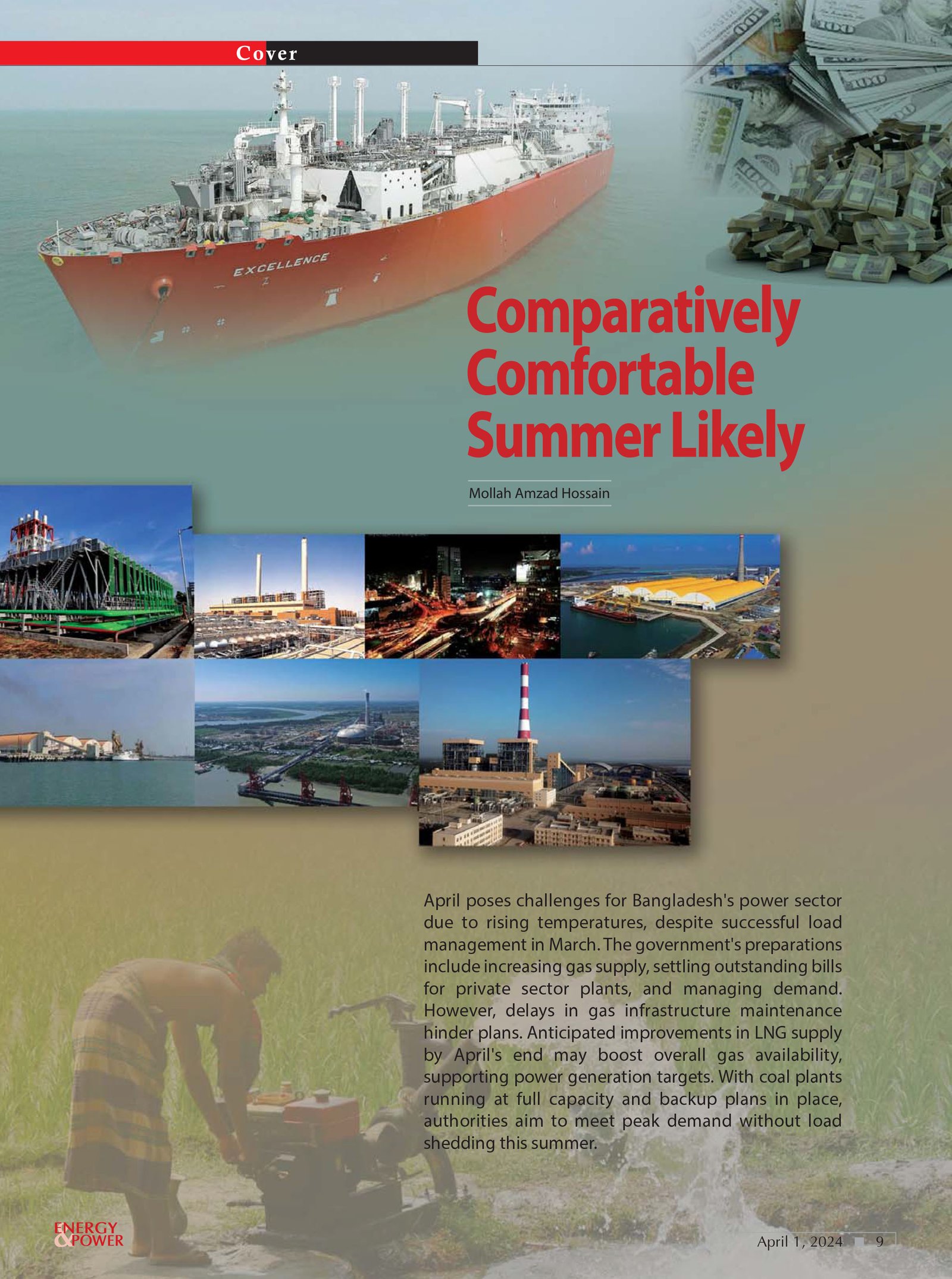
One of the two FSRUs anchored at Maheshkhali offshore is now in operation. The FSRU owned and operated by US Company Excelerate now supplies up to 650 MMCFD of RLNG. With this, the total gas supply now is 2,600-2,650 MMCFD. The other FSRU owned by Summit Energy is expected to return from Singapore by the end of March and resume operation in early April 2024. That will enable the total gas supply to reach 3,000-3,100 MMCD. When asked how much gas for power generation can be dedicated, Md Nurul Alam, Secretary Energy Division expects up to 1,300 MMCFD.
Talking with respective officials in charge of power distribution of DPDC, DESCO, NESCO, WZPDCL, and BPDB about power supply during March, EP came to know that excepting a few isolated cases all utilities could meet the demand. No load-shedding was required. They expect to get supply per demand from PGCB in April. But the exceptions were PBSs of REB. One senior executive of BREB on condition not to be quoted informed EP that their peak demand is 7,000MW. They required massive load-shedding during the summer peak last year to get 20-22% less supply than demand. But till now the deficit is between 10-12%. But the problem in the Mymensingh region is more acute. On 28 March BREB got 5,800 MW supply against the demand of 6,700MW. They had no alternative to resorting to higher load-shedding on the day. He said if nature stays like it remained in March 2024 the load-shedding can be limited to 15%. There are some technical issues related to distribution. These may cause crises as well.
It appears from the above that the supply situation of fuel gas, coal, and furnace oil will dictate how the summer load will be managed. Engr. Mizanur Rahman suggested that we get out of the earlier perception of demand side management. The power system can cater to peak demand. We must emphasize fuel management. Fuel must be preserved during off-peak ensuring this is better utilized during peak hours. He thought that shopping malls should now be kept in business from 3 PM to 10 PM. This may reduce reliance on expensive liquid fuel-based generation to some extent.
However, the question arises as the power and energy sector has been managed in crisis management mode over the past two years. There exists a huge crisis in the dollar and local currency availability. Hence power and energy sectors huff and puff with outstanding payments. The banking sector, though interested in investment in power, has now turned around. The crisis in fuel imports is getting intense. Whatever the power sector earns in trading power is barely enough to meet regular expenses. Hence outstanding payments are accruing. The finance ministry through releasing bonds has mobilized TK1,200 crore to pay outstanding bills. Issuance of bonds is under consideration. The Ministry of Power, Energy and Mineral Resources claims that they have been able to bring outstanding bills within manageable levels. But the reality is far different. Payment of IPPs could be cleared up to September 2023. But huge outstanding bills have accrued from the public sector and joint venture companies – Ashuganj Power Station Company Limited (APSCL), Coal Power Generation Company Bangladesh (CPGCB), Electricity Generation Company Limited (EGCB), NWPGCL, BCPCL, and BIPPL. Some of these companies have failed to pay installments of loans as well.
Experts and analysts apprehend that power supply chain management may turn vulnerable unless the dollar and taka supply crisis can not be successfully confronted within the next few months. There is no doubt that such a crisis did not exist before COVID impacts and the Russia-Ukraine war. Energy Advisor to Prime Minister of Bangladesh Dr Tawfiq E Elahi Chowdhury BB informed that an additional US$14 billion was required to be spent for meeting fuel import bills due to the global fuel market turbulence. He termed it a robbery. The price in the global fuel market is at a reasonable level now. But the dollar stays higher in exchange for Bangladesh Taka. This requires Bangladesh to increase local revenue by adjusting the price of fuel in the domestic market. But we must bear in mind that it will not be fair to transfer the burden on the users for the price situation created by the inefficiency and mismanagement of the sector. On the other hand, the quality supply of electricity and fuel for export-oriented industries that earn foreign exchange must be ensured.
The government must work in cohesion with all relevant stakeholders. The Ministry of Power, Energy and Mineral Resources cannot achieve much on a stand-alone basis. Failure to work together will increase outstanding payments. State-owned enterprises will increasingly lose capacity. Consequently, despite having installed capacity, the power sector may run into a serious crisis.
Download Cover As PDF/userfiles/EP_21_20_Cover.pdf