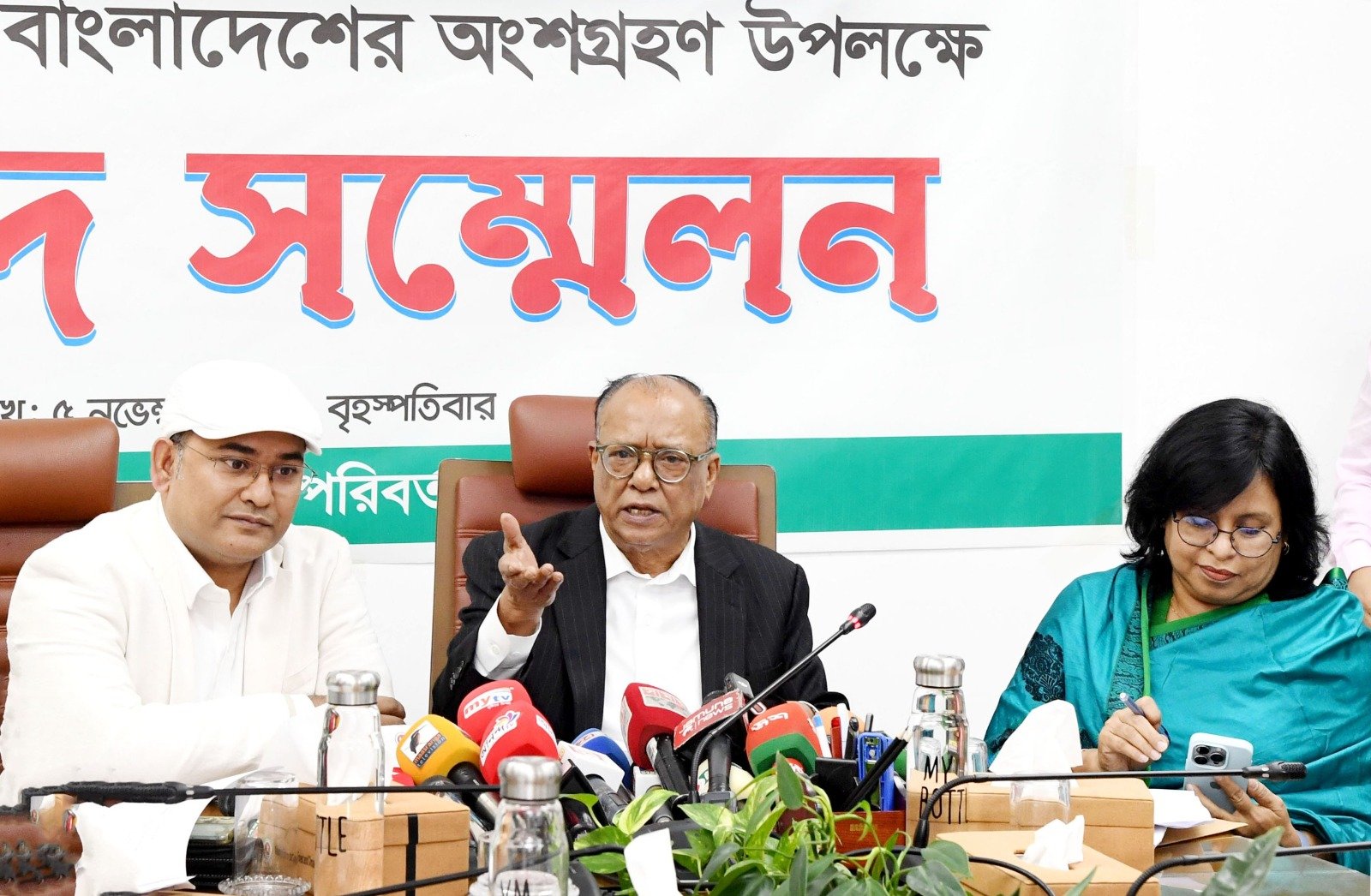
DHAKA, November 5, 2026 — Bangladesh will press for adequate grant-based climate finance and stronger support to address climate-induced loss and damage at the upcoming COP31, Environment, Forest and Climate Change Minister Abdul Awal Mintoo said on Thursday.
The country will call for increased grants for adaptation and loss-and-damage response, without adding to developing nations’ debt burdens, as well as simplified procedures for applying for and accessing climate funds, the minister said.
Speaking at a press briefing at the Secretariat, ahead of the UN climate conference scheduled for November 9–20 in Antalya, Türkiye, Mintoo outlined Bangladesh’s preparations, priorities and expectations. Prime Minister Tarique Rahman is expected to attend the high-level segment at the invitation of the Turkish government, providing an opportunity to raise the concerns of climate-vulnerable communities and Bangladesh’s national priorities at the highest political level.
Mintoo said cyclones, floods, salinity, droughts and heatwaves were increasingly threatening people’s lives, livelihoods and development. Bangladesh would prioritize climate justice, protection of vulnerable communities, and finance and technology support to implement national plans.
On adaptation, Bangladesh will seek funding, technology and capacity-building support to implement its National Adaptation Plan and advance the Global Goal on Adaptation. Priorities include water, food, health and livelihood security in coastal, haor, char and drought-prone areas, along with early-warning systems and locally led adaptation.
The minister called for faster and easier access to grant-based finance from the Loss and Damage Fund, including support for displacement, livelihood losses and other non-economic impacts, in addition to economic damage.
Bangladesh will also advocate science-based and rapid emissions reductions to keep the 1.5°C goal within reach. Mintoo said developed countries must lead, while major emitters should take effective action in line with their responsibilities and capabilities. Developing countries must receive finance and technology support to implement their conditional Nationally Determined Contributions.
The country will seek assistance for greener transitions in agriculture, industry, transport and energy, with emphasis on fair distribution of transition costs and benefits, workers’ rights, skills development, social protection, and decent employment for women and young people.
Renewable energy, energy efficiency, cleaner industry and transport, and affordable access to climate-resilient technologies will remain among Bangladesh’s priorities. The country will also seek greater support for forests, mangroves, wetlands, biodiversity conservation, nature-based solutions and climate initiatives led by women and local communities. Cooperation will be sought to address adverse impacts of climate measures on developing countries’ exports, jobs and competitiveness.
Responding to a question, Prime Minister’s Special Assistant on Environment, Forest and Climate Change Dr Saimum Parvez said Bangladesh’s position had been prepared in consultation with ministries, agencies and climate experts. The delegation will coordinate with the Least Developed Countries group, the G-77 and other climate-vulnerable countries to advance national interests.
Bangladesh expects COP31 to deliver concrete progress on finance and implementation support to protect people’s lives and livelihoods from climate risks, he said.
Parvez said the government was setting up a 100-square-metre pavilion at the conference venue to showcase the country’s climate risks and adaptation experience, NDC 3.0, National Adaptation Plan, climate finance, loss and damage, carbon markets, renewable energy and community-led initiatives. A separate jute pavilion will also be established.
Officials from the ministry, Department of Environment, Forest Department and Bangladesh Climate Change Trust, along with journalists from print, electronic and online media, attended the briefing.