
EP Analysis
NADI, Fiji, Oct 6, 2026: The second day of the Pacific Pre-COP31 process in Fiji and Tuvalu shifted the climate debate from diplomatic commitments to the realities facing frontline communities, with Pacific leaders pressing for urgent action on the 1.5°C target, faster and more accessible climate finance, stronger ocean protection and a transition away from fossil fuels.
The day’s program took senior leaders and representatives from around 30 countries to Tuvalu, where they witnessed first-hand the impacts of sea-level rise and visited climate adaptation and land-reclamation projects. The message was deliberately political: for vulnerable Pacific states, climate change is no longer a future risk but an immediate threat to territory, livelihoods, food security and national survival.
Tuvalu Prime Minister Feleti Teo put the issue of climate finance at the center of the discussion, arguing that countries that contributed very little to global emissions should not be forced to accumulate more debt to protect themselves from climate impacts.
“Why should countries like Tuvalu take on more debt to protect ourselves from a climate crisis we did so little to cause?” Teo asked, calling for faster, simpler and grant-based climate finance. He also described 1.5°C not simply as a Paris Agreement target but as a survival limit for Tuvalu.
His intervention captures one of the central political fault lines likely to emerge at COP31: vulnerable developing countries are increasingly demanding that climate finance move away from loans and complicated access procedures towards predictable, grant-based resources that can reach communities directly.
From “1.5°C” as a target to “1.5°C” as a survival threshold
The second day reinforced the Pacific’s determination to keep the 1.5°C goal at the heart of COP31.
Fiji’s Minister for Information, Environment and Climate Change Lynda Tabuya said the region is entering the Pre-COP with a clear understanding that the world is approaching a dangerous overshoot of 1.5°C. She identified four priorities: keeping 1.5°C within reach, getting climate finance to communities, putting oceans at the center of climate action and strengthening Pacific leadership.
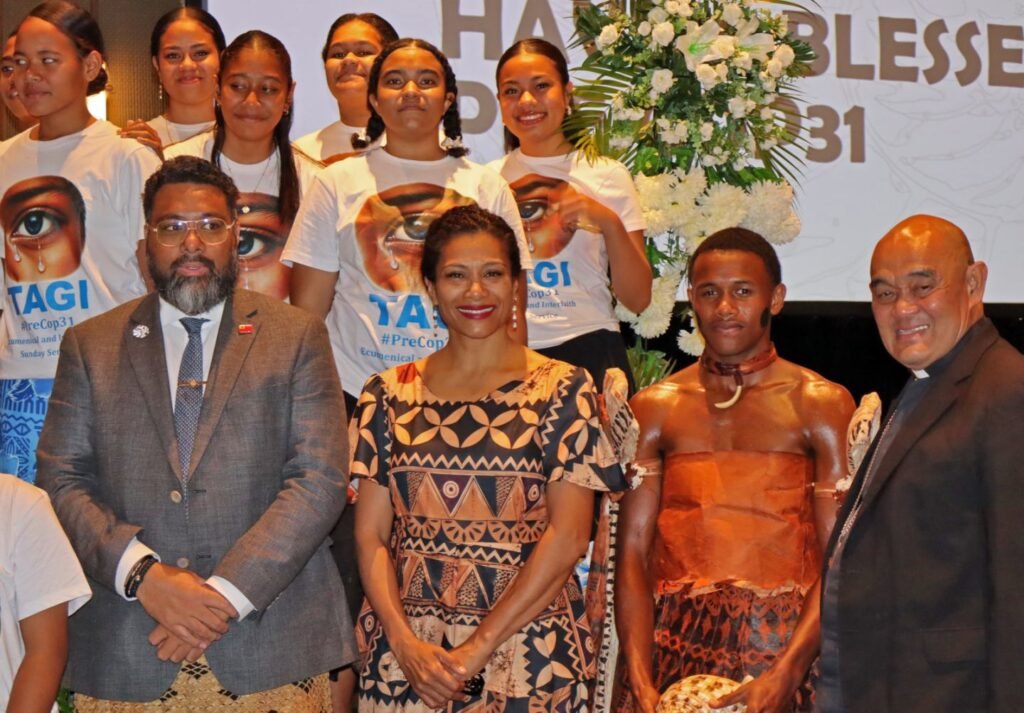
Pacific COP31 Envoy for Oceania Tina Stege of the Marshall Islands warned that ambition alone would not be sufficient.
“The 1.5 goal represents the best chance for safety, security for our Pacific people,” she said, arguing that ambition must be matched by finance for the energy transition, resilience and unavoidable loss and damage.
This is potentially significant for COP31 because it links the temperature target directly with the means of implementation. The Pacific position is effectively that keeping 1.5°C alive cannot be separated from finance, technology, adaptation and loss and damage.
Australia faces a credibility test
Australian Prime Minister Anthony Albanese used the Pre-COP to underline the need to listen to Pacific countries and highlighted the increasingly severe impacts of climate change, including floods, cyclones and extreme heat.
The Australian position, however, also presents a political challenge. Australia is seeking to provide stronger Pacific leadership while remaining a major fossil-fuel exporter. Civil society groups have therefore been demanding that Australia match its diplomatic message with stronger domestic action on fossil fuels.
For COP31, Australia’s role will be particularly important because it is leading the negotiations while Türkiye hosts the formal conference. This creates a credibility test: whether Canberra can convert Pacific demands into negotiating outcomes without allowing differences over fossil fuels, finance and energy security to weaken the process.
Australian Climate Change and Energy Minister Chris Bowen has said the Pacific should have a greater role in the COP31 negotiations, while acknowledging that the final COP decision cannot simply reproduce the position of Pacific ministers.

India calls for balance between adaptation, mitigation and finance
The debate was not limited to the Pacific position. Indian Environment Minister Bhupender Yadav called for equal attention to adaptation, mitigation and the means of implementation, while stressing the principle of Common but Differentiated Responsibilities and Respective Capabilities (CBDR-RC).
“There cannot be a ‘one-size-fits-all’ pathway to climate action,” Yadav said, arguing that local assessments should determine appropriate mitigation and adaptation measures and the resources required.
India’s position could become important in the wider developing-country negotiation because it connects Pacific demands for finance with the broader developing-world argument that climate responsibilities and solutions must reflect different national circumstances.
COP31 Presidency calls for delivery, not promises
COP31 President and Türkiye’s Environment Minister Murat Kurum also reinforced the implementation message emerging from the Pacific.
“We want to remind world leaders that promises do not hold back the sea or shield homes from the fire. Only delivery can save us,” Kurum said.
He pointed to an action agenda covering electrification, zero waste, resilient cities and oceans, backed by finance, and said the Pre-COP would be used to build political support before the negotiations in Antalya.
The statement is important because it indicates that the COP31 Presidency wants to frame Antalya not simply as another negotiating conference, but as a COP focused on implementation.
UNFCCC Executive Secretary Simon Stiell made a similar point, saying countries need to work “faster and smarter” to turn pledges and targets into real outcomes.
Civil society pushes back against a “talking COP”
The strongest pressure on governments is coming from civil society.
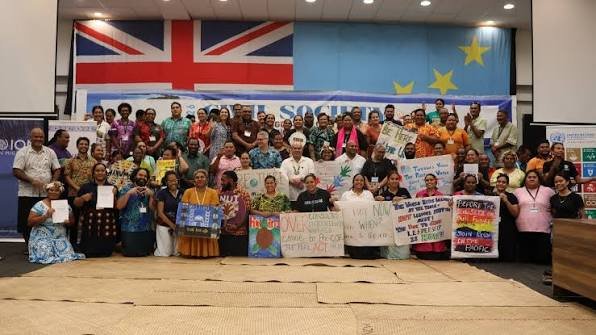
Pacific civil society organizations have presented five “red lines” ahead of the Pre-COP: rejection of false climate solutions; a phase-out of fossil fuels; opposition to new extraction without genuine free, prior and informed consent and independent environmental assessments; protection of the living planet and Pacific rights; and opposition to monetizing non-economic loss and damage. The demands were developed through consultations involving a regional network of more than 290 organizations.
Jacynta Fa’amau of 350.org Pacific said Pacific countries may temporarily exceed the 1.5°C threshold, but governments still have control over how long the world remains above it.
“Those most responsible for this crisis may have been able to ignore us when we weren’t in the room, but now the process has come to our shores and we will make sure they hear us,” she said.
Dr Rufino Varea, Director of the Pacific Islands Climate Action Network, described the five red lines as the mandate of Pacific civil society going into the Pre-COP.
“We need to see that reflected in the agenda, the political signals coming out of PreCOP, and ultimately in the decisions governments take at COP31,” he said.
The Pacific Islands Association of Non-Governmental Organizations (PIANGO) has also called for a stronger civil society role in climate negotiations, disaster planning and community relocation. Its Executive Director Emeline Siale Ilolahia argued that community organizations must be involved before policies are negotiated and should then carry the outcomes back to villages, households, schools and churches.
What emerged from Day Two?
Although the Pre-COP does not itself adopt binding COP decisions, the second day produced several clear political recommendations and signals likely to shape the road to Antalya:
First, 1.5°C must remain the central political benchmark. Pacific countries are resisting any attempt to treat an overshoot as a reason to abandon the target.
Second, climate finance must become more accessible. Vulnerable countries want faster, simpler and predominantly grant-based finance, particularly for adaptation, resilience and loss and damage.
Third, finance and the energy transition must move together. The Pacific position is increasingly linking the survival of the 1.5°C goal with accelerated renewable energy deployment and a managed transition away from fossil fuels.
Fourth, oceans need a stronger place in the climate regime. For Pacific countries, the ocean is simultaneously a climate regulator, food source, economic asset and part of cultural identity. Fiji has therefore called for the ocean-climate nexus to be placed at the center of global climate action.
Fifth, locally led adaptation is becoming a political priority. The Tuvalu visit demonstrated that adaptation is no longer an abstract negotiating issue. Coastal protection, land reclamation, relocation, water security and resilient infrastructure are immediate national priorities.
Finally, civil society wants accountability, not consultation alone. The five red lines and PIANGO’s intervention show that Pacific communities expect their demands to influence the actual negotiating text and outcomes of COP31.
The real test now moves to Antalya
The second day of the Pre-COP has therefore created a sharper political divide ahead of COP31. On one side are Pacific and other vulnerable developing countries demanding that 1.5°C, climate justice, grant-based finance, adaptation and loss and damage remain central. On the other are the difficult questions of fossil-fuel dependence, financing responsibilities, national circumstances and the pace of the global energy transition.
The significance of the Pacific meeting lies precisely here. The leaders have been taken to Tuvalu not merely to observe climate vulnerability but to understand what the consequences of inaction look like.
The challenge now is to transform that political visibility into negotiating leverage.
As Tuvalu’s Prime Minister Feleti Teo warned, the real test of the Pre-COP is not “more speeches and promises” but the actions that leaders carry from Tuvalu to Fiji and ultimately to COP31.
For COP31, that may become the defining question: Can the Pacific’s lived experience be translated into finance, stronger mitigation commitments and concrete implementation—or will Antalya produce another set of promises without sufficient delivery?