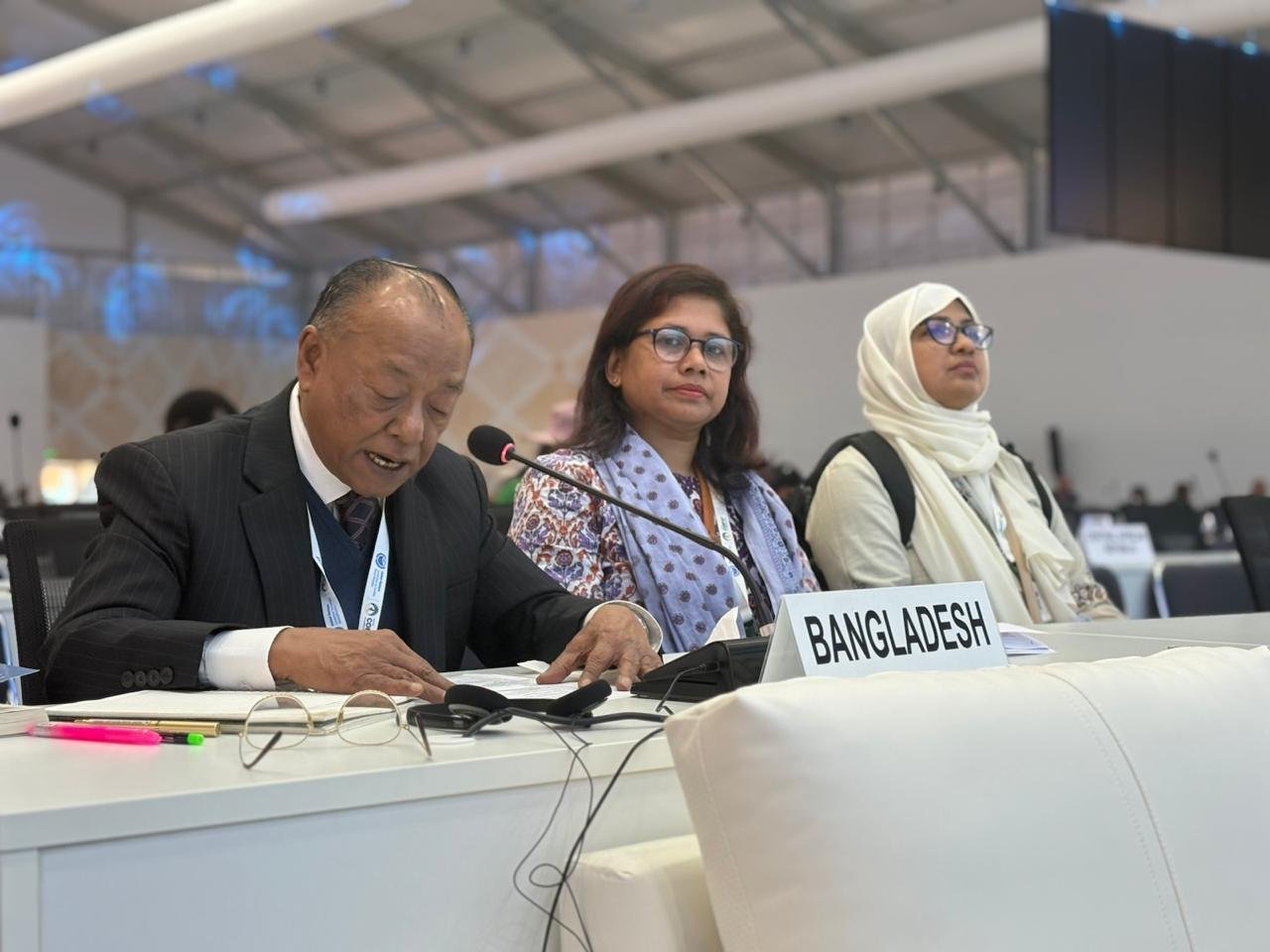
Ulaanbaatar, Mongolia, August 25, 2026: Environment, Forest and Climate Change Minister Abdul Awal Mintoo has called for stronger regional cooperation, equitable water sharing and technology transfer to strengthen drought resilience.
He made the call at a ministerial dialogue titled “Accelerating Drought Resilience” at the 17th Conference of the Parties (COP17) of the United Nations Convention to Combat Desertification (UNCCD) in Ulaanbaatar on Tuesday.
The minister said drought and land degradation are closely linked in Bangladesh. The country’s northwestern region faces recurring drought and declining groundwater levels, while saltwater intrusion in coastal areas is damaging agricultural land and freshwater sources. Flooding and river erosion are further complicating the situation.
He said about 5.46 million hectares of land in northwestern Bangladesh are drought-prone. Excessive groundwater extraction through around 16,000 deep tube wells has caused water levels to decline rapidly in many areas, prompting restrictions on new irrigation activities.
At the same time, the Bangladesh Agro-Meteorological Information System (BAMIS) is monitoring drought indicators and providing farmers with crop-specific advice through SMS, voice calls and mobile applications.
Mintoo said Bangladesh has set a target of planting 250 million trees under the National Green Mission. It has also planned to excavate and re-excavate around 20,000 kilometres of canals, rivers and water bodies over the next five years to increase surface-water availability and reduce pressure on groundwater.
Highlighting coastal challenges, he said sea-level rise and reduced river flows during the dry season are allowing saline water to enter agricultural land and freshwater sources, threatening the livelihoods of millions of people. Coastal mangrove expansion is also being pursued as a nature-based solution.
The minister stressed the importance of effective water management across the Ganges-Brahmaputra-Meghna basin and cooperation among neighbouring countries. Ensuring adequate dry-season water flows, he said, is critical to combating land degradation.
He urged countries to make basin-based cooperation and equitable water sharing key pillars of drought resilience.
Mintoo said Bangladesh’s National Adaptation Plan identifies drought management as a priority through 2050. He welcomed the proposed International Drought Resilience Observatory and suggested linking Bangladesh’s BAMIS data with the initiative.
He also called for greater technology transfer to develop and expand drought- and salinity-tolerant crop varieties.
The minister urged UNCCD member states to establish a predictive, adequately financed and effective international framework for drought resilience based on regional cooperation, warning that Bangladesh remains highly vulnerable to drought and land degradation.
Ministers, deputy ministers and heads of delegations from different countries attended the session, along with observers from international and regional organizations including FAO, ESCAP, IOM, UNICEF, UNDRR, UNDP, IFAD, AIIB and the African Union.