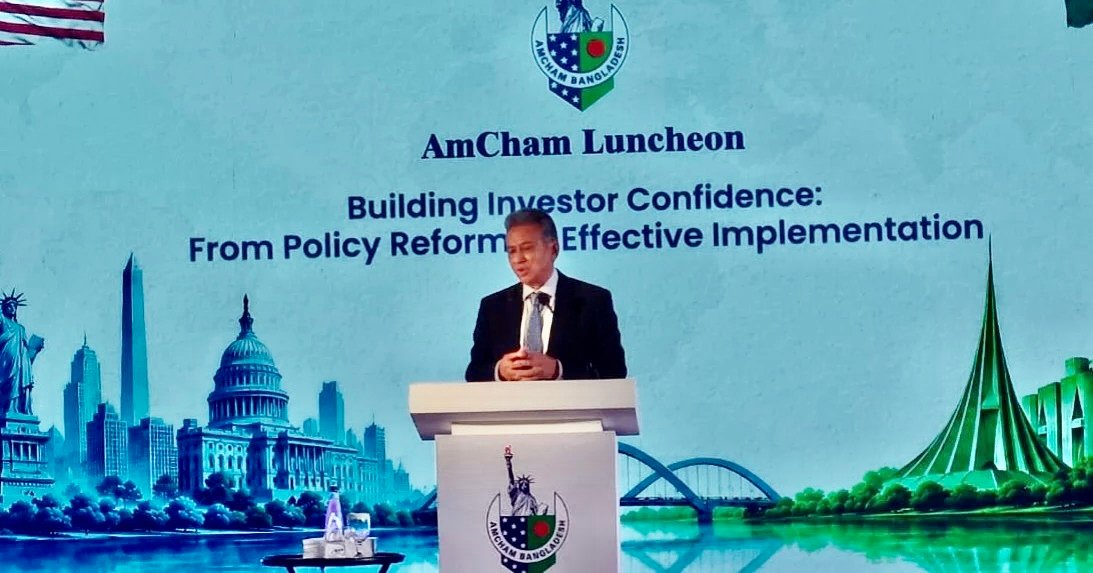
Dhaka, August 16, 2026: Finance and Planning Minister Amir Khosru Mahmud Chowdhury has said Bangladesh will need at least two years to overcome the country’s ongoing gas and electricity shortages, stressing that the crisis cannot be resolved through short-term measures.
“The problem with gas and electricity will not be resolved within six months or a year. It will take at least two years,” he said.
The minister explained that developing the infrastructure needed to address the energy shortage, including floating LNG terminals, would itself take around one and a half to two years. Therefore, an immediate solution to the crisis is not possible, he said.
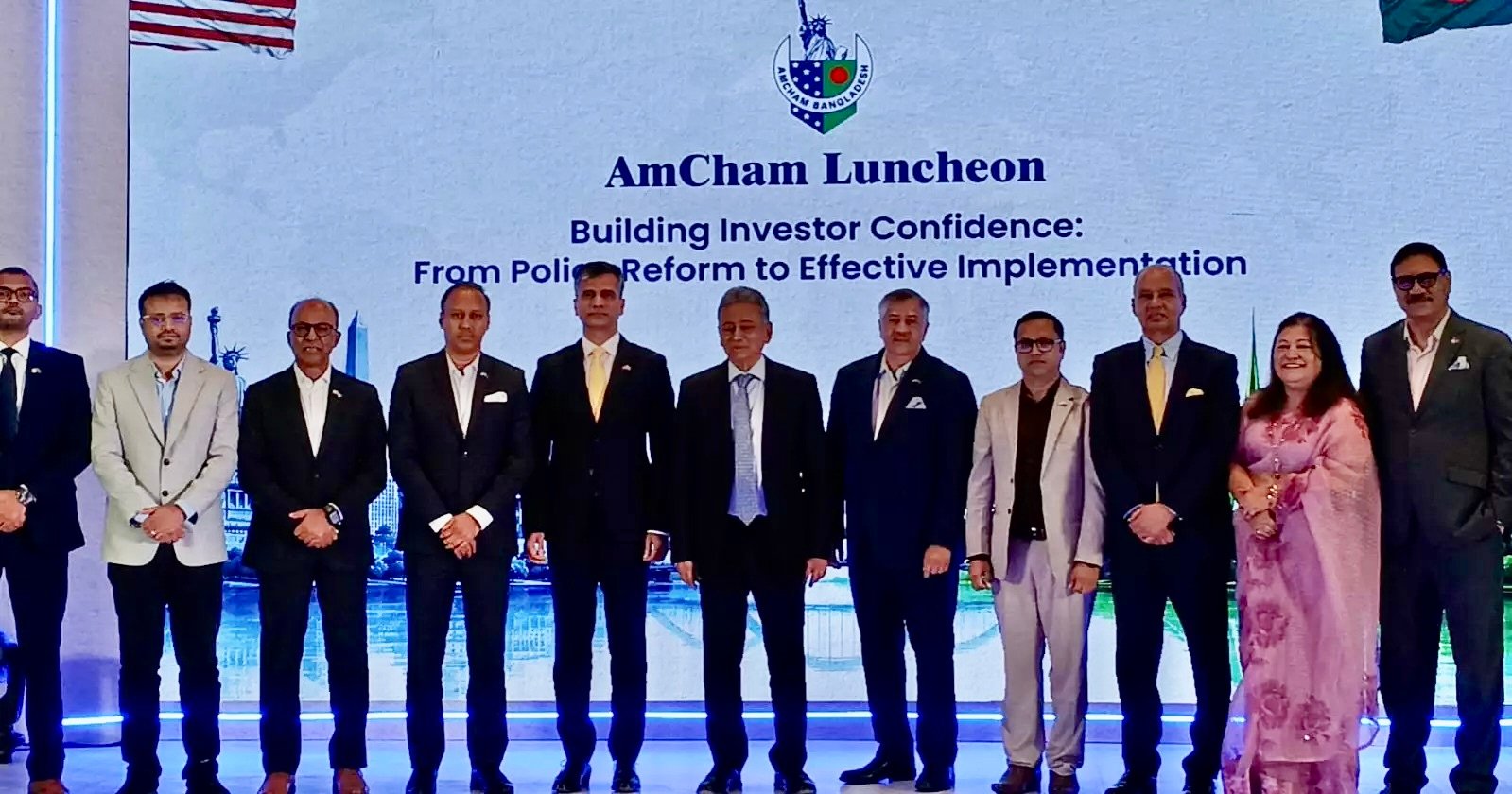
Khosru made the remarks on Sunday while speaking as the chief guest at a luncheon discussion titled “Building Investor Confidence: From Policy Reforms to Effective Implementation”, organized by the American Chamber of Commerce in Bangladesh (AmCham) at a city hotel.
Speaking about the banking sector, Khosru said it is facing a serious capital shortfall following the large-scale illicit transfer of funds abroad. He said the government is exploring alternative financing mechanisms and dedicated investment funds to address the structural deficit and support economic growth.
“There is a serious deficit in the banking sector as a huge amount of money has been laundered out of the country. Depositors are struggling to get their money back, making immediate capitalization essential,” he said.
He said the government is working to develop alternative financial channels in response to the shortage, while foreign governments and international organizations have shown positive interest in establishing dedicated investment funds.
The finance minister acknowledged that Bangladesh remains an “over-regulated” country, while many existing regulations and regulatory systems are not functioning effectively.
He outlined several reform measures being undertaken by the government to create a more business-friendly environment. The National Board of Revenue (NBR), he said, is undergoing structural changes to separate its policymaking functions from tax administration.
The government also plans to fully automate investor services, tax processing and customs logistics to reduce bureaucratic hurdles and facilitate business operations.
Khosru said structural reforms would receive priority in the national budget as the government seeks to improve the country’s economic and investment environment.
He also said Bangladesh is moving towards greater use of advanced information and communication technology (ICT) and artificial intelligence (AI) in public administration to improve efficiency.
Responding to questions on the energy shortage, Khosru reiterated that resolving the crisis requires a long-term strategic approach rather than temporary measures.
Opening the discussion, AmCham President Syed Mohammad Kamal said the business community is prioritizing energy security, stable and predictable tax policies, business-friendly regulations and overall macroeconomic stability.
HSBC Bangladesh Chief Executive Officer Mahbubur Rahman expressed optimism about Bangladesh’s investment prospects, pointing to the country’s large consumer market of around 180 million people, strong export sector and growing remittance inflows, which contribute to currency and foreign-exchange stability.
The high-level AmCham event brought together leading businesspeople, economists, senior government officials, foreign trade representatives and AmCham members operating in Bangladesh.