Dhaka, August 30, 2026: Bangladesh’s worsening energy crisis has driven the country’s energy import bill to $10.63 billion in FY2025-26, marking a 107 percent year-on-year increase, while nearly Tk35,000 crore in industrial investment remains stalled due to delays in gas connections, according to a joint study by the Metropolitan Chamber of Commerce and Industry (MCCI) and Policy Exchange Bangladesh.
The findings were presented Sunday at a session titled “Bangladesh’s Energy Security Challenge: Powering a More Competitive Business Climate.” The presentation was delivered by Hassib Hasan, Senior Associate at Policy Exchange Bangladesh.
The study draws on the Bangladesh Business Climate Index (BBX), a joint initiative of MCCI and Policy Exchange launched in 2021 to monitor business-related challenges across Bangladesh’s eight divisions.
Energy Reliability Emerges as Major Business Constraint
The study found that reliability of energy infrastructure, rather than physical access alone, has increasingly become a major constraint on businesses.
About 74.2 percent of surveyed businesses reported experiencing power outages “sometimes,” while 19 percent said they frequently had to make informal payments to obtain utility connections.
Only 20.1 percent of respondents reported seeing structural or regulatory improvements in infrastructure delivery.
The findings suggest that unreliable energy supply is increasingly undermining business confidence, production capacity and investment decisions.
Gas Supply Falls 1,380 MMCFD Short of Demand
Bangladesh’s daily gas demand currently stands at around 3,800 million cubic feet per day (MMCFD) against effective supply of only 2,420 MMCFD, leaving a shortfall of approximately 1,380 MMCFD, or 36 percent of total demand.
According to the study, power generation and fertilizer production are being prioritized during periods of supply shortages, leaving CNG stations and industrial consumers to absorb much of the resulting cuts.
CNG supply is currently meeting only around 20 percent of demand, further increasing pressure on transport and industrial users.
LNG Supply Disruption Deepens Crisis
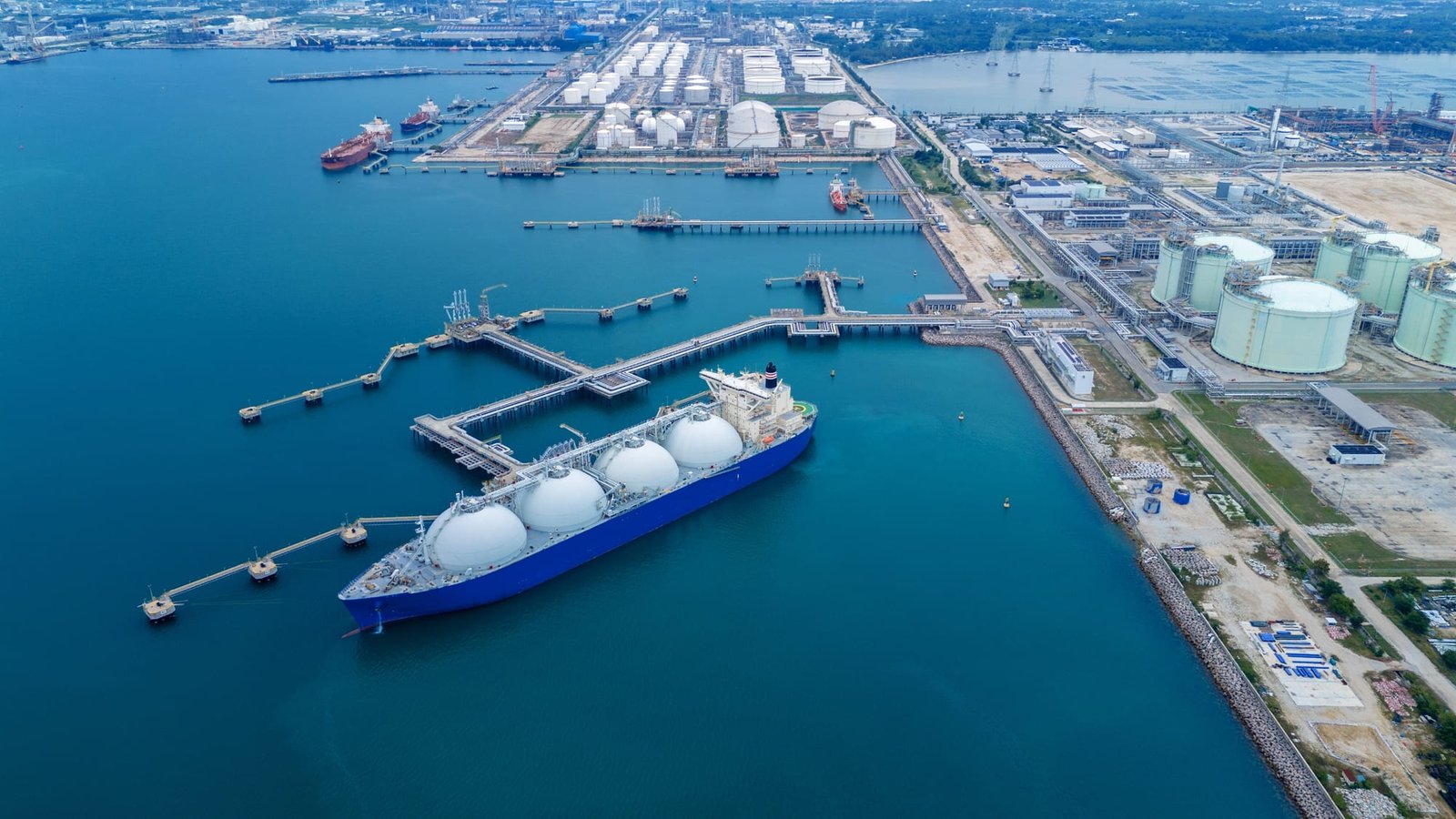
The study attributed the immediate supply crunch partly to disruptions in LNG imports following the shutdown of an Excelerate Energy floating storage and regasification unit (FSRU), which has a capacity of about 600 MMCFD.
The FSRU has remained out of operation since a fire on July 21 and has only been partially restored.
As a result, Bangladesh’s combined LNG regasification capacity at Maheshkhali is operating significantly below its potential of around 1,050 MMCFD.
The study also noted that only two of three targeted LNG cargoes were secured through three tender rounds in August, with procurement costs rising amid tight international market conditions.
At the same time, domestic gas production has declined for nine consecutive years, increasing the country’s dependence on imported energy.
Industries Facing Severe Production Disruptions
The energy shortage has resulted in extensive load-shedding in several industrial regions.
Some severely affected districts have reportedly experienced 12 to 14 hours of power cuts a day. Patuakhali was identified as one of the hardest-hit areas.
Chattogram airport reportedly experienced 10 to 12 power interruptions daily, while industrial production capacity in the area declined by around 25 percent.
In Gazipur, factories have reportedly been subjected to load-shedding for around six hours a day between 3pm and 8pm.
In Mymensingh’s Ishwarganj, a week-long power outage reportedly led to an attack on a local Power Development Board office, highlighting the growing social and economic pressures associated with prolonged energy shortages.
Narsingdi, Gazipur and Narayanganj Among Worst Hit
Industrial clusters in Narsingdi, Gazipur and Narayanganj have been particularly affected.
Narsingdi, which has more than 3,000 textile and dyeing mills and supplies around 70 percent of Bangladesh’s local fabric demand, has seen more than 300 factories suspend operations, according to the study. Some factories have reportedly resorted to using wood to operate boilers because of inadequate gas supplies.
In Gazipur, gas supply is meeting only around 45 percent of industrial demand.
In Narayanganj, the Bangladesh Knitwear Manufacturers and Exporters Association (BKMEA) reported that around 900 of its 1,850 member factories have been forced to suspend operations.
The crisis is no longer confined to energy-intensive industries. Pharmaceuticals, textiles, ceramics, sugar refining and cottage, micro, small and medium enterprises (CMSMEs) are also increasingly affected.
Import Dependence and LNG Prices Rise
Bangladesh’s dependence on imported primary energy has increased sharply, rising from 47.7 percent four years ago to 62.5 percent currently, according to data cited from the Institute for Energy Economics and Financial Analysis (IEEFA).
Meanwhile, Asian spot LNG prices have increased substantially, rising from around $10.5 per MMBtu in January to $25.3 per MMBtu in August.
The study attributed the price surge to factors including conflict in the Middle East, disruptions to Qatari LNG supplies and increased European stockpiling ahead of winter.
Manufacturing Growth Slows
The energy crisis is also weighing on Bangladesh’s industrial growth.
Manufacturing growth slowed to 2.86 percent in FY2025-26, compared with 3.71 percent a year earlier.
At the same time, capacity-payment costs for idle power plants are projected to exceed Tk48,000 crore during the current fiscal year.
The study also highlighted growing pressure on the government’s LNG subsidy budget. Around Tk47 billion, or 43 percent of the FY2026-27 LNG subsidy allocation of Tk110 billion, was reportedly spent within just one and a half months—about nine times the pace of spending recorded in the previous year.
Energy shortages have also affected food-processing industries. Retail sugar prices rose by around 7 percent in a single week after gas shortages forced refineries to reduce production.
Five Major Risks to the Economy
The study identified five interconnected risks arising from the energy crisis: reliability, affordability, resilience, investment confidence and the widening impact across sectors.
According to the researchers, the crisis has moved beyond the traditional power-intensive industries and is now affecting a much broader section of the economy.
The deteriorating energy situation is creating uncertainty for businesses, discouraging investment and weakening Bangladesh’s competitiveness.
Recommendations for Immediate Action
For the short term, the study recommended establishing predictable and prioritized gas and electricity rationing schedules for industrial and export-processing zones.
It also called for expansion of LNG import and storage infrastructure with the aim of building a strategic gas reserve equivalent to at least seven days of demand.
The study recommended diversifying the power-generation mix through greater use of renewable energy, energy-efficiency improvements and maintaining a long-term role for nuclear power.
Domestic Gas Exploration and Energy Reform Needed
For the medium and long term, the study called for accelerated domestic gas exploration to reverse the nine-year decline in production.
It also recommended diversifying LNG procurement through multiple FSRUs and long-term government-to-government agreements, alongside reforms to the capacity-payment structure.
Strengthening the electricity grid and transmission network was also identified as essential to addressing the supply-demand gap expected to persist beyond 2031.
Energy Security Must Be an Economic Priority
The study stressed that energy security should be treated as a strategic economic priority rather than merely a utility-sector issue.
It warned that without urgent structural reforms and investment in supply infrastructure, Bangladesh’s energy constraints could continue to undermine industrial production, new investment and overall economic competitiveness.
Officials estimate that it could take at least two years to sustainably address the country’s power and gas shortages, underscoring the need for immediate measures alongside long-term reforms.