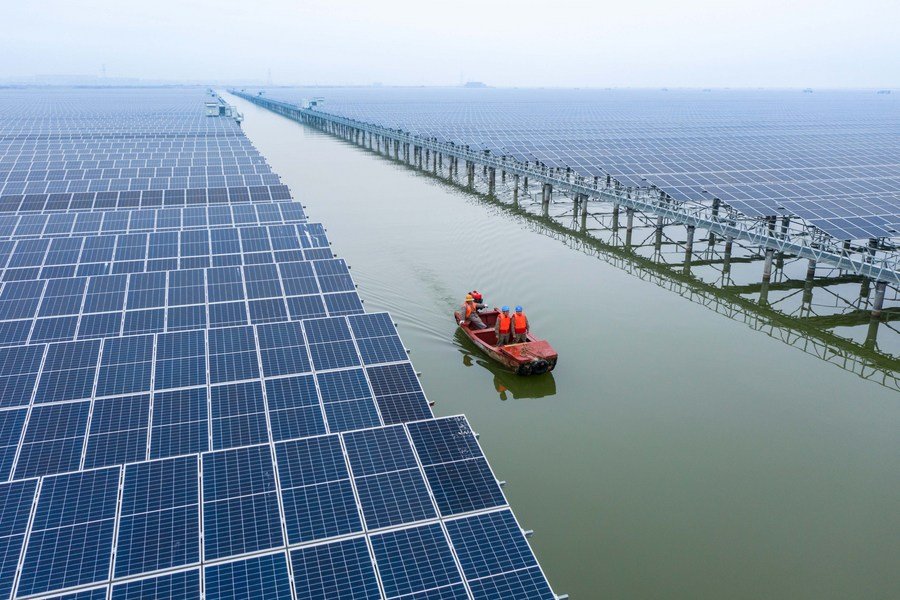
BEIJING, July 25, 2026 – China has unveiled an ambitious renewable energy development plan targeting 3.5 terawatts (TW) of installed renewable power capacity and around 6,000 terawatt-hours (TWh) of annual renewable electricity generation by 2030 as part of its 15th Five-Year Plan for Renewable Energy Development (2026–2030).
Released by the National Energy Administration (NEA), the plan aims to raise renewable energy consumption to 1.8 billion tonnes of coal equivalent (about 1,260 Mtoe) by 2030, reinforcing China’s long-term transition towards a low-carbon energy system.
Under the roadmap, combined installed wind and solar capacity is expected to exceed 2.8 TW, producing more than 4,000 TWh of electricity annually. China also plans to add over 300 GW of renewable-based peak-shaving capacity to improve grid flexibility and launch around 100 GW of new offshore wind projects during the five-year period.
The strategy includes expanding pumped-storage hydropower capacity to 160 GW, solar thermal capacity to 15 GW, while continuing the development of marine renewable energy projects.
China also expects renewable energy use outside the power sector to increase by 150 Mtoe, representing a 2.5-fold increase compared with 2025 levels.
By 2030, renewable energy is projected to account for nearly half of the country’s electricity generation, while non-fossil energy sources are expected to supply around 50% of China’s power mix.
According to official data, China had approximately 2,290 GW of installed renewable energy capacity at the end of 2025, underscoring the scale of the country’s planned expansion over the remainder of the decade.