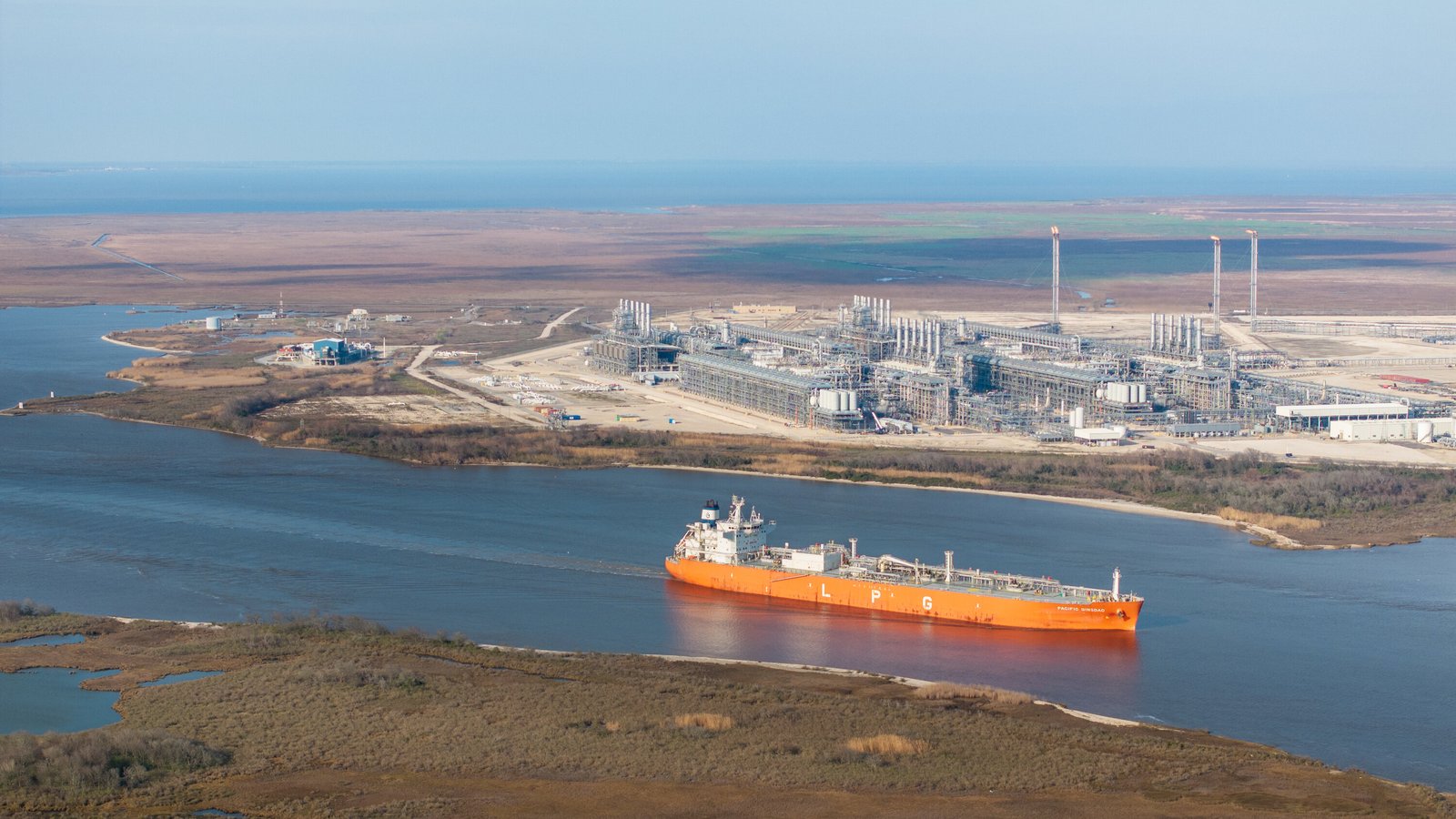
The signing of the recent U.S.–Iran agreement has had an immediate and significant impact on global energy markets, particularly crude oil and liquefied natural gas (LNG). The agreement, which includes steps toward reopening the Strait of Hormuz, easing restrictions on Iranian oil exports, and launching a 60-day negotiation process, has reduced geopolitical tensions and lowered supply disruption concerns.
As a result, international oil prices declined sharply as traders anticipated the return of additional Iranian crude supplies to the global market.
Sharp Decline in Oil Prices
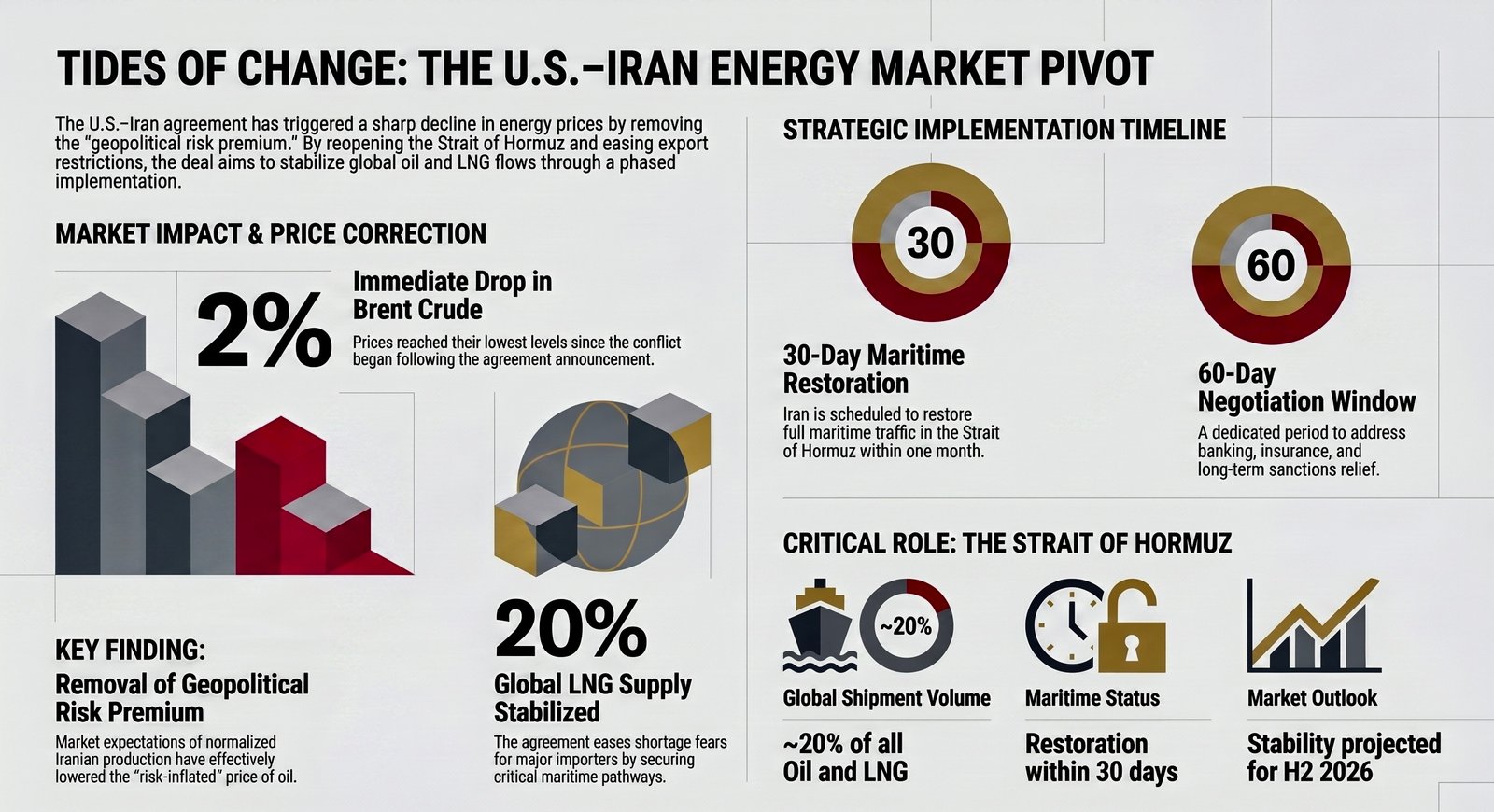
Following the announcement of the agreement, Brent crude prices fell by around 2% and dropped to their lowest levels since the beginning of the Iran conflict. U.S. West Texas Intermediate (WTI) crude also registered notable declines. The market reaction reflects expectations that Iranian oil production and exports will gradually return to normal in the coming months.
Energy analysts believe that the deal has removed a significant portion of the “geopolitical risk premium” that had been built into oil prices during the period of conflict.
Reopening the Strait of Hormuz
One of the most important components of the agreement is the reopening of the Strait of Hormuz, through which roughly one-fifth of global oil and LNG shipments normally pass. During the conflict, disruptions to shipping routes created fears of major supply shortages and pushed energy prices higher.
The agreement calls for Iran to restore full maritime traffic within 30 days, which is expected to stabilize tanker operations and reduce transportation costs for global energy consumers.
LNG Markets Respond Positively
The LNG market has also reacted positively. Earlier disruptions in the Strait of Hormuz had removed an estimated 20% of global LNG supply from the market, creating uncertainty for major importers in Asia and Europe.
The agreement has eased fears of prolonged shortages and improved supply expectations. However, analysts caution that full normalization will take time because shipping companies remain cautious and infrastructure restoration is still ongoing.
Increased Supply Expectations from Iran
Under the agreement, the United States has indicated that Iran may immediately resume certain oil sales, accompanied by waivers covering banking, insurance, and transportation services necessary for energy exports.
Industry experts expect Iranian oil exports to gradually increase over the next several months, which could place additional downward pressure on global oil prices.
Remaining Risks and Uncertainties
Despite the positive market response, several uncertainties remain.
The current agreement is an interim framework rather than a comprehensive settlement. Major issues, including Iran’s nuclear program and long-term sanctions relief, remain unresolved and will be addressed during the ongoing negotiations. Either side could still withdraw from the process if implementation fails.
Shipping security, infrastructure repairs, and restoring production capacity may also take several months before global energy flows fully normalize.
Outlook
Overall, the U.S.–Iran agreement has delivered a strong positive signal to global energy markets. Oil prices have declined, LNG supply concerns have eased, and confidence in international shipping routes has improved.
If the agreement remains intact and negotiations progress successfully, global energy markets could enter a period of greater stability during the second half of 2026. However, policymakers and investors will continue to monitor implementation closely, as any breakdown in negotiations could quickly restore volatility to oil and LNG markets.