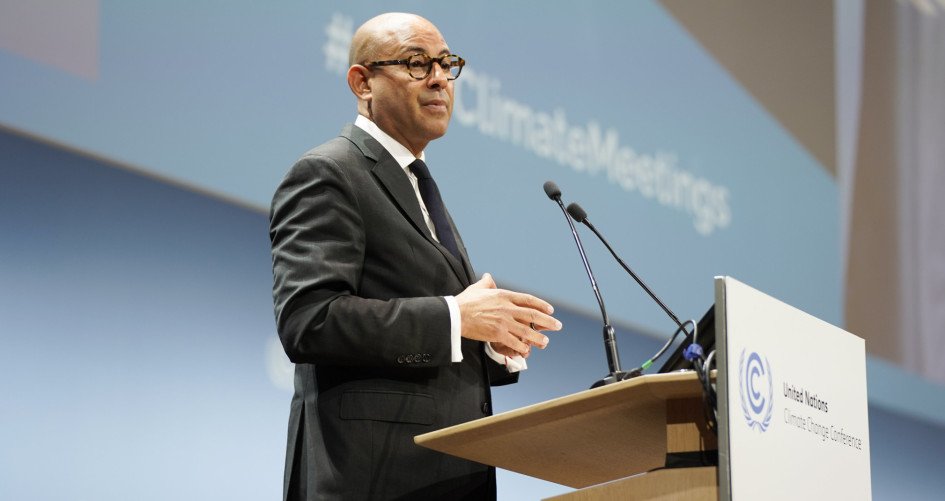
Bonn, Germany, 17 June 2026 - The United Nations’ new UN80 initiative will strengthen cooperation across the UN system and improve global climate action without altering the authority of member states under existing climate agreements, UN Climate Change Executive Secretary Simon Stiell said on Tuesday during the UN June Climate Meetings (SB64) in Bonn, Germany.
Speaking at a briefing on the UN80 initiative, Stiell described the reform process as an opportunity to modernize the United Nations on its 80th anniversary and make it more effective in responding to today’s global challenges.
According to Stiell, UN80 was launched by the UN Secretary-General to improve efficiency, strengthen coordination, and better serve member states amid growing global demands and limited resources.
He noted that the responsibilities of the UN system have expanded significantly over the years while funding has become increasingly constrained. This situation has led to duplication of efforts across several UN agencies, including those involved in climate-related work.
However, he emphasized that the initiative is not simply a cost-cutting exercise but an opportunity to create a more agile, coherent, and impactful organization.
Stiell highlighted the achievements of international climate cooperation, describing it as one of the most successful multilateral processes in recent history.
He said collective global efforts have reduced projected global temperature increases from well above 4°C to around the mid-2°C range. Although this remains above the 1.5°C target established under the Paris Agreement, he described the progress as substantial.
He also pointed out that renewable energy surpassed coal as the world’s largest source of electricity generation last year, demonstrating that international climate agreements are producing tangible results.
Despite these achievements, Stiell acknowledged that significant ambition and implementation gaps persist.
He identified insufficient political commitment, limited financial resources, and inadequate support for developing countries as key obstacles slowing progress.
While UN80 cannot directly solve these challenges, he said improved coordination among UN agencies could help countries implement climate actions more effectively.
Stiell firmly stated that UN80 will not alter the legal foundations of international climate governance.
He stressed that the ownership and decision-making authority of Parties under the UN climate convention and the Paris Agreement will remain fully intact.
“UN80 is not about reopening mandates or replacing intergovernmental processes,” he said, adding that no structural changes will weaken the Party-led nature of international climate negotiations.
Among more than 30 workstreams under UN80, Stiell highlighted Work Package 27 (WP27), which focuses on environment and climate.
The initiative seeks to strengthen cooperation, reduce fragmentation, and improve the delivery of climate and environmental programs across the UN system.
Stiell clarified that climate action will not be absorbed into broader environmental work. Instead, he said climate change should be recognized as a whole-of-government and whole-of-economy issue that affects every sector of society.
Approximately 29 UN entities are participating in the initiative, reflecting the wide-ranging impact of climate change on economic growth, public health, employment, peace, and security.
Stiell said WP27 will operate under three guiding principles.
First, it will build on existing mandates while respecting institutional independence and promoting stronger collaboration.
Second, scientific evidence will remain central to decision-making, ensuring that reforms help countries implement climate policies more effectively.
Third, the UN system will become easier for countries to navigate by reducing overlapping tools and fragmented support mechanisms.
Stiell is co-chairing WP27 alongside Inger Andersen, Executive Director of the United Nations Environment Programme (UNEP).
Recommendations from all UN80 workstreams, including WP27, will be submitted to the UN Secretary-General for further consideration.
Stiell said the proposals remain in draft form and are currently undergoing consultation within the UN system.
He concluded by inviting stakeholders to provide feedback and contribute ideas that could help strengthen international cooperation on climate action.
As climate challenges intensify worldwide, UN80 is being presented as an opportunity to create a more coordinated and effective United Nations. While preserving the authority of member states under existing agreements, the initiative seeks to accelerate implementation and enhance support for countries striving to meet global climate goals.