M. Zakir Hossain Khan
The suggested budget for the FY2026–27 represents a historic shift regarding Bangladesh’s just transition to renewable energy. Clean energy was being trapped between policy statements and fiscal disincentives for far too long, with renewable technologies being supported by the authorities rhetorically while at the same time facing a battery of tariffs, duties, and taxes that stifled their development in the market.
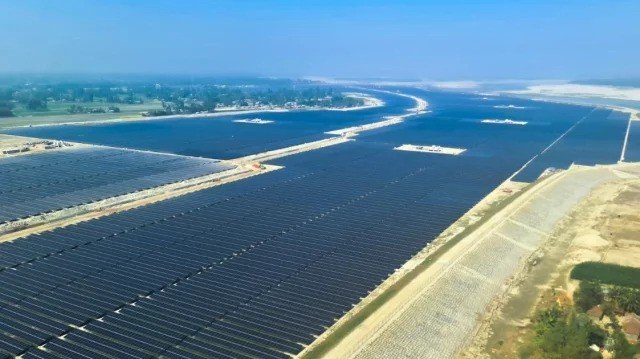
With the suggestion to keep the taxation on power generation from renewables in place until 2035, grant tax rebates on solar power payments, and cut duties on solar power parts and components, the budget shows a positive move to support clean energy as one of the essential macroeconomic, security, and industry drivers of the nation.
Reducing the CAPEX needed to deploy solar power technologies in the grid, such fiscal policies should contribute to the swift construction of utility-scale plants, promote solar roof-top installation, and benefit export-oriented industries, including the RMG sector, by ensuring compliance with environmental requirements. Most importantly, these measures present the country with an opportunity to address its dependence on foreign energy resources.
However, fiscal policies have been implemented amid the complicated institutional setting, which is regulated by the NBR and characterized by strict compliance parameters, with some of them stipulated in the statutory order (S.R.O.) No. 159-Act/2026/14/Customs. Unless this bottleneck is addressed properly, Bangladesh will end up providing the incentives to large-scale business organizations while marginalizing SMEs and rural communities that seek to develop renewable power.
Moreover, the success of any fiscal strategy aimed at supporting clean energy requires a careful assessment of existing state-subsidized fossil energy expansion. Bangladesh's energy revolution cannot yield sustainable economic, social, and environmental outcomes if the authorities fail to plan the phase-out of coal-fired power facilities.
Part I: Decoding S.R.O. 159: Bridging the Corporate-Community Divide
In order to make sure that the new financial incentives act as a catalyst in bringing about a transformation in the energy sector, the regulations regarding the import of solar components need to be thoroughly analyzed. Even though there are provisions for exemptions on customs duties, regulatory duties, and advance income tax for primary solar components under the provisions of S.R.O. No. 159-Act/2026/14/Customs, the practical considerations contained therein are heavily skewed towards large and well-funded projects of companies.
Three structural flaws within the S.R.O. present immediate barriers to an inclusive transition-
A. The Artificial Sunset of TABLE-2 Exemptions
For Section 12 of the ban, exemptions for taxes and duties on goods covered under TABLE-1 (such as solar panel and PV modules) are available until June 30, 2031. Nonetheless, exemptions for equipment covered under TABLE-2, such as steel and aluminum mounting structures, solar DC cables, BMS, and BESS, will suddenly cease on June 30, 2028.
Such an early expiration of exemptions poses one significant challenge to incorporating energy storage facilities. In most cases, utility-scale solar projects take at least two to three years to be implemented, with issues related to land acquisition and grid connection cause implementation delays. When most solar energy projects contract to purchase storage and structural facilities, the exemptions for TABLE-2 goods would already have ended, thus increasing project expenses. In some microgrids, especially those found off-grid and those managed within a community, electricity production will solely depend on local BESS facilities. As such, any cost increase after 2028 will make such projects financially unsustainable.
B. Regressive VAT and Capital Constraints on SMEs
According to the NBR framework, any organization which needs to apply for a waiver in customs duty is required to be completely registered under the provisions laid down in the Value Added Tax (VAT) and Supplementary Duty Act, 2012, including all the intricate provisions of audits, bookkeeping and invoicing practices. Whereas larger corporate houses can easily manage this process with their professional accountants, such arrangements are not feasible for local SMEs, farmers’ cooperatives, and community-led organizations.
Furthermore, by confining import eligibility to users generating power for their own facilities or specialized Renewable Energy Service Companies (RESCOs) operating under strict, pre-approved Power Purchase Agreements (PPAs), the S.R.O. effectively blocks local, non-importing distributors from accessing tax-exempt inventory. Because local community groups and small businesses typically buy their components from domestic commercial retailers rather than importing them directly, they are forced to absorb the full, un-exempted cost of solar equipment passed down through the domestic supply chain.
C. The Rigid Operational and Commissioning Timelines
Under the regulation, there should be complete installation, commissioning, and generation of electricity from the imported components within six months of the clearance of the goods at the custom checkpoints. The commitment is backed by a non-judicial stamp payment of 300 Taka to ensure strict enforcement of the regulation, with serious legal ramifications for non-compliance.
The tight six months timeframe fails to consider the dynamics involved in setting up the infrastructure in Bangladesh. It is very common in grid-connected solar systems that they take the same amount of time for the completion of the construction of the grid lines and substations by the respective state companies. In case of delay of any such project due to non-readiness of the grid for accepting electricity from the project, the private party will still face punishment.
Further, the requirement of inspection and certification of every installation under the authority of SREDA within the specified timeframe may result in excessive bureaucracy as it is very difficult for SREDA to visit all these installations within the mentioned period of six months.
To transform these barriers into opportunities, the government must simplify these administrative demands:
-
Synchronize Exemptions: Extend the tax and duty exemptions for all critical storage, balance-of-system, and structural components under TABLE-2 out to 2031, aligning them with the primary solar panel exemptions.
-
Support Local Supply Chains: Expand tariff exemptions to include certified domestic commercial importers and wholesale distributors, ensuring that tax relief reaches local retail markets where SMEs and community projects buy their equipment.
-
Introduce Flexible Project Timelines: Replace the universal six-month commissioning rule with a tiered timeline that reflects the actual scale and technical environment of each project, protecting developers from penalties caused by external utility delays.
Part II: The Human and Macroeconomic Toll of Coal Coexistence
Although designing the financial structure in favor of solar energy is essential, it is still not enough when the country runs its coal-powered plants at subsidies. The idea that the coal energy source serves as a cheap and critical base to build up industries is becoming increasingly difficult to prove on economic and health grounds. It becomes costly for the government to maintain two energy systems simultaneously since it ends up having to bear both the invisible cost of its coal-powered plants and the financial cost of its renewable energy systems.
Public Health and Economic Emergency
Bangladesh is currently facing a severe environmental crisis driven by fine particulate matter (PM_2.5). In 2024, the country’s average annual PM_2.5 concentration reached roughly 78 micrograms per cubic meter, exceeding the World Health Organization’s safe air quality guidelines by more than fifteenfold. This severe pollution has direct, measurable human and financial impacts across the economy-
|
Health & Economic Indicator |
Measured Annual Impact |
Macroeconomic Cost (% of GDP) |
|
Premature Deaths (Total Environmental) |
~272,000 lives lost |
17.6% of GDP |
|
Air Pollution Attributable Mortality |
~150,000 lives lost |
8.32% of GDP |
|
Annual Morbidity Burden |
5.2 billion illness days |
Cumulative loss in labor output |
|
Under-5 Child Mortality (2021 Data) |
Over 19,000 child deaths |
Destruction of future human capital |
When a power system produces electricity by damaging the respiratory health of its workforce and youth, it ceases to function as an engine of genuine development. Instead, it operates as a regressive economic tax that drains national income, inflates public healthcare spending, and permanently lowers labor productivity.
From Energy Security to True Energy Sovereignty
The traditional method of planning the energy policy sees "energy security" as a guarantee that the lights will remain turned on, whatever it takes financially and socially. In the case of Bangladesh, this strategy involves constructing vast numbers of power plants operating on imported coal, oil, and liquefied natural gas (LNG). Dependency on foreign fuel markets is a significant risk for any nation's macroeconomics.
The sudden hike in commodity prices caused by international geopolitical tensions or lack of sufficient fuel supplies results in the fiscal crisis for Bangladesh. Fuel purchases involve spending valuable foreign exchange funds on money and, consequently, cause the balance-of-payments deficit. The higher government subsidies and politically inconvenient electricity tariffs inevitably result in these circumstances.
The shift in national priorities from "energy security" to "energy sovereignty" can solve the dilemma. Energy sovereignty stands for producing a constant electricity supply using national resources. Being immune to the vagaries of international fuel markets, solar energy does not impose risks on the country. With the development of decentralized solar plants on factory rooftops and other sites, Bangladesh can ensure energy safety of its national budget.
Part III: Case Studies in Ecological Vulnerability and International Precedents
To understand the real-world impact of fossil fuel lock-in, we must look closely at the primary coal-fired power hubs operating along Bangladesh's environmentally sensitive coastlines: Rampal, Matarbari, and Payra.
A. Rampal and the Natural Rights of the Sundarbans
The 1,320 MW Maitree Super Thermal Power Plant is located close to the border of the Sundarbans, which is known to be the largest uninterrupted mangrove forest on the planet. The Sundarbans serve as an important biological shield for Bangladesh as it stores carbon, provides habitat for varied forms of aquatic wildlife, and shields the coastline against devastating cyclones and tidal waves.
Construction of such an extensive coal-fired power plant close to this area can lead to the eventual demise of this natural resource. Frequent shipping activities, periodic river dredging, and disposal of coal-ash associated with the operation of the plant can contribute to soil erosion along the banks of Passur River, disturb the habitat of fish and dolphins, and cause high salt content in water.
B. Matarbari and the Threat of Cumulative Coastal Pollution
The Matarbari power complex in Cox's Bazar's Maheshkhali region showcases how haphazard industrialization has adversely affected the local economy. According to independent environmental studies, the clustering of several coal plants in this coastal region results in the release of hazardous levels of mercury, sulfur dioxide, and fly ash into the surrounding environment.
Local communities face the additional problem of heavy metal pollution, primarily that of mercury, which can harm the region's fish industry as mercury can get into fish, thus making them hazardous for consumption. In a place where people rely on salt production, agriculture, and fishing, heavy metal pollution can destroy the very economy of the area.
C. Payra and the Incompatibility with Food Security
The Payra coal infrastructure highlights the direct conflict between coal pollution and agricultural productivity. The surrounding region is a highly productive agricultural and fishing zone, rather than an empty industrial wasteland.
Windborne sulfur dioxide ($SO_2$) and nitrogen oxides ($NO_x$) from the plant contribute to soil acidification, which reduces crop yields over time. Meanwhile, thermal water discharges disrupt local river temperatures, drive away key commercial fish species, and directly harm the livelihoods of local fishing communities.
Lessons from Other Developing Economies
The argument that developing countries must rely heavily on coal to industrialize is increasingly disproven by international experience:
-
Senegal (The Sendou Project): The Sendou coal-fired power station in Bargny was first marketed as a safe method of increasing electricity coverage. It soon met with widespread public protests, costly operation delays, and legal arguments surrounding the local environment because of its negative impact. Thus, the Sendou coal experience proves that using the money from abroad to invest in coal is counterproductive and leads to social disputes and losses.
-
Cambodia: Initially intended to build numerous coal-fired plants, the government of Cambodia later revised its strategy and now focuses on competing renewable energies, modernizing the electrical grid, and a moratorium on coal-based projects except for those already underway. This approach proves that a growing economy can recognize the dangers of its course at an early stage.
-
Nepal, Bhutan, and Ethiopia: These countries managed to design economic growth through local renewable sources rather than import coal. Despite their focus on hydropower, which poses special environmental and management problems, these countries prove that a developing economy can manage without coal as the backbone of its grid system.
Part IV: Overcoming the OECD Double Standard
The ongoing development of coal energy infrastructure in the Global South raises concerns about an apparent contradiction in the policies adopted by wealthier nations. Indeed, most OECD members are quickly eliminating coal-based energy from their energy mix. This commitment can be seen in the agreement made by the G7 group of nations to stop unabated coal-based energy production by the mid-2030s.
However, rich countries have been exporting coal energy technology to developing nations since at least the 1980s, and they continue to finance fossil fuel projects in vulnerable countries today. In other words, while coal energy is deemed too dangerous and too costly for advanced countries, it is accepted by poorer nations.
Bangladesh should not follow the lead set by developed nations. Development agencies, MDBs, and bilateral organizations involved in climate change mitigation initiatives should ensure that the financing of green energy development in Bangladesh matches the reality of this transition. Instead of supporting long-term coal agreements, these funds should be used to decommission early coal plants, upgrade the transmission system, and increase the capacity of energy storage in Bangladesh.
Part V: A Strategic Six-Step Roadmap for Bangladesh
To turn its recent budgetary incentives into a permanent energy transition, the Government of Bangladesh should establish a clear, structured roadmap for a just coal phase-out, centered around six practical steps:
a) Enact an Immediate Moratorium: Declare a formal ban on all new coal-fired power plants, cancel any projects still in the planning pipeline, and halt all new state-backed sovereign guarantees for fossil-fuel infrastructure.
b) Conduct an Independent Cost Audit: Commission a comprehensive, transparent review of the country's operating coal plants, including Rampal, Matarbari, and Payra. This audit should calculate the full lifecycle costs of these facilities, including foreign exchange outlays for fuel, state capacity payments, healthcare expenses from pollution, and long-term environmental cleanup liabilities.
c) Renegotiate Existing PPAs: Work with international joint-venture partners to restructure current Power Purchase Agreements. The goal should be to shift contracts away from rigid "take-or-pay" capacity payment models, reduce overall plant dispatch levels, and explore options for early buyouts or converting facilities to cleaner technologies where technically viable.
d) Publish a Phased Retirement Schedule: Establish a clear, time-bound timeline to retire older, highly polluting, and financially inefficient coal plants first, ensuring that state-protected fossil assets do not crowd out new renewable energy investments.
e) Establish a Just Transition Fund: Create a dedicated national fund to support affected energy workers and local communities. This fund should invest in localized job training, provide transitional income support, and fund environmental restoration projects near retired power plants to generate sustainable local employment.
f) Modernize and Integrate the Grid: Coordinate all coal retirement plans with proactive investments in grid modernization, expanded battery storage, and energy-efficiency programs, ensuring the replacement power network remains reliable, affordable, and widely accessible.
Securing Bangladesh's Sovereign Future
The fiscal incentives in the FY2026–27 budget show that Bangladesh is ready to embrace a cleaner, more sustainable energy model. However, trying to expand renewable energy while simultaneously maintaining long-term commitments to coal is a costly, contradictory strategy.
The economic arguments for solar energy are practical and immediate. Transitioning to renewable power helps lower import bills, protects national foreign exchange reserves, reduces the public subsidy burden, and improves the global competitiveness of export industries. Most importantly, it protects public health, preserves vital natural ecosystems like the Sundarbans, and prevents thousands of premature deaths across the country.
True energy planning requires moving past short-term calculations that make fossil fuels look artificially cheap by ignoring their heavy social and environmental costs. Nature-smart power is no longer just an environmental goal; it is a core strategy for saving lives, protecting human capital, restoring vital water systems, and safeguarding Bangladesh's long-term energy sovereignty. The government has made a promising first step in its latest budget. To lock in these gains, the next step must be a well-planned, decisive exit from coal.
Co-founder and Chief Executive, Change Initiative; Architect and Proponent of Natural Rights Led Governance. Email: zhkhan@changei.earth.