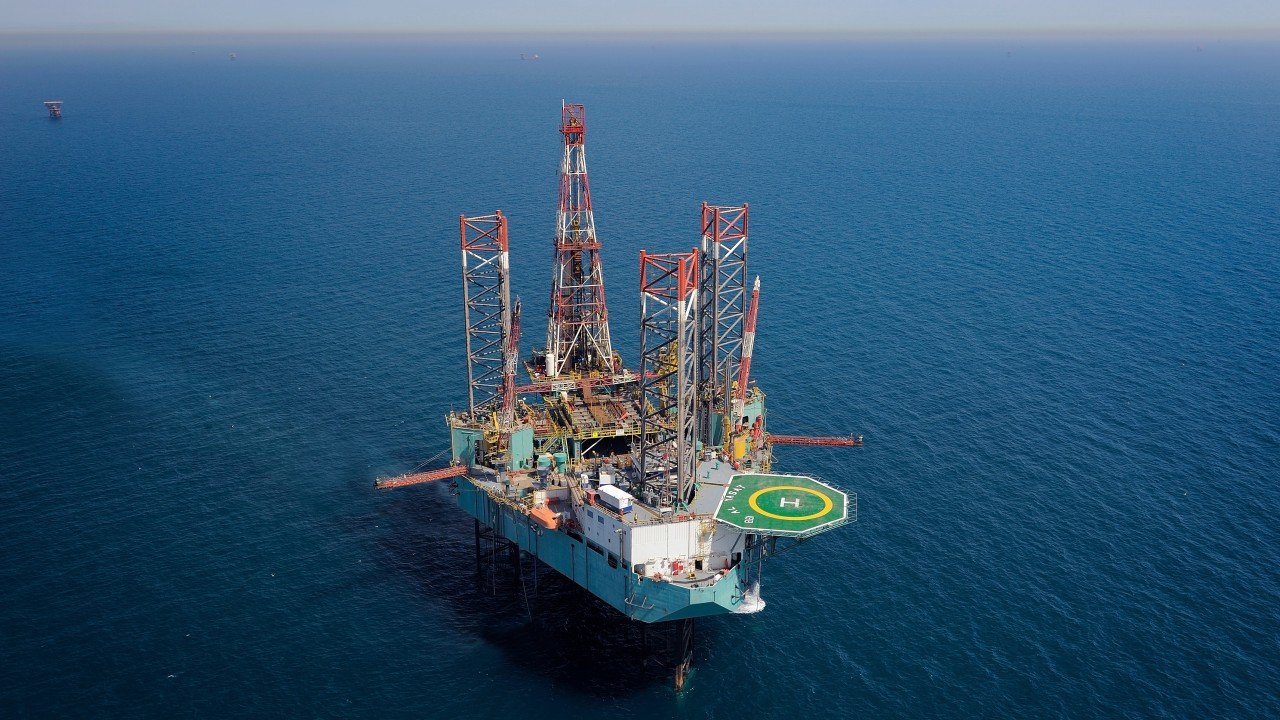
Bangladesh is set to invite international tenders on Sunday for offshore oil and gas exploration in the Bay of Bengal under the revised and approved Production Sharing Contract (PSC).
Under the new bidding round, international oil companies will be able to submit bids for 15 deep-sea blocks and 11 shallow-water blocks until November 30 this year.
According to officials, notices will be published in local newspapers and displayed at Bangladesh missions abroad. Tender notices will also be sent directly to international oil companies via email. However, unlike the 2024 bidding round, no advertisements will be placed in foreign newspapers, confirmed Petrobangla.
.jpg)
The previous offshore bidding round announced in 2024 failed to attract any formal bid submissions despite interest from several international companies. Under the Model PSC-2023, tenders were invited in March 2024, and seven globally reputed companies, including ExxonMobil, purchased bid documents, while two companies also acquired seismic data from Petrobangla. However, no company ultimately submitted bids due to political uncertainty and other concerns.
Following the failed bidding process, the interim government formed an investigation committee to identify the causes. Based on the committee’s recommendations, several revisions have been incorporated into the updated PSC framework.
The changes include reducing the Wellhead Pipeline Processing Fee (WPPF) from 5 percent to 1.5 percent and allowing cost recovery and financial incentives for pipeline investments from offshore fields to onshore facilities.
Under the earlier Model Offshore PSC-2024, gas prices for both deep and shallow offshore blocks were fixed at 10 percent of Brent crude prices. In the revised PSC, the gas price has been increased to 11 percent of Brent crude prices for deep offshore blocks and 10.5 percent for shallow offshore blocks.
A floor and ceiling price of Brent crude has also been introduced at $70 and $100 per barrel respectively, based on the average price trends over the past five years. The framework also allows price adjustments every five years.
For the first time, investors will be entitled to receive wheeling charges for offshore pipeline investments. The exact charges will be finalized when Gas Purchase and Sales Agreements are signed between Petrobangla and the International Oil Companies (IOCs).
Bangladesh secured sovereign rights over more than 118,813 square kilometers of maritime territory after resolving sea boundary disputes with Myanmar in 2012 and India in 2014 through international arbitration.
Despite the vast offshore potential, successive governments have failed to achieve significant progress in offshore oil and gas exploration. Energy experts believe Bangladesh’s maritime zones hold strong hydrocarbon prospects, especially as Myanmar has long been extracting gas from adjacent offshore areas.
Bangladesh currently has 15 deep-sea blocks and 11 shallow-water blocks in its offshore territory.
In 2008, Bangladesh signed contracts with ConocoPhillips for blocks DS-10 and DS-11. The company later sought revisions in gas pricing and contract terms. After Bangladesh declined those conditions, ConocoPhillips withdrew from the project in 2014.
Under the Offshore Bidding Round 2012, ONGC Videsh Limited signed agreements for blocks SS-04 and SS-09.
In 2017, Petrobangla signed an agreement with POSCO Daewoo for block SS-12. However, the company relinquished the block in 2020 after unsuccessful exploration efforts.
Before the 2024 round, the last offshore bidding invitation was announced in 2016. Although the PSC framework was updated in 2019, no bidding round was launched afterward.
Bangladesh is currently facing a severe gas crisis, with no immediate signs of improvement. According to Petrobangla, the approved daily gas load for eight consumer categories stands at 5,356 million cubic feet, while actual demand is estimated 4,000 million cubic feet per day.
Against this demand, the country is currently supplying around 2,700 million cubic feet of gas daily, leaving a shortfall of nearly 1,300 million cubic feet.
At present, Bangladesh’s energy and power sector relies on imports for nearly 63 percent of total supply. Rising gas shortages have significantly increased dependence on imported LNG.
Domestic gas production has now declined to around 1,680 MMCFD and is decreasing by nearly 150 MMCFD annually. Ongoing efforts are underway to discover new gas fields and increase domestic production, major breakthroughs have yet to be achieved.