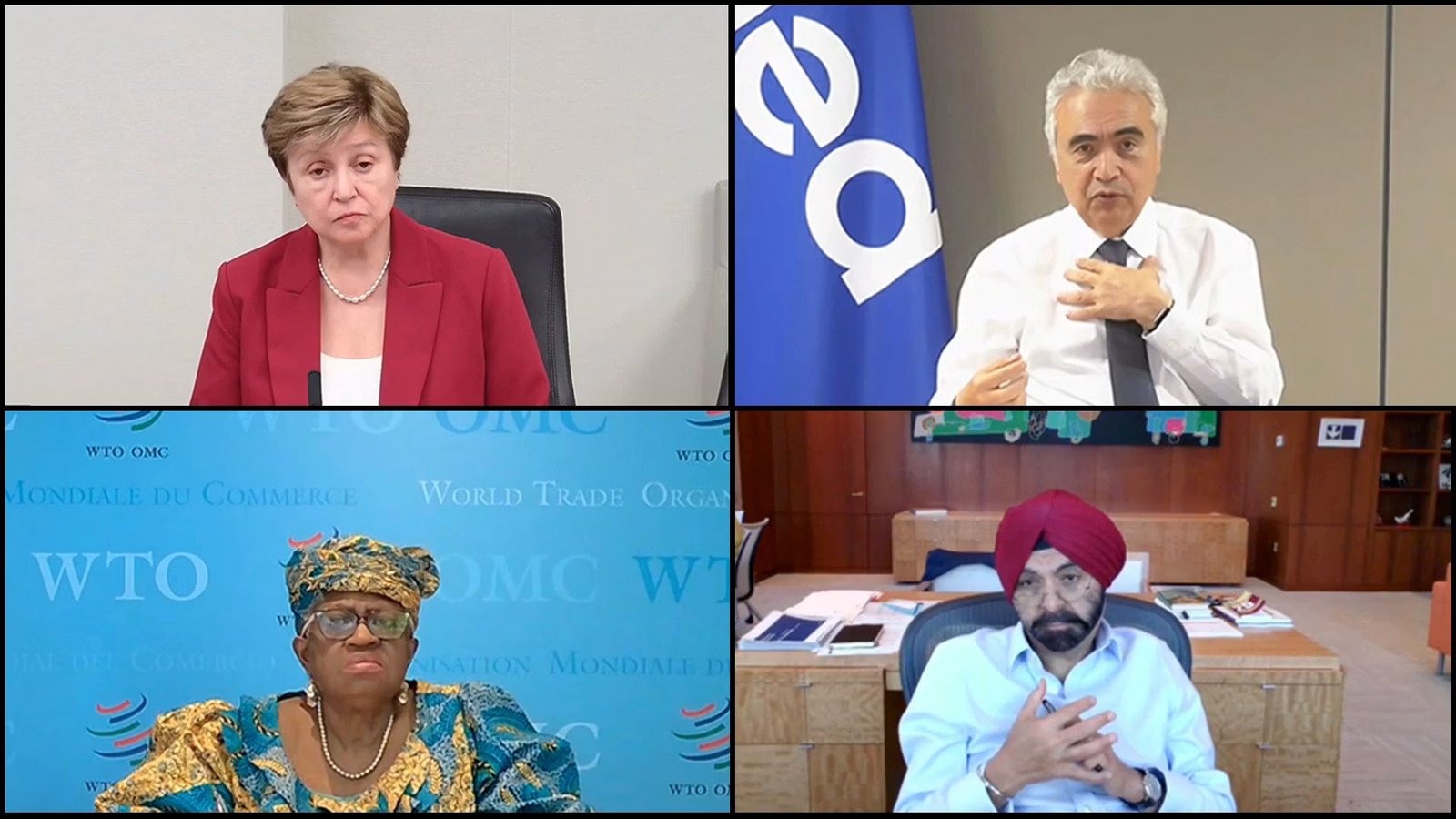
The heads of the International Energy Agency (IEA), International Monetary Fund (IMF), World Bank Group, and World Trade Organization (WTO) have warned that the ongoing war in the Middle East is creating significant challenges for global energy markets, food security, and economic stability.
Meeting in Washington, DC on May 28, the leaders assessed the impact of the conflict and coordinated support measures for countries most affected by rising fuel and fertilizer prices, supply disruptions, and economic uncertainty.
The organizations noted that while the global economy remains resilient, vulnerable countries are facing disproportionate pressure from higher energy costs and risks to jobs and livelihoods. Particular concern was expressed over fertilizer price increases as many nations enter key planting seasons.
The institutions also highlighted the rapid drawdown of global oil inventories following major supply losses through the Strait of Hormuz. They warned that continued disruption to shipping flows could heighten risks to fuel security and market stability, especially as summer oil demand rises in the Northern Hemisphere.
To address these challenges, the four organizations pledged to strengthen coordination, closely monitor energy and fertilizer supply chains, and track government policy responses. They also committed to supporting affected countries through multilateral and bilateral initiatives aimed at maintaining economic resilience and global stability.
The leaders said they will remain in close contact as the situation evolves and continue coordinating efforts to mitigate the conflict’s economic and energy-related impacts.