Power outages across the country are expected to decline from next week, although a complete end to load-shedding remains unlikely in the near term, Energy Minister Iqbal Hassan Mahmood said on Monday.
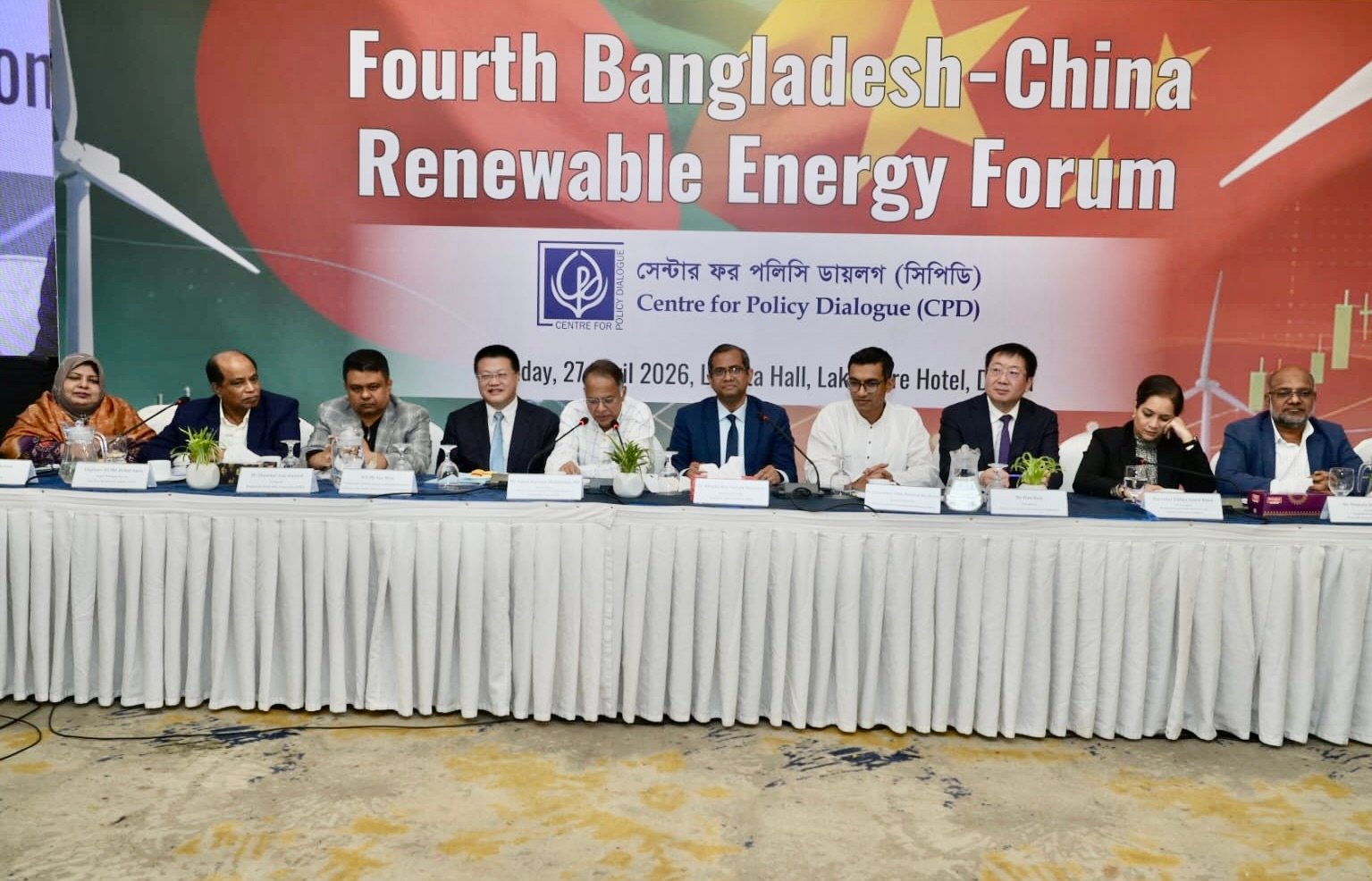
Speaking at the Fourth Bangladesh-China Renewable Energy Forum organized by the Centre for Policy Dialogue, the minister stated that current load-shedding ranges between 1,200 and 1,500 megawatts. “From next week, it should drop to around 800 to 900 megawatts. However, a complete halt is not possible at this moment,” he said.
The minister identified financial constraints as a major challenge, revealing that outstanding dues to power import entities have reached Tk 56,000 crore. The situation has been further exacerbated by the ongoing Middle East crisis, which has added approximately $2 billion to the country’s energy expenditure.
Highlighting structural weaknesses in the sector, he noted a significant mismatch between installed capacity and actual output. While Bangladesh has an installed capacity of around 30,000 megawatts, actual demand stands at about 18,000 megawatts. Despite this surplus capacity, many power plants remain idle due to shortages of fuel, while the government continues to bear maintenance costs.
As an example, he mentioned the Rupsha power plant in Khulna, which has remained shut for three years due to the failure to supply gas from Bhola, describing it as a case of poor planning.
Looking ahead, the minister emphasized renewable energy—particularly solar power—as a key solution to the ongoing crisis. He said the government aims to generate 10,000 megawatts of solar power within the next five years under the direction of Prime Minister Tarique Rahman.
To overcome land shortages, the government plans to lease state-owned khas land to private investors for solar projects and provide tax incentives to boost investment. An inter-ministerial initiative is already underway to prepare an inventory of such land.
The minister also signaled a shift in policy approach, criticizing previous mandatory rooftop solar installation rules as ineffective. “We want to promote solar energy through incentives, not compulsion,” he said.
He further announced that renewable energy proposals rejected during the interim administration would be reviewed, urging private sector participation through public-private partnerships to accelerate Bangladesh’s transition to clean energy.