The government has decided to review 37 renewable energy projects LOI that were cancelled during the interim government, in a move aimed at reassessing stalled investments and accelerating clean energy development.
These projects, with a combined generation capacity of around 5,800 megawatts, had previously received Letters of Intent (LoIs) during the final phase of the former government.
.png)
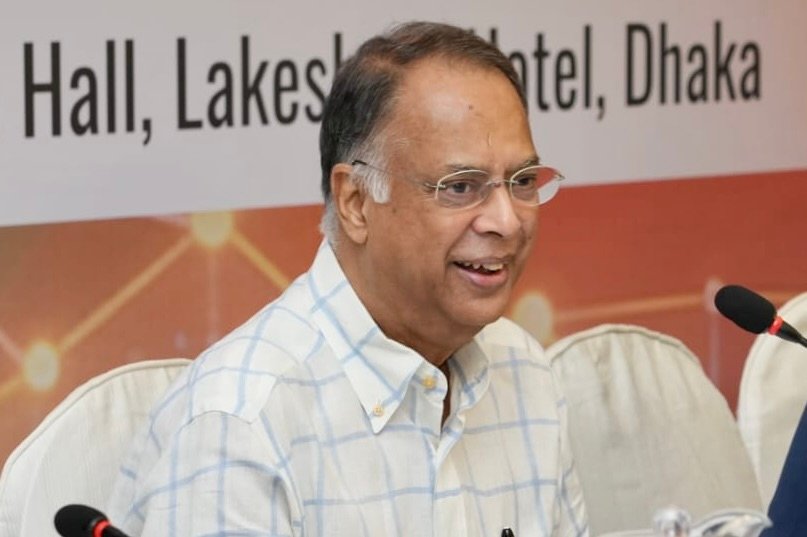
The decision was announced by Power, Energy and Mineral Resources Minister Iqbal Hassan Mahmood while speaking as chief guest at the Fourth Bangladesh-China Renewable Energy Forum organized by the Centre for Policy Dialogue. He said the Power Division has been instructed to review the cancelled LoIs and submit recommendations within 10 days, after which a final decision will be taken.
The move has been welcomed by industry stakeholders. Mostafa Al Mahmud, President of the Bangladesh Sustainable and Renewable Energy Association, said the initiative would help rebuild confidence among both local and foreign investors in the renewable energy sector.
The 37 projects were originally approved under special provisions for quick power development but were later scrapped over allegations of irregularities and lack of transparency during the interim government’s tenure. Despite repeated requests from investors for reconsideration, the previous administration did not review the cancellations. Instead, it invited fresh tenders for 55 solar projects after revising implementation and power purchase agreements, but these failed to attract foreign investors.
According to studies by the Centre for Policy Dialogue, the tender process received limited response, with an average of only 1.4 bids per project. Although projects totaling around 900 megawatts were selected and LoIs issued, none of the companies have yet signed final agreements.
The cancellation of earlier LoIs created uncertainty in the investment climate, slowing the expansion of renewable energy in the country. However, the current government has since finalized a plan to instilled 10,000 megawatts of electricity from renewable sources by 2030. The plan was approved at a cabinet meeting chaired by Prime Minister Tarique Rahman.
In parallel, the government has finalized a land allocation policy for renewable energy projects under public-private partnership (PPP) arrangements. Public agencies have been instructed to identify unused land for solar power installations, after which proposals will be invited from private investors.
According to the Sustainable and Renewable Energy Development Authority, Bangladesh currently has a total renewable energy capacity of 1,738 megawatts, including 230 MW from hydropower and 62 MW from wind. Of this, 1,360 MW is connected to the national grid, with solar power accounting for the majority at 1,068 MW.
Under the national renewable energy policy 2026, Bangladesh aims to generate 20% of its electricity from renewable sources by 2030 and 30% by 2040.
Experts warn that unless the cancelled projects are fairly reassessed and investment-friendly policies—such as restoring implementation agreements and revising power purchase terms—are introduced, the country may struggle to meet its renewable energy targets and attract long-term financing.