If the Bangladesh Power Development Board (BPDB) fails to pay dues as per contract, it will lose the right to demand electricity supply from private power plants according to its needs. On the other hand, the contracted power plants will also have no obligation to supply electricity to BPDB.
Despite being aware of this provision in the Power Purchase Agreement (PPA), BPDB on 5 February decided to collect liquidated damages (LD)—a contractual penalty—from domestic private power plants for failing to supply electricity as demanded, without first clearing outstanding payments.
According to leaders of the Bangladesh Independent Power Producers’ Association (BIPPA), this policy is being applied to local private power producers, while foreign-owned power plants are being exempted. BIPPA leaders described BPDB’s decision—taken just days before the election—as “provocative.”
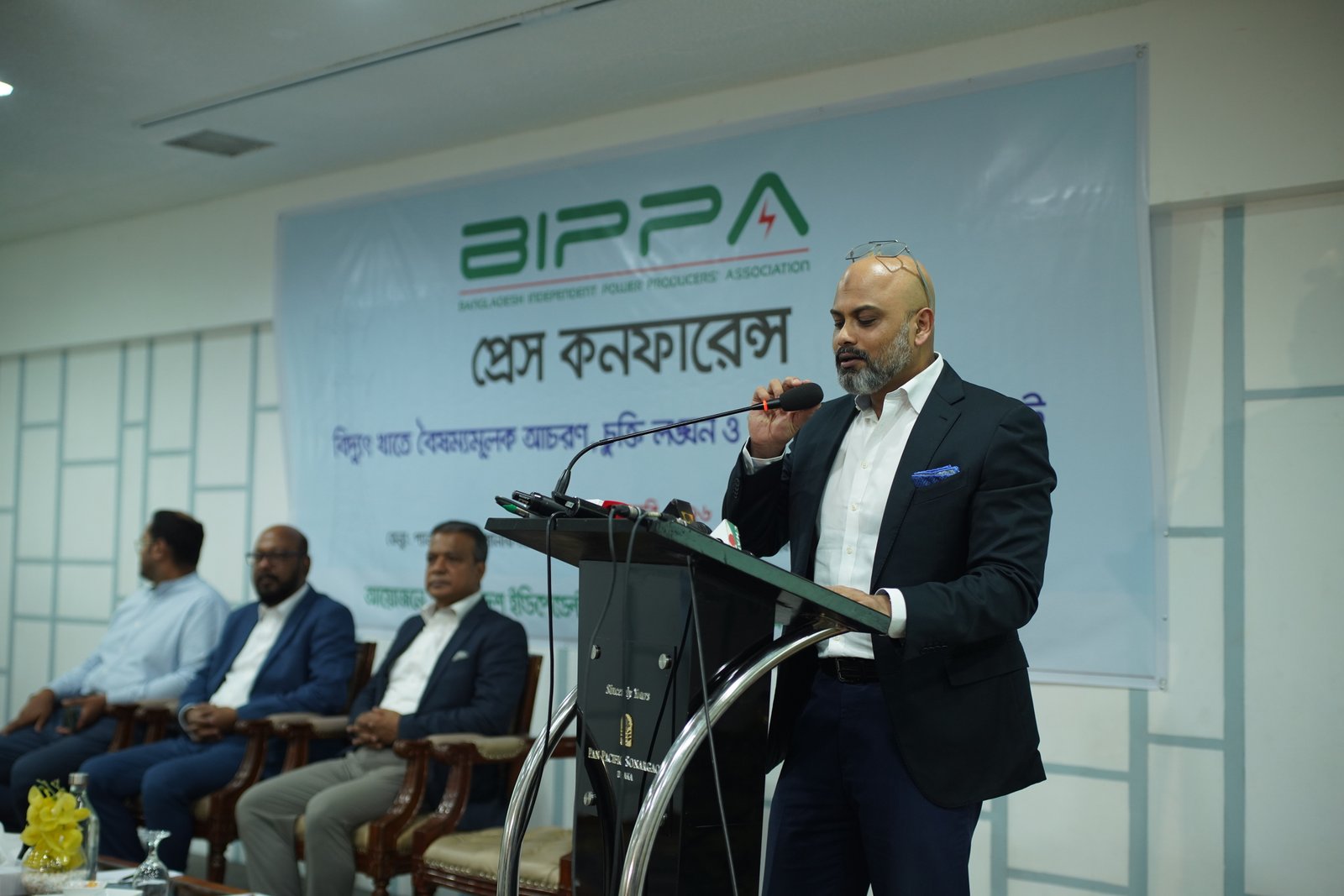
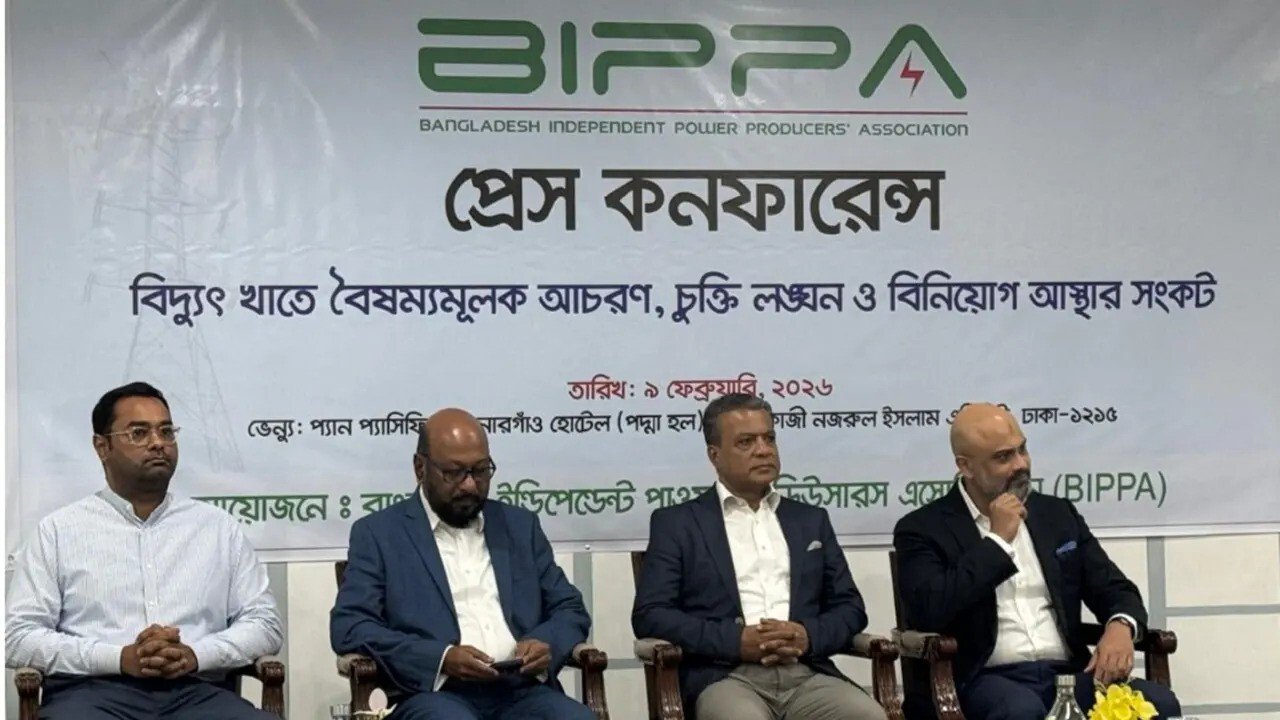
BIPPA’s former chairman Imran Karim made these remarks at a press conference held yesterday at a hotel in the capital, citing the relevant clause of the PPA.
He said that outstanding dues to 44 furnace oil–based private power plants currently stand at Tk 14,000 crore. Depending on the company, bills have remained unpaid for 8 to 10 months.
In response to a question, BIPPA President David Hasnat said that unless at least 60 percent of the arrears are paid, they will not be able to supply electricity as required during the upcoming Ramadan period, irrigation season, and summer.
He believes that the decision to withhold payments while collecting penalties (LD) in violation of contract terms may be a tactic to place domestic entrepreneurs in confrontation with the elected government.
David said, “We want to supply electricity as per contract, but due to the arrears we have no capacity to import fuel oil and generate power.”
At present, the total outstanding dues to both public and private sector power plants in the country are around Tk 30,000 crore. According to BPDB sources, the board has requested the Ministry of Finance to quickly release subsidy funds to clear the arrears, but has not received the money.
Imran Karim said that due to delayed bill payments, an increase in the dollar exchange rate, and bank interest, they have suffered losses of nearly Tk 8,000 crore. Because of the unpaid dues, it has become difficult to pay bills for fuel imports, and this crisis is disrupting electricity generation.
He said that BPDB behaves one way with a foreign company and differently with local companies, even though the contract terms are exactly the same. According to the contract, if BPDB cannot pay bills, it loses the right to demand electricity. Yet, penalties (LD) were deducted when generation was limited.
He added that under similar circumstances, a Chinese company—Barishal Power Company—was fined Tk 270 crore, but later the money was returned after proper verification. In contrast, a different decision is being taken in the case of local producers.
Imran Karim said, “It’s off-field in our own field—when will the field be made for us?” He added that foreign companies’ bills are not kept unpaid for more than 3 to 4 months, while local companies face 8 to 10 months of arrears. Many power companies are unable to repay loans. They are being forced to run on credit for oil and spare parts. Foreign companies do not operate under such conditions—so would they even want to invest after seeing this situation?
He said that if the dispute cannot be resolved through discussion, they may go to the Bangladesh Energy Regulatory Commission (BERC). However, when BIPPA approached BERC, their application was rejected, and they were advised to resolve the crisis through discussions with BPDB. But BPDB did not provide them any opportunity for dialogue.
Expressing frustration, Imran Karim said that the Chinese embassy wrote a letter on behalf of the Chinese company, but no one would do that for him. He said this makes him feel like he should keep his Bangladeshi passport and obtain a foreign passport—so that at least some embassy would stand beside him.
BIPPA President David Hasnat reiterated that it would be difficult to continue operating the power plants without receiving at least 60 percent of the outstanding dues. He said it appears that there is an intentional attempt to put domestic entrepreneurs in confrontation with the new government.
He questioned: the interim government claims it has improved everything—then why are such huge arrears still present in the power sector? He believes bill payments were deliberately stopped.
When asked whether they would go to court, David Hasnat said they had already gone to BERC, but the commission dismissed their petition and advised them to resolve the issue through talks with BPDB. However, BPDB did not allow any opportunity for discussion. A final decision on whether to go to court has not yet been made.
He said that after the election on 12 February, once the winning party or alliance forms a government, there will be an opportunity to raise the issue with them.
In response to a question about capacity payments, he said the answer should be sought from the energy adviser, who has explained in detail in his book why capacity payments are necessary.