There is no option but to ensure a smooth supply of primary fuel for maintaining the dynamism in the production and services sectors. Failure will not help achieve the medium- and developed-economy status. Efficient management and appropriate strategy can help achieve a smooth supply of the primary fuel. Long-term loans from multilateral development partners need to be taken because the necessary dollar supply is not possible from present sources. On the other hand, domestic fuel supply must be increased on a war footing. We have coal and natural gas resources. Global expertise must be used in addition to our skills for exploiting natural gas resources. There is no doubt that coal is a dirty fuel. But I do not think that there is any better option now than exploiting our own discovered coal resource.
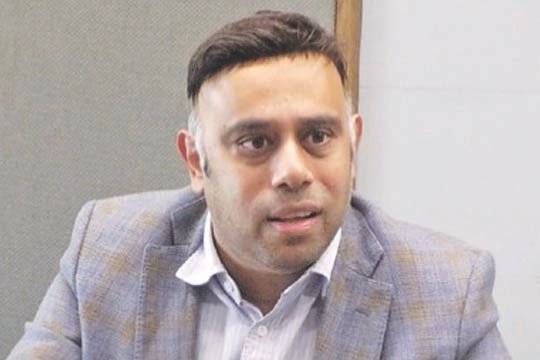
Dr. M Masrur Reaz, Chairman and CEO of Policy Exchange Bangladesh, said this in an exclusive interview with Mollah Amzad Hossain, Editor of Energy & Power.
The primary energy supply deficit has been identified as the number one challenge of Bangladesh's economy in the latest report of the World Economic Forum. What are your views?
We need to bear in mind that Bangladesh's economy is predominantly private-sector based. The private sector contributes 75% to the GDP. There was a time when the public sector used to invest 100% in utilities, especially power and energy sector utilities. But now the private sector contributes about 50% of power generation. Foreign exchange earnings and employment largely depend on export-oriented industries. Their development entirely depends on the state of the global market. There exist different dynamics like price and delivery on time. The development and competitiveness of export-oriented industries and the services sector largely depend on the smooth supply of fuel.
Exports from Bangladesh need to be increased 9 times from the present level if Bangladesh aspires to graduate to a developed economy by 2041. Again, a smooth power supply is essential for fully mechanizing agriculture. Hence for the development of agriculture and the production of industrial commodities, there is no option to ensure a sustainable supply of quality power and energy on an uninterruptible basis to export-oriented industries and service sectors.
Again, the quality electricity supply is also essential for expanding the use of electric vehicles (EVs) in the transport sector to keep up with the global modern trend. Primary fuel supply is essential for that. For the development industries and services sectors, there is no option to smooth the movement and transportation of industrial commodities and labor forces. Bangladesh may not make much headway in renewable energy development over the next 10-15 years. But efforts must continue to attract new investment.
There is no doubt at all that a smooth supply of primary fuel is the backbone of Bangladesh's economy. Hence the World Economic Forum in its report has correctly identified the primary energy supply deficit as the number one challenge of Bangladesh's economic development.
The energy division is assuring about smooth and uninterrupted supply of gas by 2026. Do you think it will be possible to do that?
Please note that if the present apprehension of the experts and researchers comes true, it will not be possible to ensure a smooth supply of quality power and energy on a sustainable basis even in 2026. That will trigger a crisis. The vision of economic development cannot be achieved. To do that economy needs a growing GDP at 8% from next year. The investment required for that is 36% of GDP. On the other hand, Bangladesh would lose tariff advantages for graduation from the Least Developed Country. Bangladesh will need to enhance the competitiveness of export commodities. Failures will cast adverse impacts on development, investment, and employment. Unemployment will increase. Power and energy are not just the essential service sectors, but the lifeline of the economy. Failure to ensure smooth supply will create adverse impacts on everything.
The outstanding payments of the power and energy sector now is US$5.0 billion. The government sources informed a large portion of overdue payments to the power sector would be met within the next few days. Will it be possible to do that?
No sector can sustain the nonrealization of overdue payments and the financial stress for an indefinite period. The outstanding payments have two parts - one in foreign currency and the other in local currency. Stagnancy prevails over the past one and a half years in payment of foreign currency. We must agree that we now have serious weaknesses in the management of foreign currency. Taka has been devalued to about one-third of what it was against US dollars. The situation could not be effectively confronted even through selling dollars from the reserves. There is no option to increase the flow of dollars to meet the requirements of imports and pay the installment of borrowed loans. We cannot afford any decline in our export earnings from the present level. We cannot completely stop the drainage of foreign exchange through hundi. However, we must keep trying to reduce it to increase contributions of remittance. For this, there is no option but to control trade-based money laundering.
The loans borrowed from banks are not being repaid but rather laundered out of the country. Effective steps should be taken to bring down the default loans.
I think the Energy Division must carry out a joint survey with the Finance Division and Bangladesh Bank on how much of the money required for payment of outstanding bills and money required for fuel import for maintaining statuesque can be met from local sources. Let us assume that this would be 60%. The rest should be borrowed from the World Bank, IDB, and ADB as long-term loans. The economy will be ready to pay back the loan if an uninterrupted fuel supply can be ensured through this action. Beyond this, we must get engaged with major fuel exporting countries to explore the possibility of fuel supply on a deferred payment basis.
Payment of outstanding bills of power and energy sector in local currency remains unmet now. How can the situation be remedied?
Please note that there is no option to increase revenue collection to get out of the situation. Bangladesh stays at the rock bottom of the Tax-GDP ratio among the South Asian countries. The revenue we earn is the bare minimum in our economy. To increase this, there is no option but to government investment in tax reforms and enhancing management skills.
The government can increase money flow by printing notes. But that will increase inflation. An effective interim tool can be issuing bonds. The government needs to do that. The government may think about innovative financing. The government has huge assets in the energy sector that can be monetized. The government can arrange money by managing its assets. By expanding the projects and smartly using PPP, the government can raise money. (See Bangla Pls)
Party in state power Awami League in its election manifesto has pledged an all-out initiative for enhancing gas exploration. It has also announced its pledge to exploit coal resources. What do you think needs to be done for the optimum utilization of your resources?
There is no denying that coal for its emitting nature is one of the dirtiest fuels. But we must bear in mind that our primary fuel resource is not unlimited. We have limited gas and coal. Following the Russia-Ukraine war, many European countries that almost abandoned coal have resumed using coal for their energy security. Some countries have adopted fresh policies for mining coal yet again. They did it to keep the wheels of the economy rolling. I find no reason why Bangladesh should not exploit its coal resources as a short- and medium-term resort for energy security. It may not be benign to the environment. But it is extremely essential for the economic growth of Bangladesh. The government must provide priority attention to it.
On the other hand, we may not have too large a gas resource. However, from the discussion of experts, it appears that Bangladesh can rely on its gas resources for at least 10-15 years. However, required investments for turning this resource into reserve have not been made over the past two decades. Again, the wrong belief that Bangladesh can exploit this resource in its capacity alone proved wrong. I am not against our endeavors. However, it has become essential now to attract FDI from IOCs for exploring petroleum resources onshore and offshore by applying state-of-the-art modern technologies.
My common sense drives me to say that investments from local and foreign sources are essential now for exploring our petroleum resources expeditiously. The exploration for gas resources must be made on a war footing. Failure to do that will deepen and intensify the primary fuel supply shortage.
Bangladesh Bank is going to announce monetary policy. Will it work to reduce the inflation you think?
Interest rate adjustment may assist in reducing inflation. But we need to see what steps are being taken to improve the value of the taka against the dollar. I do not find any alternative to the overall improvement of financial management and governance.
Interview as PDF/userfiles/EP_21_Interview_Dr_ M Masrur Reaz.pdf