It would not augur well for the Bangladesh economy if subsidies to the power and energy sectors keep rising due to growing dependence on imported primary fuel. Considering the disadvantage, planned actions have been launched to increase the contribution of own gas to the fuel mix within 3-4 years. However, exploitation of own coal reserve has not been totally abandoned although it is not under consideration now. On the other hand, the COVID-19 pandemic has impeded the planned offshore exploration for petroleum resources.
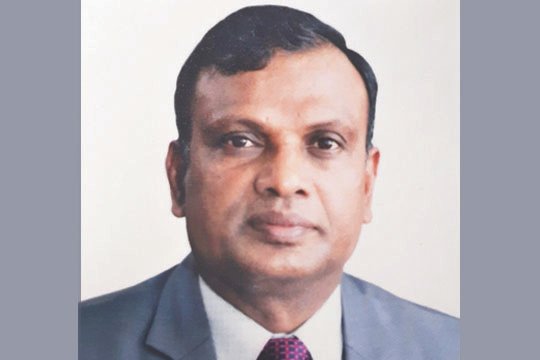
Senior Secretary of Energy & Mineral Resources Division (EMRD) Md Anisur Rahman made the observation in an exclusive interview with Energy & Power Editor Mollah Amzad Hossain.
How would be the coal and gas supply situation in Bangladesh over the next 3-4 years? The dependency on imported primary fuel is steadily increasing. What are you doing for supplying primary fuel to power sector and industries at competitive price?
The supply deficit of primary energy as compared to the ever-increasing demand is the most critical problem of Bangladesh now. Such situation has emerged due to the demand growth in power and industrial sectors beyond the projections by the Gas System Master Plan. Works on updating the master plan has started with the assistance of a Japanese organization. Reliance on imported gas is increasing due to progressive depletion of own gas production. Coal import is being done for all coal based power plants excepting the Barapukuria mine mouth plants. Keeping the price at affordable level would be a major challenge if reliance on imported fuel cannot be kept limited. For that very reason, initiatives have been launched under the stewardship of BAPEX for the exploration of Petroleum in the onshore areas.
Like others, you are aware that Bangabandhu’s Energy Vision was to supply energy to all at affordable price through maximizing use of own fuel – coal and gas – for power generation and industrial development. But contrary to it, Bangladesh has moved towards imported primary fuel. How would you react to that?
Bangabandhu laid the foundation of power and energy sector development. Ensuring the rights of the citizens on the natural resources of Bangladesh through article 143 of Bangladesh Constitution was his brainchild. He also envisioned the constitutional right of accessing to power of all. Now in the birth centenary year of the founding father, that vision has been achieved. It is also true that necessary attention for petroleum exploration was not given over the past 20 years. On the other hand, demand for natural gas has increased exponentially for commendable economic development. The plan for around 100 Special Economic Zones (SEZ) is under implementation. The demand of gas for power generation is ever increasing. Hence there is no alternative now to import of Liquefied Natural Gas (LNG) alongside expediting exploration for own petroleum resources.
We have discovered coalfields. But mining is taking place only in Barapukuria. Presently, the government has no plan to develop other fields. However, there is no decision yet that these will not be developed at all. We are following the directives of the Honorable Prime Minister going for low carbon development. Plans for implementation of 10 coal power plants have been shelved. Consequently, gas is now the preferred fuel option once again. Within next November, four new wells (including two exploration wells) would be drilled. Expression of Interest (EOI) has been invited for exploration at deeper prospects and for Chittagong Hill Tracts region. We are optimistic about increasing the supply from own source in the next 3-4 years.
But we believe that the rising demand cannot be met supplying from the own sources alone.
The successful resolution of the maritime boundary disputes with neighbors Myanmar and India were milestone achievements of Bangladesh. But at the same time, Bangladesh could not achieve any success from the prospects of maritime resources till now. At this stage, it is still uncertain when exploration campaign can be launched. What are your strategies now for this?
There is no denial that prolonged delays have been made. Our endeavor for launching deep-water exploration campaign got a big blow by the unexpected outbreak of COVID 19 pandemic. After finalizing the Model PSC, we were all set to launch the campaign. March 22, 2020 was set as the day for officially announcing the fresh PSC bidding round. We could have concluded the agreement for multi-client survey(s) before that with Schulmberger. They were ready for starting the work but could not start it. That work would start as soon as the situation gets conducive yet again.
Now for the changed global circumstances, major IOCs have diverted their attention towards LNG. We are not very hopeful about encouraging responses now. But we are contemplating to invite intending IOCs for investment through making proposals and negotiating PSCs with us.
The future of mining from Barapukuria has entered the zone of uncertainty. There is no decision yet for mining at Phulbari, Dighipara and Khalashpir. Does it mean that Bangladesh has decided for leaving coal underground forever?
I have already mentioned that mining would continue at Barapukuria. But the government has no plan till now for mining other discovered fields. There exist multi- dimensional debates about mining methods; mine water management and rehabilitation of farmlands. But no such decision has been taken for not mining ever. Only future would say what would happen to coal resources of Bangladesh.
There are talks about finding new gas resources in Chittagong Hill Tracts and deeper horizons of onshore deeper prospects. But experts are cautioning against BAPEX-alone policy for these highly risky explorations. They suggested finding Joint Venture partners for BAPEX or entering into PSCs with IOCs. What are your views?
We have significant amount of information about some structures of Chittagong Hill Tracts. After validating these, we need to go for further exploration. Yes, it would be risky going there relying on BAPEX-alone policy. Considering these, we have invited Expression of Interesting (EOI) for selecting JV partner(s) for BAPEX. The documents have been dispatched to various Bangladeshi missions abroad. We are expecting competent JV partners for BAPEX for blocks 22A and 22B.
Another EOI has been invited for exploration at 4500-7000 meters of depth. It is expected that by the end of 2022, exploration would start after concluding Joint Venture Agreement with successful bidders. Apart from above, five EOIs for deep drilling have been invited for Srikail 1, Mobarakpur, Titas 1, Bakhrabad 1 and Rashidpur 1.
On top of that, Petrobangla data center has been opened for all interested exploration companies.
What is the perspective plan of government for BAPEX, especially in the onshore areas? Is there any plan for PSC bidding for the onshore?
I am personally conservative about keeping onshore exploration preserved for BAPEX. But any proposal for joint venture works with BAPEX would be appreciated.
We understand that LNG import is now the priority to make up the gas deficit. Eccelerate Energy has expressed its interest to supply 26% more LNG from its FSRU at Maheshkhali. What are your views? NWPGCL under a JV has also given a proposal for 1000 MMCFD LNG supply through setting up a Customized FSRU in deep water and constructing a pipeline to Khulna. Summit Group has also submitted a proposal for LNG import. What is the state of these proposals?
Please note that in the present and emerging scenario, there is no option but growing big in LNG import. The capacity of the two under-operation FSRUs at Moheshkhali is 1000MMCFD. We have taken a maximum of 850MMCFD from there. Both the FSRUs have standby regasification unit. Eccelerate has submitted proposals for 26% increase in supply. Subject to availability of LNG, we have no issues. But from September there is a decision for not importing any LNG from spot market for the time being. Spot market is extremely volatile now. LNG to Bangladesh would come from Qatar and Oman under long-term contracts. Contracts for shorter 2-3 years of term are the stages of finalization. We are hopeful about concluding these by end 2021. Not the tendering, but going to the source is our priority now.
Eastern region of Bangladesh is the focal point now for gas supply and LNG import. But for power generation and industrialization, we have to take into consideration of Western region as well for additional gas supply and LNG. Two Indian companies have signed MOUs with Petrobangla for LNG supply. Both have proposed for supplying LNG through pipelines to Bangladesh after importing LNG to terminals in India. Not much development has been achieved yet.
Two proposals for LNG import using Payra port remained pending with EMRD. Previous study rejected the possibility of land-based LNG terminal at Payra Port region for shallow draft. NWPGCL under JV with Siemens, CMC and BP intends for setting up 3600 MW capacity LNG-based power plants. After exit of BP from LNG supply plan, Eccelerate joined the JV. The JV, after carrying out a feasibility study, has submitted a proposal to the EMRD. Not at Payra, but about 60-70km away into the deep water from Kuakata shore, they intend to set up a FSRU of 1000 MMCFD LNG supplying capacity. Subsea pipeline would transport RLNG for using at the power plants and they proposed to supply the spare gas to the Khulna region. They proposed to construct the pipeline with own investment. A committee is now reviewing their proposal especially the eventual price of gas to ascertain whether the price would remain within the affordable limit.
Summit Group has also submitted a similar proposal. There is an additional alternate proposal too. This would be setting up FSRU at Kutubdia Island and transporting LNG either using smaller LNG carriers or through pipeline to Payra.
The EMRD cannot state with confidence whether such apparently expensive proposals involving complex infrastructures would lead to supplying energy at affordable price. Up to Tk 3200-3300 crore investments would be required for constructing 190km pipeline to Khulna.
When are you expecting the land-based LNG terminal to come into operation? When the field construction would start?
Works for a land-based terminal at Matarbari is in progress now. Initially, it would have a capacity of 1000 MMCFD with a scope for expansion to 2000 MMCFD. It may take up to 2025 to bring the first unit into operation. Some 12 companies had responded to the EOI and after evaluation, 8 companies have been short-listed. Tokyo Gas would finalize the EPC tender document by September 2021. After review the tenders would be invited from the short-listed companies.
On a single channel at Matarbari, the Coal Port, Coal Transfer Terminal, LNG Terminal, LPG Terminal and Container Terminal are in vision. Can it contain such huge traffic?
Chattogram Port Authority owns the port though the investments for the terminals are supposed to be made by our ministry. They are the right contact point to answer your question. We are not sure whether they have done any feasibility study for this.
The present deficit of gas is 500 MMCFD and it is growing. Own production is progressively depleting. Can imported LNG cover this growing deficit?
True, it would be extremely difficult containing the present and emerging deficit through LNG import if industries specially power generation becomes exclusively reliant on gas. Hence all fuels including diesel, furnace oil would be continued as options. The economy would get a huge shock if emerging fuel demand cannot be met. We have to act thinking deep on how the 6000 MMCFD gas demand projected in 2041 would be met. Relying on imported energy alone would create huge challenge at that time.
Decision for developing a comprehensive master plan for Power and Energy has been taken with Japanese assistance. What are your views?
A perfect and time-befitting decision. A comprehensive and implantable master plan is essential for power generation and required fuel supply. There is no alternative to this.