Increasing demand for power would be the immediate challenge for the government as the country’s generation capacity now remains idle. And, improving the transmission and distribution systems would help ensure uninterrupted supply of quality power while a rational fuel mix would facilitate lowering the generation cost, creating demand for electricity particularly in industries.
Energy experts identified the immediate challenges of the energy sector at a virtual discussion titled “2021 Energy Sector Challenges” held on January 2, 2021. Energy and Power magazine in collaboration with M2K Technology and Trading organized the event titled “EP Talks” as part of a series.

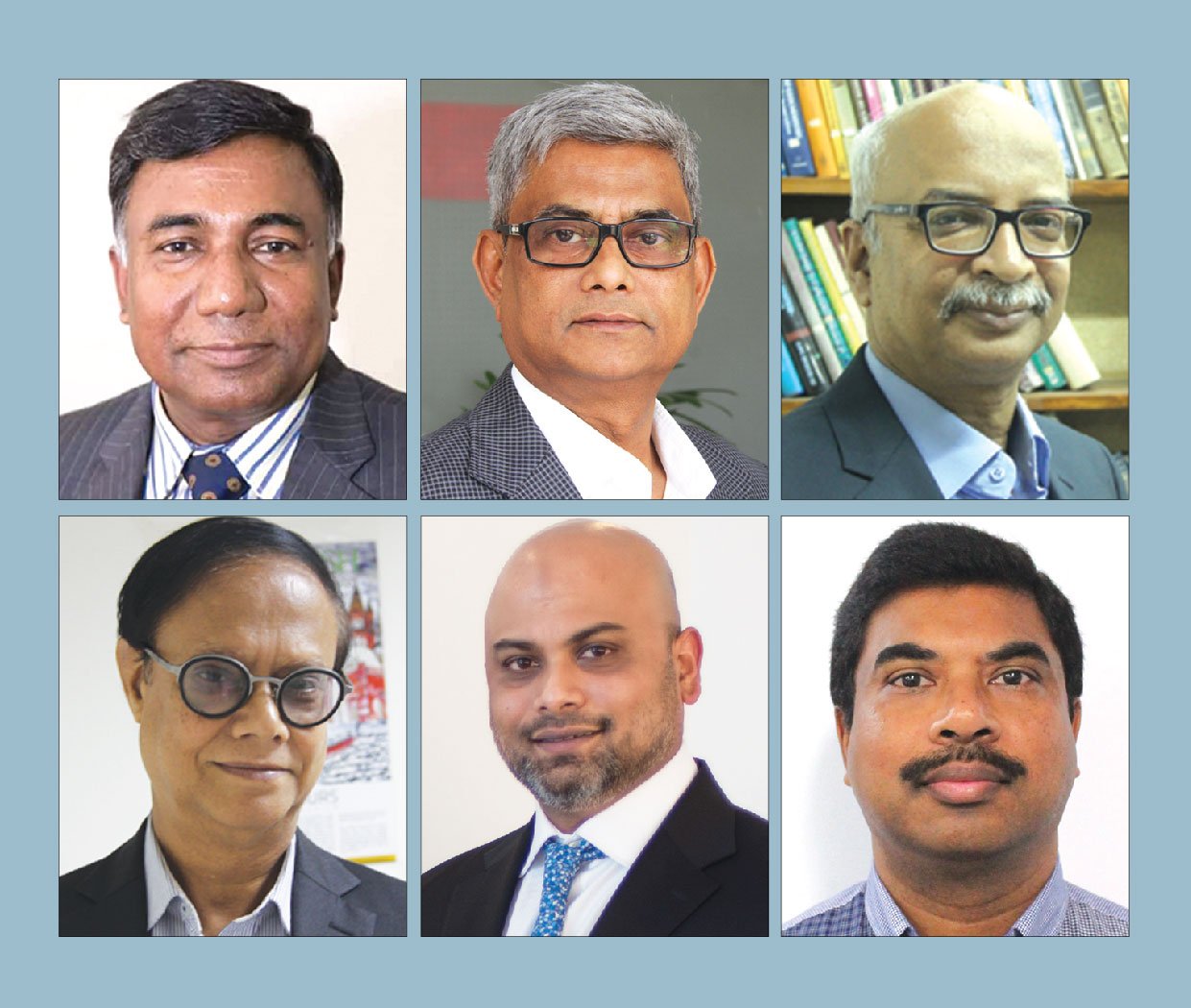
Director General of Power Cell Engr. Mohammad Hossain presented the keynote paper and Editor of Energy & Power Mollah Amzad Hossain moderated the discussion.
The experts discussed in details the problems and challenges, and put forward recommendations to address the issues so that the sector could contribute more to the economic development of the country.
In his keynote presentation, Engr. Mohammad Hossain mentioned that the power sector has achieved commendable success through embracing and confronting various challenges. The target for power to all and achieving 24,000MW generation capacity was set for 2021. We have achieved 100% coverage of the grid power supply and with the 3,000MW captive power, 24,500MW generation capacity was achieved one year ahead of the schedule.
Now, we are working on ensuring quality power supply on uninterruptible basis to all. Confidence on grid power supply would be enhanced after completion of the works. We are endeavoring for ensuring supply from dual sources. Now actions are underway for automatic data generation. Around 50% automation would be completed within 2021.
Engr. Hossain said that consistent with the prevailing situation. we formulated Captive Power Policy (CPP), Small Power Policy (SPP), Merchant Power Policy (MPC) and Independent Power Policy (IPP). Now we are working on a comprehensive power generation policy combining all these. We want to bring private sector in the power transmission. The new policy will provide that opportunity. We are trying to access wholesale market of Indian power for a while. We entered into long term power supply, but our own plants remain idle now. We will rather purchase power when it is required. Let utilities purchase own power. We are trying to develop that strategy.
Prof Dr. M Tamim, noted energy expert and former Special Assistant to the Chief Advisor of the former caretaker government, said that use of grid power in the industry must be increased as it remained static over the past 3-4 years. The demand projection for power sector has so far been proved wrong. Power Cell should be given the responsibility for better projection. The power demand should be estimated from the macro considerations. We will be in a serious trouble if we fail to more accurately project the demand for next five years. Planning should be restricted for 10 years. Planning for 20 years in a developing country is useless. The 20-year-old plants using primitive technologies must be phased out. Due to gas deficit, about 2,500-3,000MW generation capacity remains idle. Cooling load is 3,500MW. Forecasting is very important on how Bangladesh would manage that load in summer.
He said that it is possible to purchase power at lower price if Bangladesh can access to the wholesale market of India. We are now importing power from India through two single lines of one-way connectivity. We have to update the connectivity for accessing the wholesale market. Solar power is traded at 3.0 Indian Rupees per unit now. This is not the actual cost, however. They are looking for market. We should have at least three to four more connectivity with India for power trading. Payra and Matarbari hubs are being developed. Automated power transmission system needs to be there. Rooppur nuclear power plant will soon be ready for commercial operation, but we would not be able to utilize that power until appropriate transmission facilities are in place. Evacuating more than 10% power from a single source would create a risk.
Engr. Md Quamruzzaman, former Director of Petrobangla, raised question whether the energy sector could create a dream career destination for the new professionals. Until such situation can be created for the new professionals, the cherished objectives cannot be achieved. These areas have so far been neglected. In my opinion, this is a major challenge. Knowledge gathering through training is essential so that works can be efficiently done without fear. Business as usual operation of the board of directors of the state-owned enterprises (SOEs) is not delivering much. The Managing Directors are bringing the projects and the boards are simply approving those. The directors have to own the companies, provide essential directives and monitor progresses. The works must be done through maintaining the quality and completed within the stipulated time and estimated budgets.
Engr. Quamruzzaman said enabling infrastructure would be required to improve energy supply situation. The LNG storage capacity required to be increased if LNG is considered as a preferred fuel. We have to grow smarter about fuel use. We would use more LNG when global price remains lower and when the price goes up, we will have to use more own gas. For this, we must expedite gas exploration activities. The capacity of land-based LNG terminal needs to be increased up to 25 million tonnes per annum. It would be technically feasible.
The energy expert said Bangladesh is lagging way behind exploration of own gas. For lack of a decision, lower global price and extraordinary delays in commencing multi-client survey, nothing could be done yet in deep offshore exploration. We could exploit possible gas resource in the deeper zones. PSC can be done for this.
“We cannot also afford to exclude coal, which is still the most affordable primary fuel. But we have to decide what would be its contribution?” he said. He added that the Mosharraf Committee had prepared and submitted a comprehensive report, but was not discussed about it. The reports of Phulbari mining need more reviews. IWM gave a report on open pit mining. That report was also not discussed. We have already observed challenges of transportation and price in case of imported coal.
Dr. Ahsan H Mansur, Executive Director of Policy Research Institute, observed that primary fuel import dependency would definitely create an impact. If Bangladesh can continue developing its export trade, such impact can be absorbed. The impacts from fuel import may not take full effect.
He suggested changing focus of energy and power from domestic sector to industries. That will assist in maintaining cycle of financing. Higher investments must be directed to transmission and distribution segments now.
Let the private sector come to transmission, but this must be done in a fair and transparent manner starting in a limited way without creating any risk for the government. Investors also have to share the risks. It is high time to bring private sector in transmission and distribution segments. We have to explore whether we can introduce private-to-private sector linkage between India and Bangladesh. That will make sectors much more competitive.
Huge investment is being made for creating back up facilities for power supply. We have to enter lifts with the apprehension of getting stuck for probable power disruption. Generators are being installed to address this situation. The cost is increasing. We could supply power at cheaper rate due to use of own gas. But the cost is now increasing for not exploiting our own coal reserve. There is no talk even at policy level about own coal. After 20 years, our own coal may not be mined at all.
Imran Karim, President of Bangladesh Independent Power Producers Association (BIPPA) and Vice-President of Confidence Group, pointed out that the power system has about 1,700MW capacity power plants using outdated old technology. There is no point keeping these going. Other than captive and other generators, the grid power generation capacity is 15,000MW. Often we see in media that the system has much surplus generation. In my opinion, the government has done it correctly. The situation demands introducing private sector in transmission and distribution segments. There must be a policy developed for this. I think the government policy for preferring gas in the future fuel mix is a right consideration.
Responding to a question about investors’ interest in power transmission, he mentioned that land acquisition is a serious challenge in Bangladesh. In such situation, it is extremely difficult for any other organization other than the government in constructing transmission lines. Subject to the government’s generous interest, many investors would come forward. A large group of investors are working in the sector.
Prof. Dr. Firoz Alam, an academic, researcher and a chartered professional engineer from RMIT University at Melbourne in Australia, illustrated a comparative power consumption at residential, industrial, commercial, and agricultural sectors in Bangladesh, India and Pakistan. Unlike other South Asian and global trend, the residential sector in Bangladesh is the largest power consumer with over 57% of the total. As an emerging and developing economy, the industrial sector in Bangladesh should have been the largest power consumer. In fact, Bangladesh industrial sector’s power consumption is lowest among South Asia’s major economies and significantly lower among other developing economies with similar per capita GDP. Citing the power consumption data over eight years (2012-2019), Prof Alam stated that the power consumption in industrial and agricultural sectors remain almost unchanged despite the nation achieved almost 10% compound annual growth rate (CAGR) of power consumption for the same period. Over 90% of this annual power consumption growth is absorbed by the residential sector. He urged exploring the reasons and encouraging industrial sector to use grid-connected power and to minimize the use of captive power. Prof Alam has also mentioned that efforts (making sure south facing building’s orientation) need to be undertaken during residential and commercial buildings construction to maximize natural light during daytime and natural ventilation for reducing power loads of air-conditioning and artificial lights. He underscored the need for bilateral and multilateral cooperation in power and energy exchange/ trade among Bangladesh, India, Bhutan, and Nepal for enhancing country-specific and regional energy security.