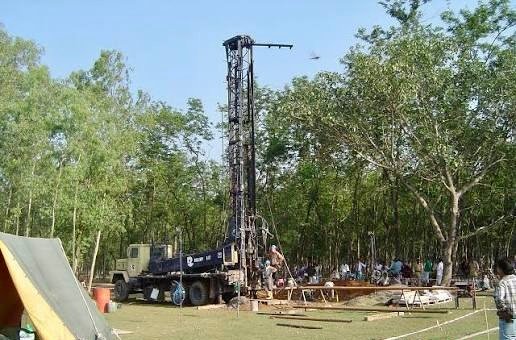
At a time of mounting energy insecurity, exploiting Bangladesh's discovered coal resources using state-of-the-art, environmentally responsible mining technologies should become a top national priority. Domestic natural gas reserves are rapidly depleting, while the country is struggling to import LNG, liquid fuels, and coal from an increasingly volatile global energy market. Developing new onshore and offshore gas resources will take years, while expanding renewable energy (RE) faces significant technical, financial, and institutional constraints. Moreover, renewable energy alone cannot meet Bangladesh's growing energy demand.
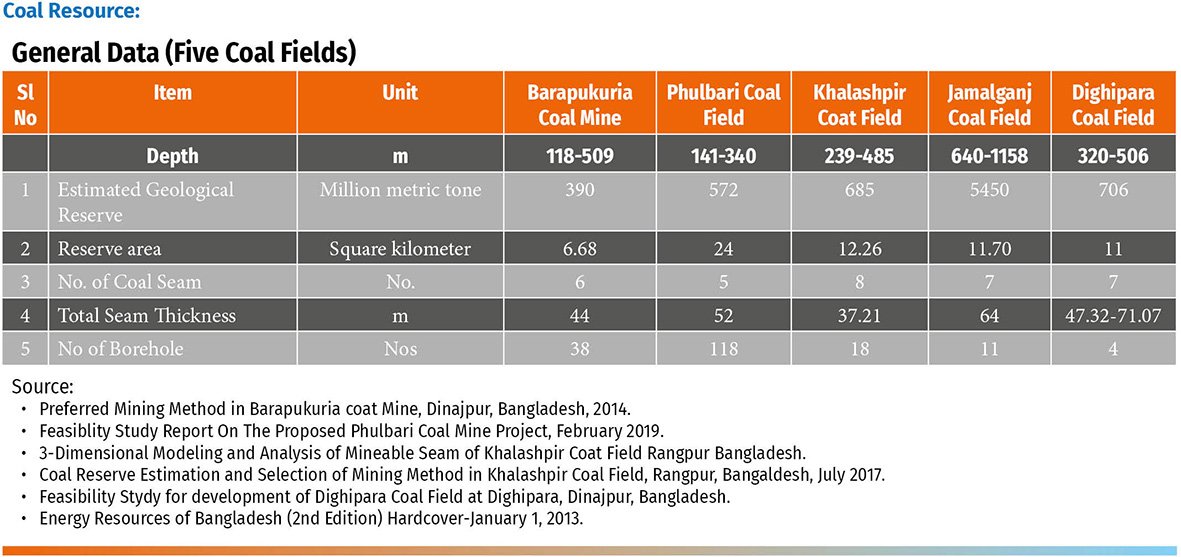
In contrast, Bangladesh's five discovered coalfields in the greater Dinajpur and Rangpur regions contain an estimated energy equivalent of about 65 trillion cubic feet (Tcf) of natural gas. These reserves consist of high-calorific-value coal with low sulfur and low ash content. Energy experts believe that coal from the Barapukuria and Phulbari fields alone could support the generation of up to 10,000 MW of electricity for at least 50 years.
The Scheme of Development (SOD) for the Phulbari coal project, prepared following extensive feasibility studies, concluded that modern water management systems and progressive agricultural land rehabilitation could minimize environmental impacts. Bangladesh also has no binding international obligation to reduce greenhouse gas emissions. Meanwhile, coal-fired power plants at Payra, Rampal, Matarbari, and Barapukuria have demonstrated that emissions can remain within internationally accepted standards when modern technologies are employed.
The present BNP alliance government, after completing its ongoing technical assessment, should make a political decision on coal mining within 2026. If mining operations and mine-mouth power plants are developed simultaneously beginning in 2027, Bangladesh could have at least 5,000 MW of domestically fueled coal-fired generation by 2031.
For more than two decades, opposition from often poorly informed and sometimes politically motivated activists has delayed the development of what many describe as Bangladesh's "black gold." Meanwhile, conflicts in the Arabian Gulf and Persian Gulf have intensified energy insecurity across fuel-importing nations. Under these circumstances, Bangladesh should seriously consider utilizing its domestic coal resources.
Admittedly, such a decision is not straightforward. The coalfields lie beneath fertile agricultural land and complex aquifer systems. However, internationally proven mine water management technologies already exist and were comprehensively evaluated in the Phulbari feasibility studies. The SOD also includes phased plans for restoring agricultural land and rehabilitating affected communities after mining.
Before approving any mining project, the government may appoint an internationally accredited mining consultant to independently audit the technical, environmental, and social aspects of the proposed development.
Present fuel supply scenario
Bangladesh's energy system has historically depended on natural gas. At its peak, domestic production reached approximately 2,750 MMCFD, supplying gas for electricity generation, urea fertilizer production, industries, and household cooking.
Benefiting from relatively cheap gas and electricity, energy-intensive industries expanded rapidly, outpacing investment in petroleum exploration and development. Unfortunately, successive governments since 2000 failed to adequately explore and develop new onshore and offshore gas resources. At the same time, discovered coal reserves remained untapped because of the absence of political consensus.
As existing gas fields matured, domestic production gradually declined from around 2,750 MMCFD to roughly 1,700 MMCFD today.
To offset the shortfall, Bangladesh began importing LNG in 2018 after commissioning two Floating Storage and Regasification Units (FSRUs) off the coast of Moheshkhali. Petrobangla currently supplies approximately 2,700 MMCFD of gas, including 900–950 MMCFD of regasified LNG (RLNG). However, peak national demand has already reached around 4,000 MMCFD.
Because of the resulting supply deficit of 1,200–1,300 MMCFD, nearly 3,500–4,000 MW of gas-fired generation capacity remains idle. The two existing FSRUs can regasify a combined maximum of around 1,100 MMCFD.
The caretaker government led by Professor Muhammad Yunus canceled the contract for a third FSRU and discontinued negotiations with Excelerate Energy regarding a proposed deepwater floating LNG terminal off Kuakata. These decisions have further delayed Bangladesh's ability to expand LNG import capacity.
Meanwhile, Bangladesh has developed several large imported coal-fired power plants in partnership with foreign investors. When coal supplies arrive on schedule, these plants can collectively generate around 7,000 MW of electricity.
As a result, Bangladesh has transformed from a country largely dependent on indigenous energy resources into a major energy importer. Recent geopolitical tensions have driven fuel prices sharply higher while disrupting global supply chains, creating severe energy security challenges for Bangladesh and other fuel-importing countries.
Bangladesh has taken some encouraging steps to accelerate petroleum exploration. BAPEX is implementing its 50-well and 100-well drilling programs, while Petrobangla is preparing new production-sharing contract (PSC) bidding rounds for both onshore and offshore exploration.
However, meaningful results from these initiatives are unlikely within the next eight to ten years. There is no guarantee that commercially viable gas discoveries will be made. Even if significant offshore discoveries occur, commercial production would likely require another eight to ten years.
By then, production from existing gas fields may have declined much further. Bangladesh simply cannot afford to become an economy entirely dependent on imported LNG.
RE can help, but not replace conventional fuels
Many stakeholders advocate accelerating the country's energy transition by rapidly expanding renewable energy and other clean energy sources. The 2,400 MW Rooppur Nuclear Power Plant will certainly improve energy security once fully operational.
However, Bangladesh continues to face major technical, commercial, institutional, and geographical constraints in developing large-scale solar and wind energy. Even under optimistic scenarios, renewable energy is unlikely to contribute more than around 10,000 MW in the foreseeable future, and achieving that target will require overcoming substantial policy, financial, and infrastructure barriers.
Nevertheless, renewable energy development should continue aggressively. The government's target of achieving a 10 percent renewable energy share by 2030 is both appropriate and achievable if existing barriers are systematically addressed.
Coal remains an untapped strategic asset
Among Bangladesh's five discovered coalfields, only Barapukuria is currently under production using the underground longwall top caving method. Coal extracted from the mine supplies the adjacent power plant.
However, this mining method has proven technically challenging and expensive. The cost of producing coal at Barapukuria now exceeds the cost of importing coal.
Many experts believe that Barapukuria would be better suited to open-pit mining. A high-level government committee under the previous Awami League administration also recommended adopting this approach.
The government has already acquired large areas of land around Barapukuria at substantial cost, while extensive land subsidence has created large water bodies. Yet no final decision has been taken regarding conversion to open-pit mining.
Unless an alternative mining strategy is adopted, underground mining at Barapukuria may cease after 2027, leaving the adjoining 525 MW mine-mouth power plant without fuel.
During the BNP government of 1991–96, Bangladesh signed an exploration agreement with BHP Minerals Australia for coal exploration at Phulbari, leading to the discovery of substantial coal reserves.
Later, during the Awami League government of 1996–2001, an agreement was signed for mine development after the project rights were transferred to Asia Energy Corporation, a subsidiary of GCM Resources.
Following extensive feasibility studies involving internationally recognized mining consultants, Asia Energy submitted its comprehensive Scheme of Development in 2005.
Over the subsequent two decades, successive governments neither canceled the agreement nor approved the mining project.
The Phulbari SOD incorporates internationally accepted technologies for agricultural land restoration, groundwater and surface water management, and phased rehabilitation of mine-affected communities.
Available studies indicate that Phulbari alone could support between 5,000 MW and 7,000 MW of mine-mouth coal-fired generation for approximately 50 years using modern open-pit mining methods.
Treated mine water could be reused for irrigation and community water supply, while mined land could be progressively restored and returned to local landowners for agricultural use.
The government has also completed preliminary studies at Khalashpir and Dighipara, while feasibility studies for coal bed methane (CBM) extraction have been undertaken at the deep Jamalganj coalfield.
Regional and international mining experts frequently cite successful coal mining operations in India, Germany, Poland, and China as evidence that modern mining technologies can effectively address environmental and social concerns.
Although Bangladesh is among the countries most vulnerable to climate change, it currently has no mandatory international commitment requiring reductions in greenhouse gas emissions.
Commercially proven technologies are available to mitigate many of the environmental concerns raised by civil society regarding coal mining.
For Bangladesh, responsibly utilizing its coal resources may represent the most practical and economically viable pathway toward medium- and long-term energy security.
The government should therefore make a policy decision on coal mining during 2026.
Otherwise, by 2030, declining domestic gas production could leave Bangladesh overwhelmingly dependent on imported LNG, coal, and liquid fuels. The resulting import bill would place immense pressure on the economy, industries would face higher production costs, and economic growth could slow significantly.
The most realistic path forward is to begin coal mining by 2027 while establishing a high-level independent expert committee to oversee environmental management, operational safety, and regulatory compliance.
Harnessing Bangladesh's own coal resources for electricity generation could become a transformative step toward strengthening national energy security.
With the global transition away from fossil fuels accelerating, Bangladesh also faces the risk that its discovered coal reserves could remain permanently underground unless a political decision is made soon.
Download Special Article As PDF/userfiles/EP_24_04_Special_Article.pdf