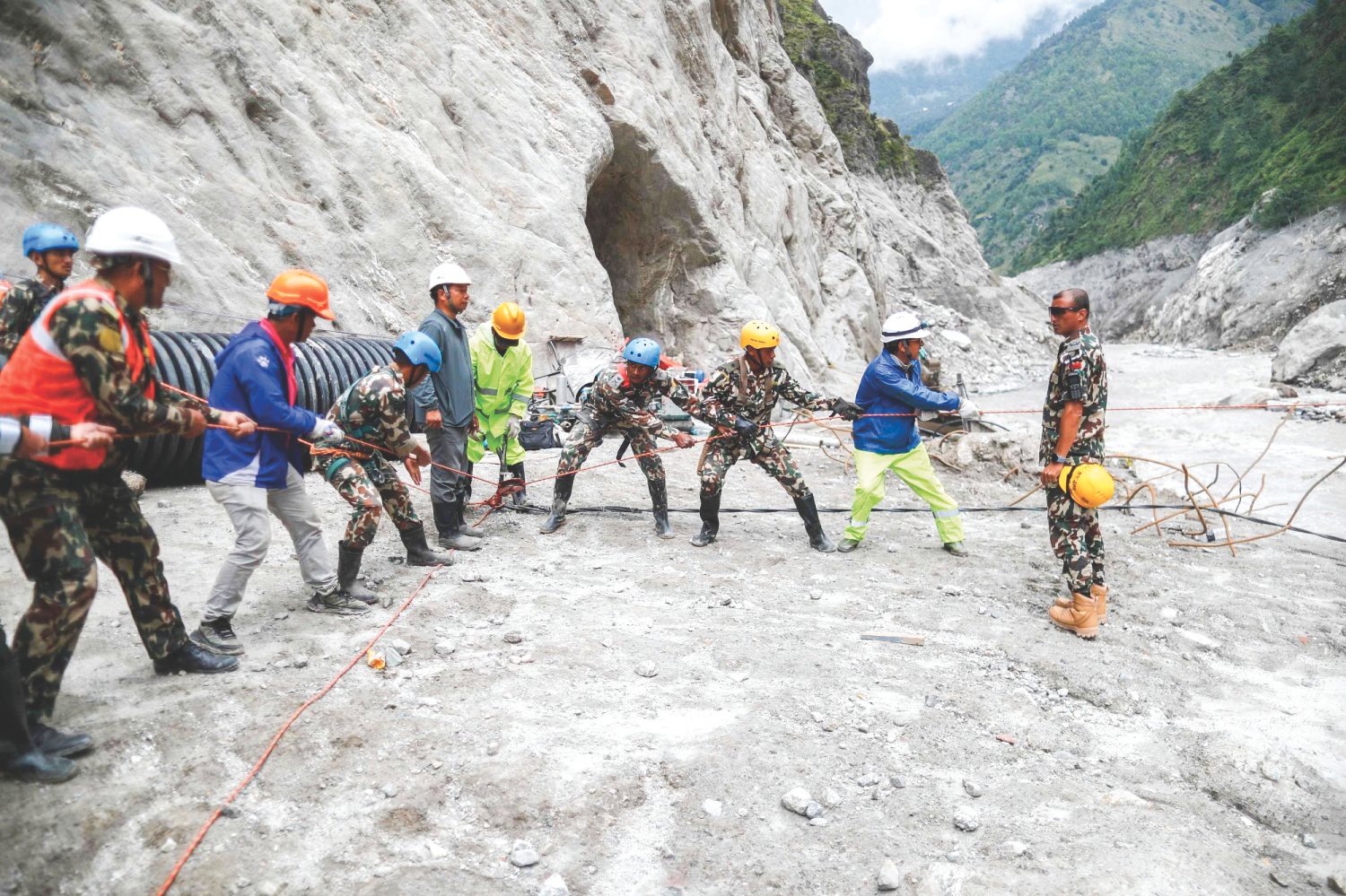
Nepal’s hydropower-driven energy strategy is facing renewed scrutiny after a devastating August disaster damaged power infrastructure, disrupted electricity generation and exposed the vulnerability of projects to growing climate and geological risks.
The disaster, triggered by a glacial mountain collapse on the China-Nepal border, killed more than 1,400 people and left thousands missing. It also knocked 410 megawatts (MW), or about 10% of Nepal’s power generation capacity, out of service.
Hydropower supplies more than 90% of Nepal’s electricity. Over the past decade, the country has increased its hydropower capacity more than fourfold to around 4,120 MW, connecting nearly all of its 30 million people to the national grid.
Nepal had also begun exporting surplus electricity to India and Bangladesh, but authorities suspended exports following the disaster.
Government assessments indicate that the energy sector accounted for about half of the infrastructure damage. Seven hydropower projects were directly affected, while six projects under construction, with a combined capacity of 508 MW, also sustained damage.
The destruction has prompted calls to reassess project design, construction standards and disaster preparedness.
Energy, Water Resources and Irrigation Minister Biraj Bhakta Shrestha told parliament that the disaster had provided serious lessons for the future, stressing the need to develop systems that can reduce risks from similar events.