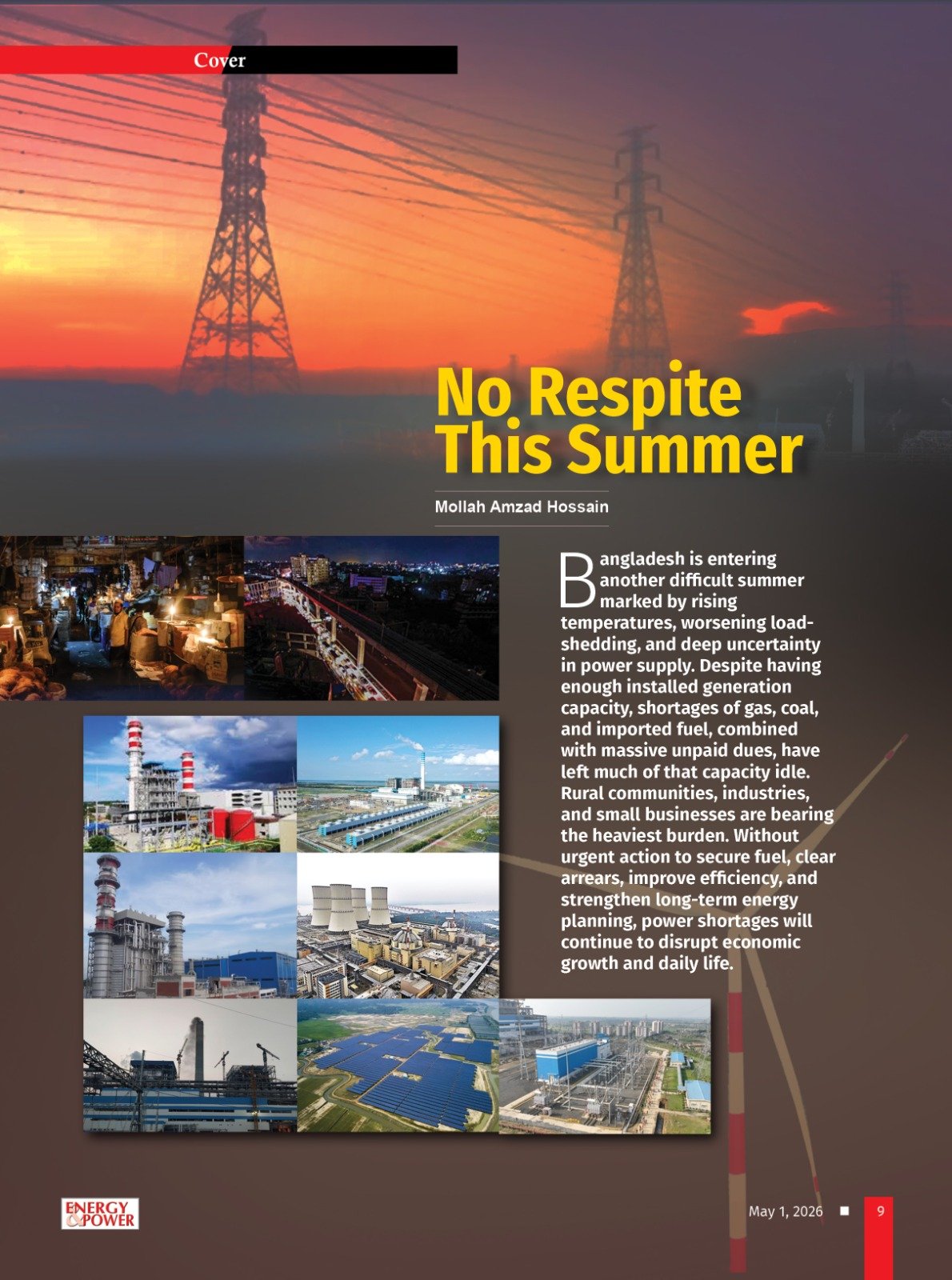
The return of load-shedding after a long break feels like an old wound reopening. As temperatures climb and heatwaves spread across the country, households, factories, and farms are once again being forced to plan their days around power cuts. In cities, the inconvenience is frustrating; in rural Bangladesh, where outages last up to 16 hours, it is crippling.
This summer was always going to be difficult. But what makes the crisis more painful is that Bangladesh has enough installed power generation capacity on paper. The real problem lies elsewhere – fuel shortages, unpaid bills, poor planning, and years of neglect in developing domestic energy resources. The result is a system that looks strong from the outside but struggles to keep the lights on when demand rises.
As temperatures rise, the electricity deficit—and consequently load-shedding—is increasing. With the onset of heatwaves, the Bangladesh Power Development Board (BPDB) is struggling to meet electricity demand.
An analysis of demand and supply during the last two weeks of April shows that on April 22, total electricity demand over 24 hours reached 378 million kilowatt-hours (kwh). Against this, BPDB was able to supply only 326 million kwh, leaving a deficit of around 53 million kwh.
In megawatt terms, peak evening demand on that day reached 16,647 MW, while supply stood at 14,467 MW. Daytime peak demand supply was 12,216 MW. During peak hours, load-shedding amounted to 2,180 MW.
Although load-shedding had little impact in the capital, Dhaka, on that day, its effects were severe in rural areas. According to media reports, rural regions experienced power outages lasting between 6 and 16 hours. In particular, the impact was acute in the service areas of 80 rural electricity cooperatives under the Bangladesh Rural Electrification Board.
.jpg)
The electricity shortage has disrupted daily life and negatively affected industry and commerce. It is reported that production in small and medium industries has been disrupted by up to 30% due to load-shedding. Similarly, production in the ready-made garment sector is claimed to have declined by 25–30%.
The Power Division has expressed regret over the electricity shortage and public suffering. It stated that this summer will not be completely free of load-shedding, although the situation is expected to become tolerable from early May.
However, many critics have blamed the newly formed government, arguing that power shortages have increased whenever the BNP has come to power, sometimes reaching extreme levels. In reality, the current situation itself has made it difficult for the newly formed BNP government to ensure electricity supply.
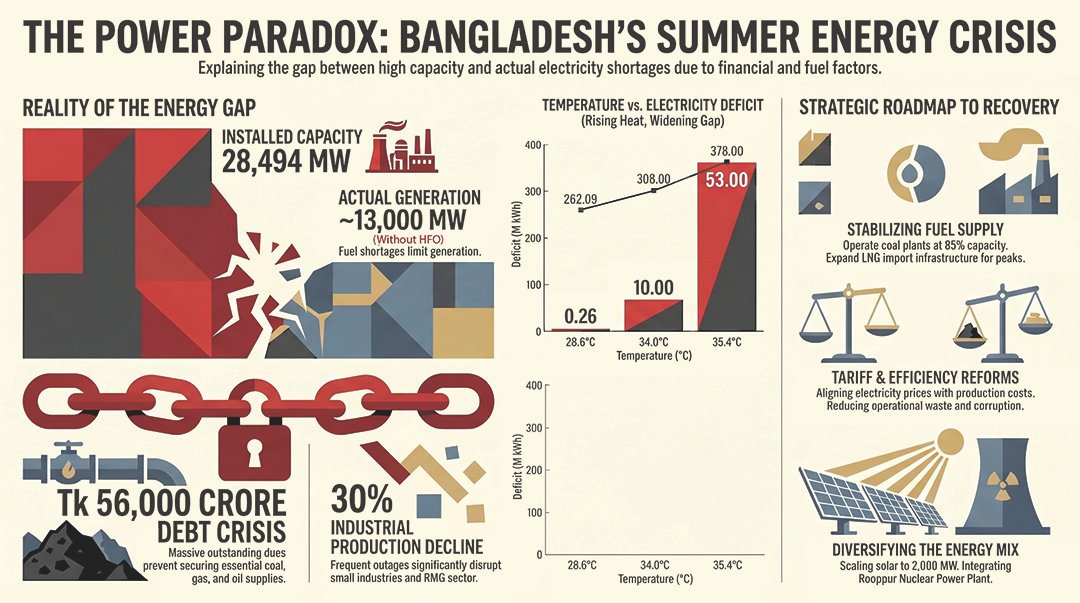
During this summer, peak electricity demand is projected to reach 18,500 MW. In contrast, the country’s installed grid-connected capacity, including imports, stands at 28,494 MW. However, due to shortages of fuel supply, BPDB is struggling to generate an average of only 13,000 MW. Additionally, BPDB to generate up to 4,000 MW from HFO plants at peak times.
The current outstanding dues in the power sector amount to Tk 56,000 crore. BPDB’s inability to pay these dues has created a crisis in securing fuel supplies, especially coal and oil. Meanwhile, Petrobangla is currently unable to supply even half of the gas required to operate gas-based power plants, and this situation is unlikely to improve in the near future—in fact, it may worsen.
Speaking at an event on the power crisis, Minister for Power, Energy and Mineral Resources Iqbal Hasan Mahmood, MP, stated that current load-shedding stands at around 1,200–1,500 MW, which is expected to decrease to 800–900 MW in early May. However, he emphasized that load-shedding will continue throughout the summer.
He said, “This is not the fault of the current government. The previous Awami League government severely weakened this sector through rampant corruption, establishing power plants without ensuring fuel supply, and creating massive arrears. The interim government then pushed the sector into an ICU-like condition. We have started working to restore the sector’s health and ensure electricity supply to meet demand.”
He added that achieving this goal will not be easy. The current outstanding dues in the power and energy sector amount to Tk 56,000 crore. Although efforts are underway to clear these dues, it will take time to restore normalcy. He also noted that the ongoing U.S.–Israel–Iran conflict has further worsened the financial crisis in the energy sector.
Experts believe that flawed policies in the power and energy sector are responsible for the current situation, where shortages persist despite having sufficient installed capacity. The main reason is the neglect of domestic energy resources—particularly gas and coal exploration and extraction—over the past 25 years.
From 2009 to 2024, numerous power plants were established to ensure an uninterrupted electricity supply, raising total generation capacity to 28,494 MW—more than sufficient for the country’s demand. However, between 2018 and 2020, over 2,000 MW of diesel- and furnace oil-based capacity was added unnecessarily, leading to excess capacity and forcing BPDB to pay high capacity charges.
Moreover, while generation capacity increased, there was no planned effort to ensure a steady supply of gas and coal through domestic exploration or expansion of import infrastructure. Instead, the sector became increasingly import-dependent.
.jpg)
As a result, the country’s dependence on imported energy has risen sharply—from 25% in 2015 to about 59% currently—and continues to grow.
Experts believe that, despite having sufficient capacity, load-shedding is occurring mainly due to the inability to finance fuel supply.
Former BERC member Engineer Mizanur Rahman believes that LNG import capacity is currently limited to 1,100 MMCFD, while domestic gas supply is also declining. Therefore, even with adequate financing, it will not be possible to significantly increase the gas supply. As a result, the full capacity of coal-based power plants must be utilized. At the same time, arrears in the electricity import sector must be reduced to ensure full supply.
Shafiqul Alam, Lead Energy Analyst at the Institute for Energy Economics and Financial Analysis (IEEFA), Bangladesh, believes there is no alternative to ensuring financing for coal imports. Due to coal shortages, less than 50% of total generation capacity was utilized in March.
Former BUET dean Dr. Ijaz Hossain noted that there is no alternative but to provide financing to ensure coal power plants operate at around 85% capacity. Although gas-based power capacity exceeds 12,194 MW, the current gas supply allows generation of only 5,200–5,500 MW. There are no signs of gas supply improving between May and September.
Petrobangla has stated that it is purchasing LNG from the spot market at double the price to supply up to 950 MMCFD for grid power. However, demand is around 2,200 MMCFD. Currently, total gas supply in the country, including RLNG, is about 2,600–2,700 MMCFD, while demand is at least 4,000 MMCFD.
Including imports from Adani, total coal-based power capacity stands at 7,629 MW, of which 6,029 MW is installed domestically. Due to coal shortages, these plants have been operating below 50% load.
Professor Ijaz believes that to minimize shortages during summer, coal power plants must operate at 85% capacity, which could generate 6,000–6,500 MW. Combined with gas-based generation, the total supply could reach around 12,000 MW. Ensuring at least 1,000 MW from imports would further help.
.jpg)
With an additional 4,000 MW from furnace oil and other sources, the total supply could reach around 17,000 MW. However, if demand rises to 18,500 MW, as projected, load-shedding of at least 1,500 MW will be unavoidable.
Some units of the Adani and Patuakhali coal power plants that were previously offline have now resumed production. One unit of the Banshkhali SS Power plant is still offline but is expected to return soon. To fully utilize coal capacity, outstanding dues—including $669 million owed to Adani—must be gradually reduced.
At the same time, arrears to gas-based IPPs and joint venture plants are also significant. For example, the Jera Meghnaghat power plant alone amounts to about $82 million.
On the other hand, the country’s furnace oil-based power plants have a total capacity of 5,634 MW, about 80% of which are privately owned. Outstanding dues to these plants exceed Tk 14,000 crore. Without the gradual repayment of these arrears, they will also be unable to import fuel oil.
In a conversation with Energy & Power, Bangladesh Independent Power Producers’ Association (BIPPA) President David Hasnat stated that BPDB currently owes its power plants an amount equivalent to nine months of unpaid bills. As a result, operators are running out of capacity to import fuel oil.
He noted that they have been raising this issue since the tenure of the interim government, but received no response. Instead, before leaving office, the interim government imposed liquidated damages on domestic IPPs by violating power purchase agreements without settling outstanding payments.
He added that they have requested the current government to clear arrears and resolve the liquidated damages issue. Otherwise, it will be difficult to supply electricity from furnace oil-based power plants in the coming months.
A review of power generation data shows that due to rainfall caused by a low-pressure system over the Bay of Bengal, the electricity deficit has almost dropped to zero. On April 27, the highest temperature in the country was 28.6°C. On that day, total electricity demand over 24 hours was 262.09 million kilowatt-hours, while supply reached 261.83 million kilowatt-hours, leaving a negligible deficit of just 0.26 million kilowatt-hours. During this time, furnace oil-based generation accounted for only 2% of the supply.
However, on April 26, when the maximum temperature was 34°C, total demand rose to 308 million kilowatt-hours, while supply was 298 million kilowatt-hours, resulting in a deficit of 10 million kilowatt-hours. On April 22, when the temperature reached 35.4°C, demand surged to 378 million kilowatt-hours, while supply was only 326 million kilowatt-hours, leaving a deficit of 53 million kilowatt-hours. On that day, 10% of electricity had to be generated from furnace oil, significantly increasing overall generation costs.
This relationship between temperature and demand must be considered in summer management. Once temperatures exceed 35°C, electricity demand rises sharply. Although the peak demand in April was 16,647 MW, only 14,467 MW could be generated. This means that even though demand was below BPDB’s projected peak, load-shedding remained severe.
Engineer Shafiqul Alam believes that once temperatures rise above 35°C, the country’s cooling load increases significantly, leading to higher deficits. The World Meteorological Organization has indicated that an El Niño event is active, which will also affect Bangladesh. As a result, temperatures may exceed 40°C, making it difficult to predict how much the power deficit can be reduced during heatwaves.
The Power Division has stated that planned load-shedding will be implemented nationwide. Previously, when rural areas faced up to 16 hours of load-shedding, Dhaka remained largely unaffected. At that time, State Minister for Power Anindya Islam Amit informed the National Parliament that instructions had been given to implement load-shedding in Dhaka as well, and this policy is now being followed.
However, the Power Division’s claim that load-shedding will be limited to 800–900 MW from early May has not reassured consumers. Sector insiders believe that load-shedding may remain tolerable only when temperatures are moderate. If temperatures rise or heatwaves intensify, BPDB will struggle to manage the deficit.
Experts believe there is no quick solution to address the fuel supply shortage for power generation. However, BPDB must take steps to increase coal supply, ensure emergency oil imports, and maintain electricity imports. The only way to achieve this is to start clearing arrears.
Indeed, all arrears cannot be cleared quickly, and returning to normal conditions will take time. This will require either increased subsidies or a reduction in BPDB’s losses.
Professor Ijaz Hossain believes that the three-year roadmap taken during the Awami League period to align electricity production costs with selling prices should be followed. Recently, BPDB proposed increasing the wholesale electricity tariff by Tk 1.20 per unit from the current Tk 7.04. At the consumer level, a proposal has been made to increase tariffs by Tk 1.80 per unit for higher-end users.
Currently, the production cost per unit of electricity is Tk 12.10, while BPDB’s annual losses stand at Tk 52,000 crore. Ijaz suggests that 50% of the gap between production cost and wholesale price should be addressed through tariff increases within one year. The remaining 50% should be adjusted through reducing waste, corruption, and inefficiencies, alongside improving operational efficiency. Both measures must be implemented simultaneously.
It is worth noting that a Tk 1.0 increase in wholesale tariff per unit would reduce BPDB’s annual losses by Tk 10,000 crore.
Summer is still far from over, and for millions of people, that means more nights without fans, more sleepless heat, and more uncertainty for homes, farms, and factories. Until September, managing electricity demand will require more than temporary fixes. The government must begin clearing overdue payments, keep power plants running at full possible capacity, and ensure load-shedding is planned fairly so that the burden does not fall only on rural communities and small businesses.
But solving this crisis is not only about surviving one summer. Bangladesh must also prepare for the years ahead by reducing unnecessary electricity use through better cooling systems, efficient appliances, and smarter energy management. Increasing domestic gas and coal supply will take time, so for now, expanding LNG import capacity through additional FSRUs remains unavoidable to handle peak demand.
At the same time, stronger transmission and distribution systems are essential so that electricity generated actually reaches consumers without frequent outages. The country must also move faster on solar power. Raising grid-connected solar capacity from 777 MW to at least 2,000 MW would reduce costly dependence on furnace oil during daytime demand.
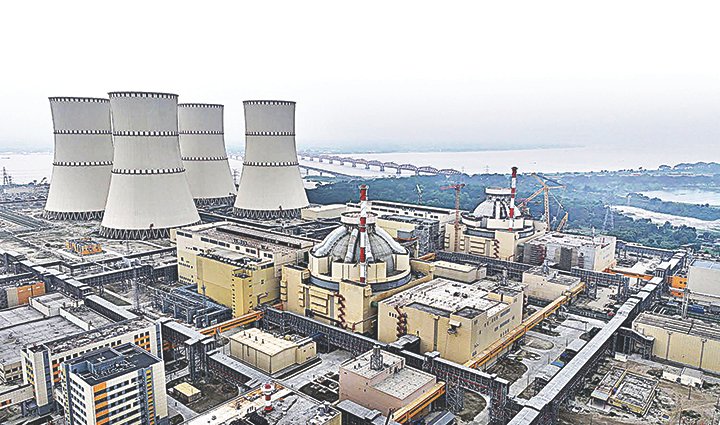
The Rooppur Nuclear Power Plant also carries major importance. If its first unit can supply at least 300 MW from August and begin commercial operation before March next year, it will provide much-needed relief. Bringing the second unit online before summer 2028 would further strengthen long-term energy security.
Rescuing BPDB from its growing debt and financial losses will not be easy. But delaying hard decisions will only make the problem more expensive and painful. Without decisive action now, load-shedding will become not just a seasonal problem, but a permanent obstacle to daily life, industrial growth, and Bangladesh’s economic future.
Download Cover As PDF/userfiles/EP_23_22_Cover.pdf