Keeping the financially fragile power sector operational, while managing potential electricity shortages during the upcoming Ramadan and summer, will be the new government’s biggest challenge. Outstanding in the power sector has already reached a massive scale. Unless steps are taken to clear these arrears, public and private power plants will not be able to operate at full capacity. At the same time, to ensure an optimal fuel mix, the government must secure adequate dollar supplies. However, there is no quick way out of the crisis in the power and energy sector.
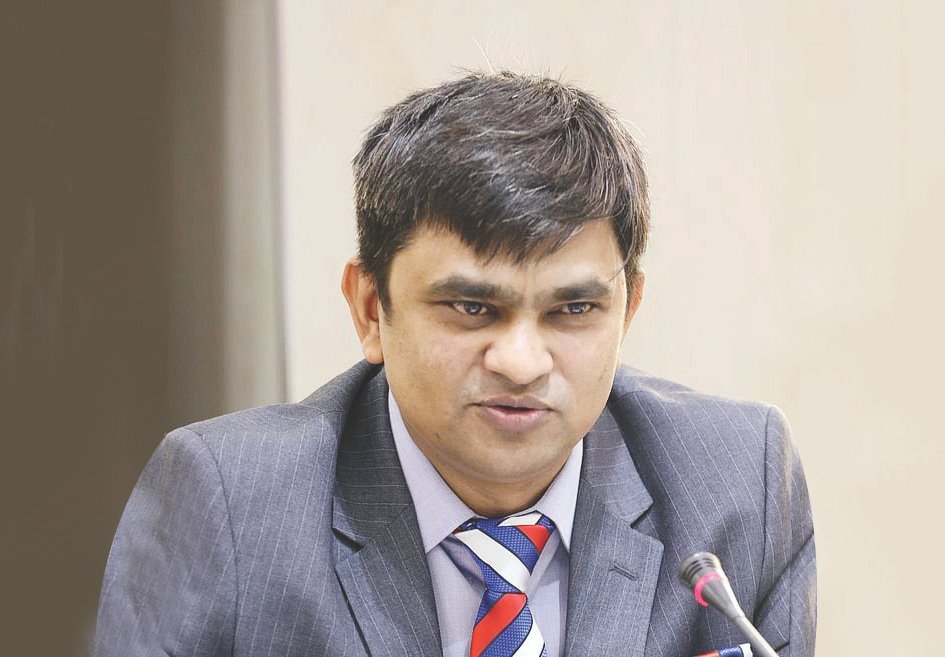
These views were shared by Engr. Shafiqul Alam, Lead Energy Analyst (Bangladesh) at the Institute for Energy Economics and Financial Analysis (IEEFA), in a discussion with Mollah Amzad Hossain, Editor of Energy & Power. The full interview is presented below:
Considering the current state of Bangladesh’s energy and power sector, what will be the biggest challenges for the upcoming elected government? What kind of plans should the new government take in the short, medium, and long term?
The new government will face multiple challenges immediately upon taking office. As Ramadan begins in February, and temperatures will likely rise in March alongside the need for irrigation, the power demand will surge. Furthermore, while electricity demand was lower due to relatively mild weather last year, the demand is expected to exceed 18,000 MW this summer. Hence, the first challenge will be ensuring sufficient fuel supply to support additional power generation as BPDB’s revenue deficit (subsidy+loss) soared to Tk 55,600 crore in FY2024-25 from around Tk 47,000 crore in FY 2023–24. Ensuring sufficient fuel supply after managing such a high level of revenue deficit is itself a major challenge.
The problem compounds as domestic gas production continues to decline despite the plan to ramp up local production. Against this backdrop, the next government should plan for sufficient electricity and gas supply for the key sectors to drive economic growth. Even if planned load shedding is required in the residential sector, supply to industries must be maintained.
To manage the situation better, it is all-important to release dollar timely manner to avoid payment backlogs and ensure necessary energy supply. This will help reduce the use of high-Sulfar fuel oil (HSFO), thereby keeping generation costs under control.
It is also important to draw lessons from the surge in electric three-wheelers, which has increased grid-power demand after midnight by around 4,000 MW. If the ongoing gas and LPG shortages persist, the number of electric cookstoves could drastically increase soon. One million cookstoves could raise the power demand by around 2,000 MW during the cooking hours. Without a proper energy transition plan, the country will likely face increasing difficulty in meeting power demand in the foreseeable future.
Amid such hurdles on the road, the new government may consider undertaking implementable programs, such as ensuring additional gas supply from domestic fields by the end of the year. Similarly, it may design a distributed renewable energy program to add new capacity of around 1,000 MW in a year. This is in addition to the efforts to shore up utility-scale renewable energy projects. Alongside these, the government should devise a feasible energy and power master plan through proper stakeholder consultations and expert inputs to drive the financially distressed power sector and highly import-dependent energy sector towards sustainability.
Over the past five years, electricity generation costs have increased by 83 percent. Fuel import dependence has clearly played a role, but how much have currency depreciation, irregularities, or corruption contributed to this increase?
According to BPDB’s data, the average cost of electricity generation, excluding transmission, has surged from Tk 6.61 per kilowatt-hour in 2020–21 to Tk 12.10 per kilowatt-hour in 2024-25. The primary reason is excessive import dependence. Over the past five years, the taka has depreciated by 43 percent against the US dollar, which, according to my assessment, contributed to roughly 30 percent of the increase in power generation cost. However, the BPDB’s increasing purchases from other sources, for example, IPPs, and the use of expensive fuel oil in power generation significantly contributed to this soaring cost. The reserve margin in power generation increased from around 52–53 percent in 2020–21 to 61.03 percent in 2024–25, which also contributed to the rising generation cost.
Currently, Bangladesh’s import dependence across the power and energy sector is around 56 percent, and there are concerns that this trend will continue to rise. What preparations do you think are necessary to curb this dependence?
There is no immediate way to rein in import dependence. Rather, unless special initiatives are taken to increase domestic gas supply and expand power generation from renewable sources, import dependence could rise to 80–90 percent. Despite continued discussion on advancing renewable energy to curb the growing power sector crisis, the country has yet to install the solar power capacity that can be utilized without battery energy storage.
Notably, Pakistan has managed to reduce LNG imports through large-scale expansion of rooftop solar. India continues to thrive on renewable energy expansion. Another regional country, Sri Lanka, has achieved great success in rooftop solar expansion. Amid such examples, if Bangladesh can also accelerate renewable energy, it will be able to significantly reduce its import dependence. Alongside this, it needs to harness its own gas and enhance energy efficiency to limit its exposure to the volatile international fossil fuel market.
This will require strong commitment from the next government to streamline the energy and power sectors based on consultations with all relevant institutions, experts, and stakeholders.
Civil society groups, NGOs, and some research institutions argue that the rapid expansion of renewable energy is the only solution to reducing import dependence. What is your view?
Bangladesh should prioritize the implementation of 3,000 to 4,000 MW renewable energy projects, including low-hanging fruit like rooftop solar, in the next three to four years. As battery energy storage will likely be more competitive and industries with targets for decarbonization will utilize CPPAs for renewable energy projects, Bangladesh can considerably increase its reliance on renewable energy, reducing import dependence, in the foreseeable future. In fact, the apparel industry having mitigation targets will amplify efforts for increasing the share of green sources in its energy mix to remain competitive in the international market.
However, to take full advantage of renewable energy and curb import dependence, Bangladesh’s gas-dependent industry sector will require a transition to electric systems, such as electric boilers and grid power, subject to a reliable power supply from the grid. This means modernizing the grid to accommodate a larger share of renewable energy.
Many believe that during the upcoming summer, there could be a major power supply crisis compared to demand. How do you see the situation?
Compared to last year, power demand is likely to increase this summer. On the other hand, Ramadan and the summer season will commence immediately after the elected government takes office. Therefore, the minister in charge of the energy and power ministry should take a stock of ensuing challenges through meetings with all power and energy sector institutions to review their plans and chalk out the most feasible option to manage the summer. This will help load management, prioritization of fuel use based on cost, and ensure dollar availability to avoid payment backlogs, and limit the use of expensive fuel oil in power generation. As mentioned before, the government may consider planned load-shedding, but should help industries operate at optimal capacity.
Energy transition is essential for every country. What steps should the new government take to ensure an appropriate energy transition pathway for Bangladesh?
As a long-term plan, the new government should craft a clear roadmap for the energy transition based on expert consultations, the country’s capacity, and the trend of technological advancement. This long-term vision should prioritize renewable energy alongside energy efficiency. In preparing so, it may review successful energy transition strategies adopted by countries in this region and elsewhere.
In the short term, the next government should waive the applicable import duties on accessories of distributed systems, such as rooftop solar, to create a level playing field with utility-scale projects. Likewise, it should reduce the high import duties applicable to components of energy-efficient appliances. The government may also create a special fund for renewable energy to incentivize small-scale systems such as solar irrigation and rooftop solar.
With energy and power sectors confronting critical challenges, the government should work on developing an energy-conscious society to minimize energy wastage.
Bangladesh’s domestic energy resources are limited—mainly gas and coal. Do you think the new government should take steps to extract these resources to reduce import dependence?
The global financing architecture will likely limit the possibility of securing finance for coal extraction in the country. Hence, any plan relying on coal extraction could rather intensify the country’s import dependence or increase the stranded asset risks.
Given the situation, the country should harness its own gas alongside ramping up renewables.
The power and energy sector is in a financially fragile condition. What is the way forward to gradually overcome this situation?
Addressing this problem will require a planned approach that should be carefully implemented over a period. As we have seen that only increasing tariffs does not ultimately bridge the gap between revenue and cost, the next government should also opt for reducing costs, such as minimizing the use of expensive power generation, while advancing renewable energy.
Download Interview As PDF/userfiles/EP_23_16_Interview.pdf