The liquefied petroleum gas (LPG) sector is passing through a critical juncture. Suddenly, the sector is facing a crisis in both local and international markets, creating deep trouble for household and industrial users alike. Household consumers, in particular, are the worst affected. Many are unable to obtain gas for cooking, while others are forced to buy LPG cylinders at nearly double the regulated price.
Regarding the LPG crisis, the government has placed the blame on operators, citing international market conditions and the role of retailers. However, the suffering of consumers continues to intensify with each passing day.
Operators and energy experts argue that the LPG sector is facing difficulties at every stage of the value chain—from import and bottling to distribution and sales. LPG operators state that they must obtain licenses and approvals from as many as 28 different authorities throughout the year, at an annual cost of Tk 1.0–1.5 crore. This process, they say, is excessively complicated, time-consuming, and costly.
Experts suggest that, following the practices of other countries in the region, Bangladesh should set the license validity period at five years, subject to annual compliance checks. At the same time, a single-point service should be introduced to issue all licenses and approvals. Responding to this proposal, Bangladesh Energy Regulatory Commission (BERC) Chairman Jalal Ahmed said that if the government so wishes, BERC could provide such a single-point service. He also stated that he sees no obstacle to extending the license validity period from one year to five years.
“There will be no LPG crisis from February,” assured BERC Chairman Jalal Ahmed at a recent roundtable discussion. He described the current crisis as temporary but acknowledged that a consolidated and coordinated action plan is required for a lasting solution. However, other stakeholders believe that the crisis will not subside overnight and that only a comprehensive and well-structured plan can bring sustainable stability to the sector.
Speakers at the roundtable emphasized the need for regulatory reform in the LPG sector and suggested that the existing regulatory structure should be overhauled to improve overall performance. They argued that rules and regulations should be designed to protect both public interests and the viability of companies operating in the sector. If the ongoing price spiral is not controlled, they warned, all reform efforts will ultimately prove futile. According to the organizers, import limits are not the primary barrier; rather, a coherent government plan and concerted efforts are urgently needed.
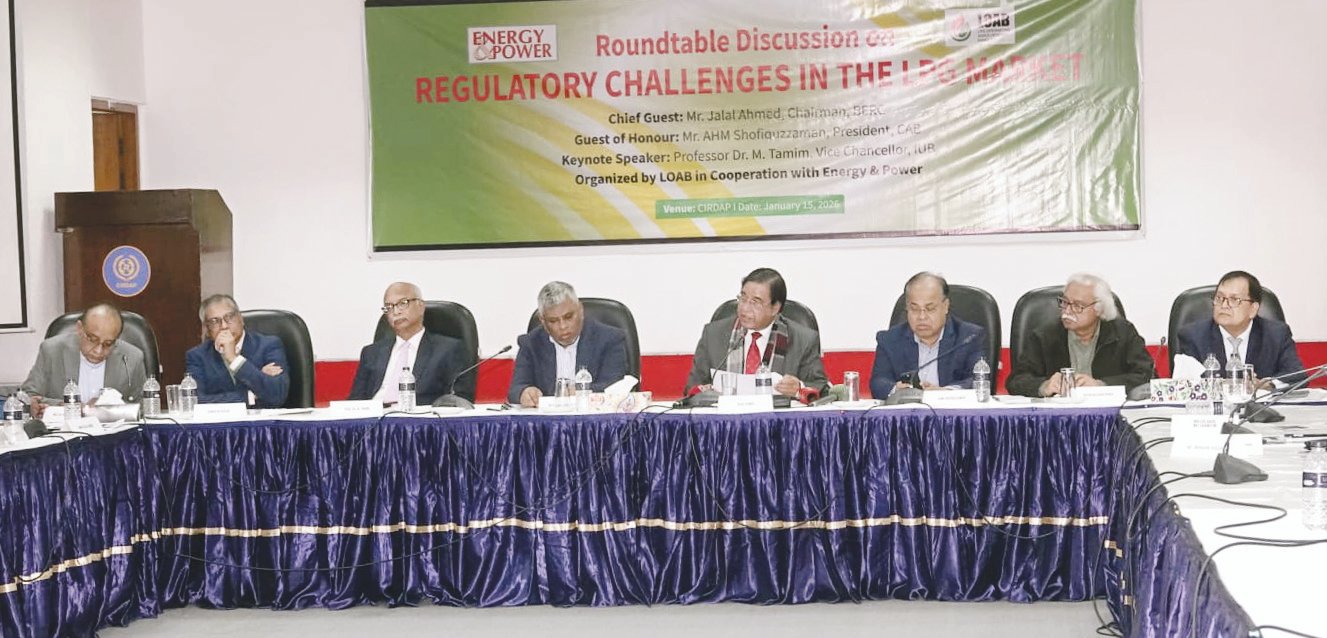
The roundtable discussion on “Regulatory Challenges in the LPG Market” was organized by the LPG Operators Association of Bangladesh (LOAB) and Energy & Power magazine on January 15, 2026. Editor of Energy & Power, Mollah Amzad Hossain, moderated the discussion and noted that people are struggling to obtain gas for their daily needs. Regulation, he emphasized, should facilitate better operations rather than create obstacles. He also reiterated the need for a single-point regulatory system for the LPG sector.
He further highlighted the current state of the LPG sector and stressed that proper planning is essential to safeguard the interests of both consumers and producers. With adequate facilities and cooperation from the government, he said, LPG could play a vital role as a clean cooking fuel.
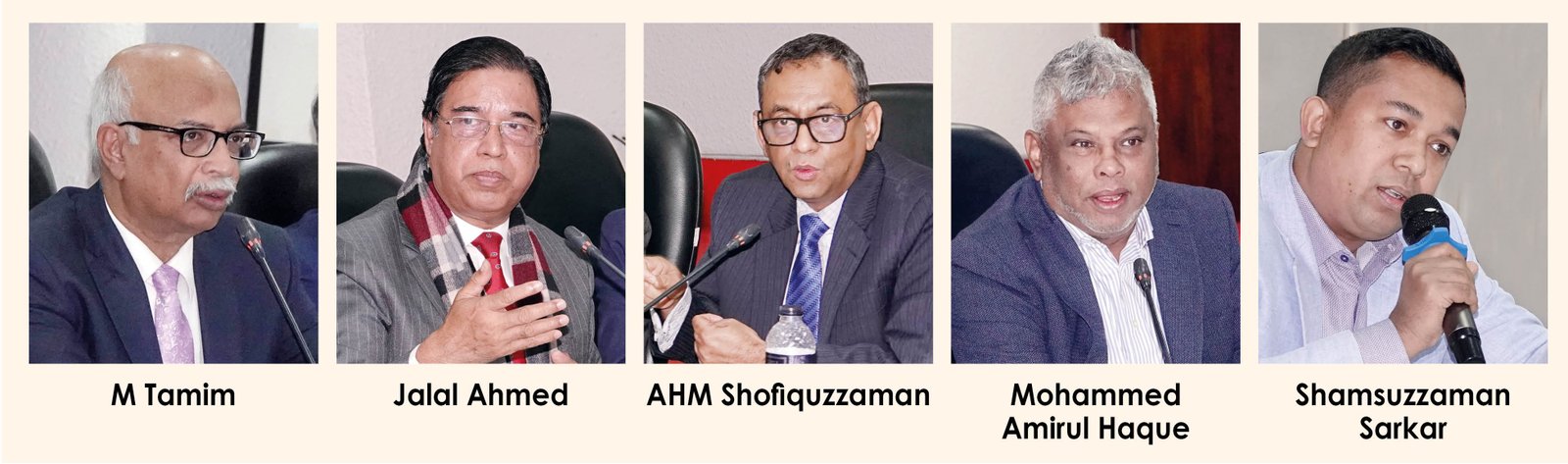
M Tamim
Energy expert and Vice Chancellor of Independent University, Bangladesh Dr. M. Tamim said there are serious weaknesses in the regulatory structure and overall system governing the LPG sector. He described the licensing process as overly complex and burdensome. LPG, he noted, plays a critical role in addressing Bangladesh’s ongoing gas crisis and supporting the country’s energy transition. The sector is entirely driven by the private sector, with investments totaling around USD 3.5 billion.
Dr. Tamim explained that LPG supports households, transport, industries, and rural energy access, but remains fully dependent on imports. Operators, he said, must secure more than 26 separate approvals for routine operations. He called for comprehensive regulatory reforms and urged that all formalities be brought under a single regulatory authority.
He added that although challenges in the LPG sector have existed for some time, the situation has worsened recently as demand continues to grow steadily. The multiple-authority approval system, he said, is a major structural problem in Bangladesh. Licensing is not only complicated but also excessively expensive, placing additional pressure on operators.
If these costs are not reduced, Dr. Tamim warned, they will inevitably be passed on to consumers through higher prices. He also pointed out that LPG has relatively low environmental emissions and should therefore be recognized as a green industry. Extending license renewal periods to five to ten years, he said, would reduce operational risks and uncertainty for companies. He further suggested shifting from a control-based regulatory system to a safety-based regulatory framework.
Jalal Ahmed
BERC Chairman Jalal Ahmed said as chief guest the government is working on regulatory reforms and aims to ease operational procedures for LPG operators, which would ultimately benefit consumers. He noted that LPG imports had declined in recent months due to both international and domestic factors, but expressed optimism that supply conditions would normalize soon.
He rejected claims that LPG imports were restricted, stating that most companies actually import more than their assigned ceilings. The government, he said, is also considering extending license durations and expanding online services for operators. Measures are being taken to resolve import-related issues and to exercise greater control over prices in local markets.
Ahmed also said BERC is working to improve its own efficiency and strengthen its regulatory authority. “We are trying to be proactive rather than reactive,” he said. “With collective efforts, we will overcome the present crisis. This has been a learning experience, and we hope such problems will not recur.”
He assured participants that regulatory complications would be reduced, license durations extended, and fees lowered. “We will sit together and find a proper solution to overcome this problem,” he said.
AHM Shofiquzzaman
Former Secretary and Consumers Association of Bangladesh (CAB) President AHM Shofiquzzaman said LPG should be declared an essential commodity and that the price-setting process must be made fully transparent. He added that proper governance has not yet been ensured in the sector.
He argued that government agencies should not be directly involved in LPG business operations, which should instead be left to private enterprises. A single-point regulatory system, he said, would help consumers access LPG at fair prices without unnecessary hassles.
Shofiquzzaman also noted that the government is planning to declare LPG a green sector and provide access to green financing. However, he pointed to a lack of coordination among government agencies, warning that without proper cooperation, a healthy business environment cannot be sustained.
Mohammed Amirul Haque
LOAB President Mohammed Amirul Haque said the LPG sector is going through a critical period. “This is a longstanding problem,” he said. “We are facing challenges in both international and domestic markets.”
He cautioned that investment would stagnate if regulatory bottlenecks are not removed. According to him, key challenges include the complex licensing process, high renewal fees, and limited cargo discharge facilities. International supply shortages have further compounded the crisis.
“If these problems are not addressed, the crisis will persist,” he said, adding that solutions cannot come from operators alone. “The days of hide-and-seek are over. We must be open-minded; otherwise, no one will invest in this sector. We need at least 28 licenses every year, which has made operations almost impossible.”
Shamsuzzaman Sarkar
Deputy Director of the Department of Environment, Shamsuzzaman Sarkar, said LPG bottling plants have been reclassified from the red category to the yellow category. He added that a decision has been taken to declare the LPG industry as a green industry. He also assured participants that environmental clearance would be issued within seven working days.
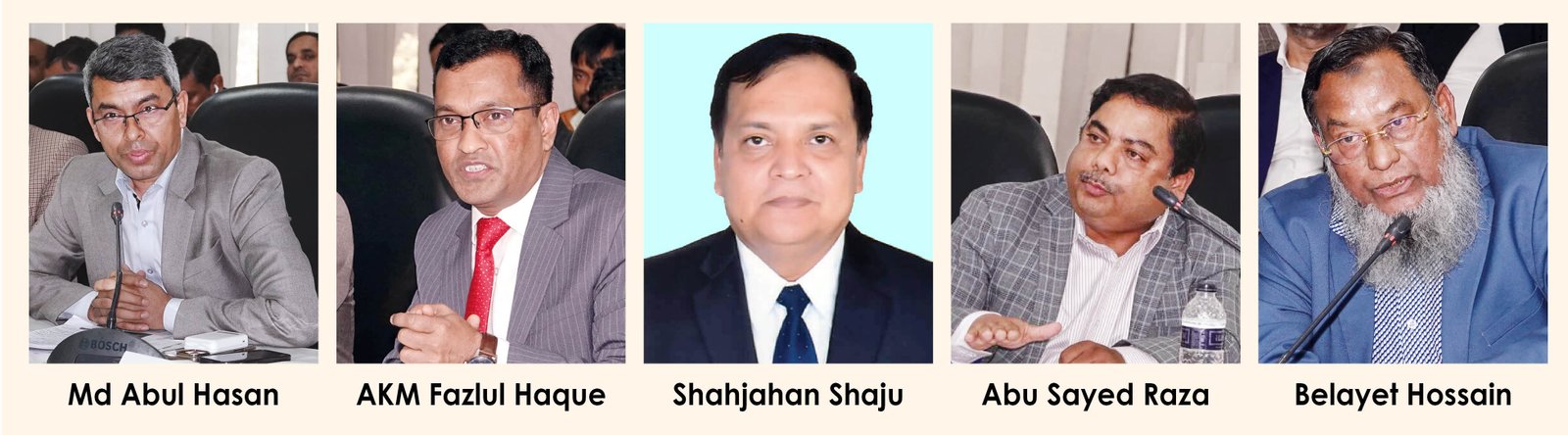
Md Abul Hasan
Md Abul Hasan, Chief Inspector of Explosives, said that his office has introduced an online service for LPG operators. He noted that licenses would be issued to operators in the shortest possible time. Emphasizing the need for reform, he said a single-window system should be introduced for the LPG sector and that supervision should be conducted by a single authority. “LPG is the best tool for green cooking,” he said.
AKM Fazlul Haque
AKM Fazlul Haque, Joint Secretary at the Energy and Mineral Resources Division, said the LPG sector faces challenges related to pricing, safety systems, and market operations. He noted that around six million families currently use LPG as a clean cooking fuel. However, he stressed that ensuring public safety and security remains the government’s responsibility.
“We are working to formulate a comprehensive and sustainable policy framework for the LPG sector,” he said, adding that the division has requested Bangladesh Bank to introduce green banking support for LPG industries to provide easier access to loans.
During the discussion, journalists raised questions about the recent abnormal increase in LPG prices. Operators and other stakeholders responded that the crisis had been caused by inadequate supplies from the international market. They also pointed to problems related to limited landing facilities and weaknesses in price management. According to them, LPG prices should be fixed in line with international market prices.
Shahjahan Shaju
Shahjahan Shaju of Universal Gas said that six operators currently dominate the market, while the remaining operators have little influence. He added that many companies are facing serious difficulties due to the complexity of the licensing process and demanded subsidies to support the healthy growth of the sector.
Sakib Ahmed Siddiqui
Sakib Ahmed Siddiqui of Unitech LP Gas said operators are not receiving adequate supplies from the market. “We are purchasing LPG at high prices—how can we sell it at a lower price?” he asked, adding that LPG prices should be determined in line with international market rates.
Abu Sayed Raza
Abu Sayed Raza of Meghna Fresh Gas said operators are facing both international and domestic challenges. “The pricing structure needs to be rational,” he said, adding that his company has not violated any government rules and has always tried to keep the market stable, even at the cost of its own losses.
He described the LPG crisis as a global issue, noting that cargo shortages persist in the international market. Since prices are set by BERC, he argued, there is little scope for syndication. However, he acknowledged that supply-demand imbalances exist and should be addressed collectively.
Belayet Hossain
Belayet Hossain of Jamuna Space-Tech said LPG operators are facing both political and economic challenges. He also pointed to difficulties related to import limits and emphasized that LPG prices should be fixed in accordance with international market prices. “Otherwise,” he warned, “this problem will not go away.”
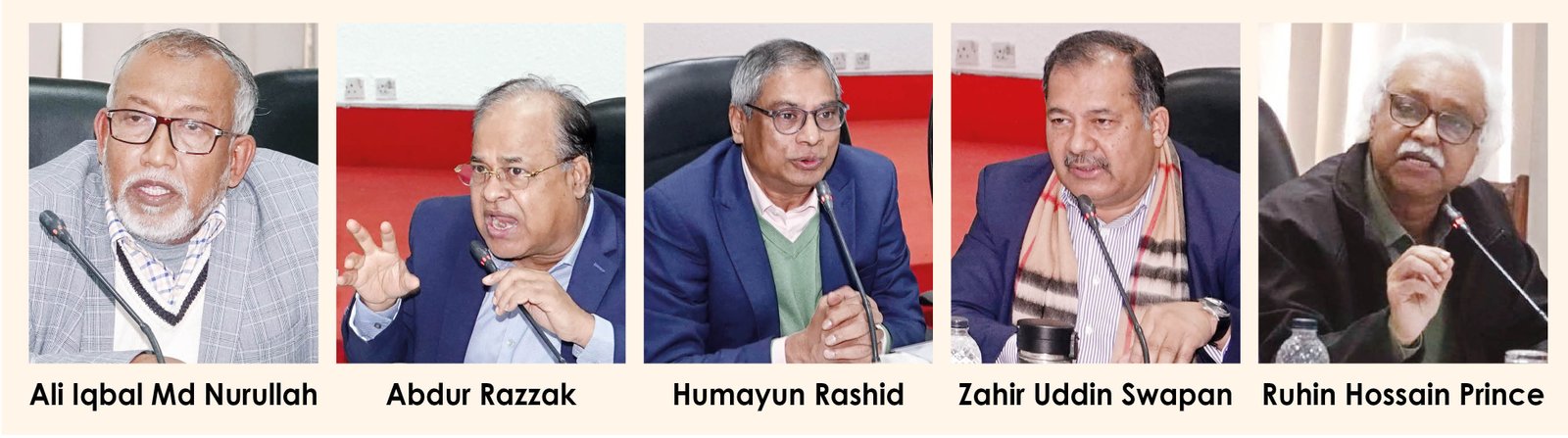
Ali Iqbal Md Nurullah
Former Petrobangla Director Ali Iqbal Md Nurullah said the monitoring system for the LPG sector remains very weak. He emphasized that LOAB and regulatory authorities should not act as rivals but instead cooperate for the greater benefit of the sector. Regular interaction between the two, he said, is essential for improving governance and market discipline.
Abdur Razzak
JMI Chairman Abdur Razzak said that only five out of 27 LPG operators have the capability to import, leaving the remaining companies in a vulnerable position. If the current situation continues, he warned, the entire market could face deeper trouble. He noted that it is impossible for companies to sell LPG at lower prices when they are purchasing it at high rates. “There must be balance in the market,” he said, “otherwise operators will not survive.”
Humayun Rashid
LOAB Vice President Humayun Rashid said that, following the example of other countries in the region, Bangladesh should extend the validity period of licenses issued by various institutions from one year to five years. He also reiterated the need for a single-point service for obtaining licenses and approvals, noting that such reforms would have a positive impact on consumer-level pricing.
Zahir Uddin Swapan
BNP leader Zahir Uddin Swapan said every government should have a clear and specific plan for expanding the energy sector, with policies designed in the public interest. He also suggested easing excessive administrative control over the LPG sector for the benefit of consumers.
Ruhin Hossain Prince
Former General Secretary of the Communist Party of Bangladesh (CPB), Ruhin Hossain Prince, said that crises are sometimes created artificially to generate excess profits. He suggested bringing the LPG sector under government control and restricting imports to safeguard consumers’ rights.
Conclusion
Over the past decade, Bangladesh’s LPG sector has expanded rapidly. Current annual demand—covering residential, industrial, and autogas use—stands at around 1.5 million tonnes and is expected to double by 2030 and quadruple by 2040.
However, the sector’s growth is constrained by the requirement for operators to obtain licenses from 28 different institutions, at an official annual cost of around Tk 1.5 crore, with unofficial costs believed to be significantly higher.
Experts believe that adopting policies followed by countries such as Thailand, India, and Vietnam—particularly extending license validity and introducing a single-point service—could substantially reduce costs and benefit consumers. LPG remains the only fuel in Bangladesh that does not require government subsidies, with 98 percent of supply coming from the private sector. Recognizing LPG as a green fuel and bringing it under green banking could address many of the sector’s challenges while enhancing competition and supporting industries facing natural gas shortages.
Box
Key Recommendations from the Roundtable
1. Introducing a single-point licensing system
2. Reducing license fees and extending validity periods
3. Declaring LPG a green industry and providing green financing
4. Installing exclusive cargo anchorage facilities for LPG
5. Lifting import limits on LPG
6. Aligning LPG prices with international market prices
7. Shifting from control-based to risk-based regulation
8. Introducing digital governance in the LPG sector
9. Providing targeted consumer subsidies
10. Developing a long-term, comprehensive growth plan for the LPG industry
Download Roundtable As PDF/userfiles/EP_23_16_Roundtable.pdf