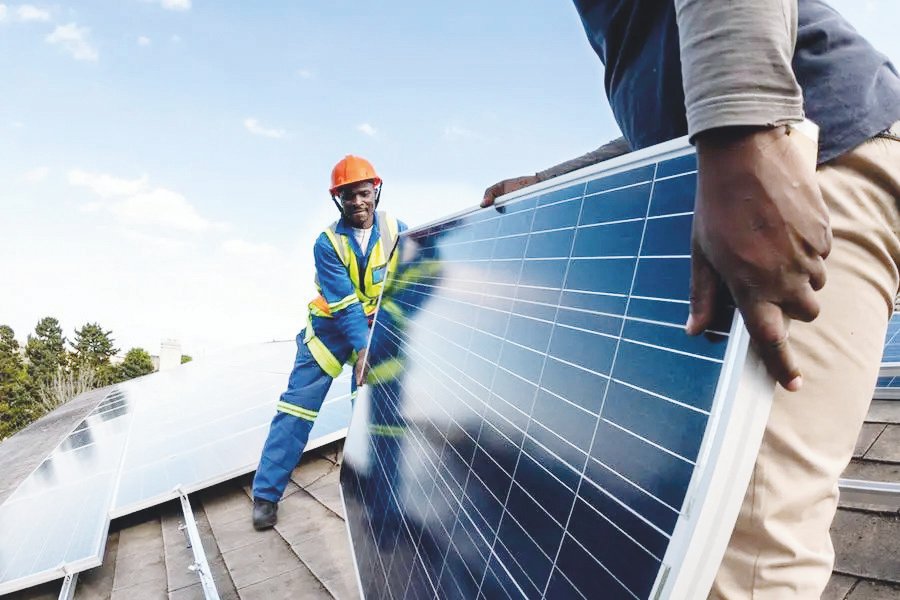
Despite renewable energy installations hitting a new peak, jobs in the sector only increased by 2.3% from 2023, reaching 16.6 million in 2024.
The newly released Renewable Energy and Jobs – Annual Review 2025 by the International Renewable Energy Agency (IRENA) and the International Labour Organization (ILO) highlights the increasing impact of geopolitical and geoeconomic frictions, as well as growing automation, to the renewable energy workforce.
As in previous years, uneven development continues across the world. China remains the preeminent force in both deployment of generating capacities and equipment manufacturing, mainly due to its integrated, large-scale supply chains that deliver equipment at unmatched prices.
In 2024, China created an estimated 7.3 million renewable energy jobs, or 44% of the global total. The EU followed suit with the same total as in 2023 at 1.8 million jobs.
Brazil’s renewables employment runs to 1.4 million, while India’s and the United States’ barely grew from around 1 million to 1.3 million and 1.1 million, respectively.
Commenting on this trend, IRENA Director-General, Francesco La Camera, said, “Renewable energy deployment is booming, but the human side of the story is as important as the technological side. Governments must put people at the center of their energy and climate objectives through trade and industrial policies that drive investments, build domestic capacity, and develop a skilled workforce along the supply chain.”