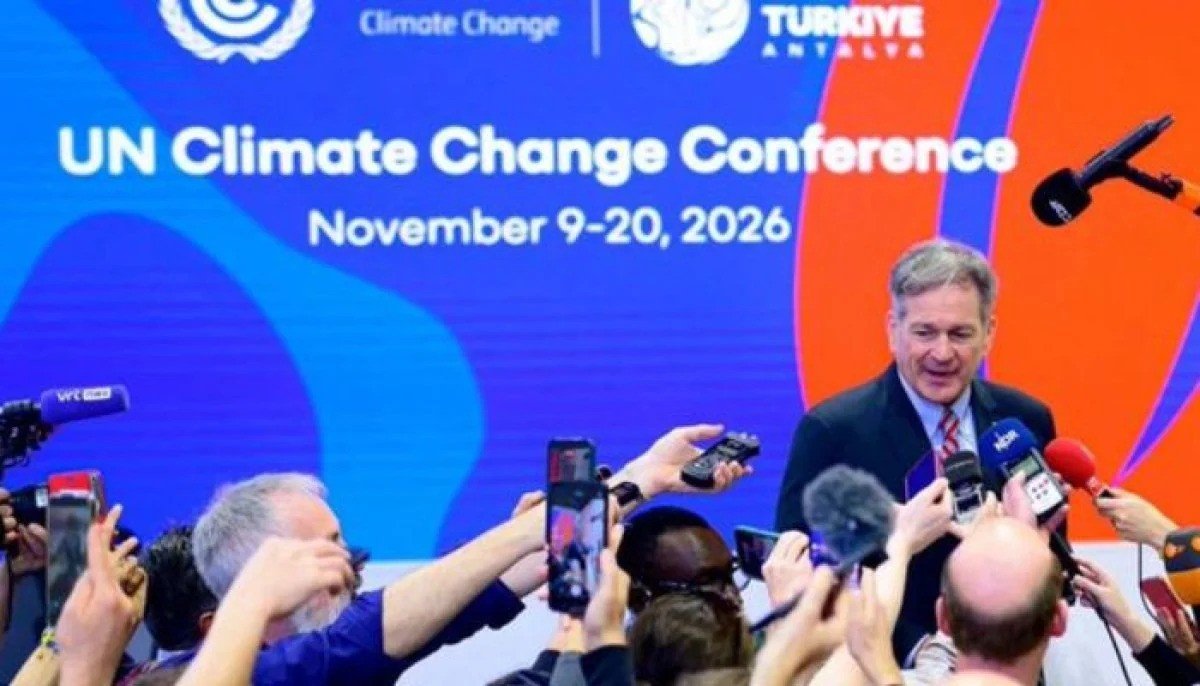
Mollah Amzad Hossain with Afroza Akther Pervin from Antalya, Türkiye
November 21, 2026 — The deadlock in the COP31 negotiations continued into the extended day on Saturday, with nearly 200 countries still struggling to reach consensus on the final cover decision and other major political issues. Despite intensive consultations throughout the night and Saturday, differences over fossil fuels, climate finance, adaptation and just transition remained unresolved. Frustration among negotiating parties and civil society also intensified, culminating in a group of ministers and delegation leaders marching to the COP31 Presidency offices to press for stronger commitments.
The conference was scheduled to close on November 20, but the closing plenary was adjourned as countries failed to agree on the outstanding texts. COP31 President Murat Kurum had said on Friday that progress was being made and that the parties were getting closer to finalizing the texts. He announced that negotiating teams would continue working overnight to prepare a third draft of the Presidency’s proposed cover decision.
However, by Saturday afternoon, the revised draft had still not been formally presented to all parties. Reuters reported that negotiators were waiting for a new version while frustration mounted. The delay has raised questions about the transparency and effectiveness of the final-stage consultation process.
Delegations march to Presidency offices
One of the most significant developments on Saturday was a collective move by ministers and heads of delegations from around 30 to 40 countries to the COP31 Presidency offices. The group included UK Energy Minister Miatta Fahnbulleh, European Union ministers and representatives of small island and developing countries, including Fiji’s climate minister and Vanuatu’s climate envoy Ralph Regenvanu.
According to reporting by The Guardian, the delegation sought assurances that the final agreement would not retreat from previous commitments on transitioning away from fossil fuels. They also demanded a commitment to triple adaptation finance for developing countries and called for any reference to carbon capture and storage (CCS) to be balanced with clear targets on electrification.
The move reflected growing frustration among countries that believe the latest draft has weakened earlier proposals and failed to reflect the urgency of climate action.
Fossil fuel language divides negotiating parties
The inclusion of an explicit reference to transitioning away from coal, oil and gas remains the central political dispute. The revised draft circulated on November 19 removed the earlier references to fossil fuel phase-out and the proposed US$120 billion annual adaptation finance target by 2035.
The European Union has been pushing to restore fossil fuel language in the final text. The Guardian reported that the EU believes it has the support of around 130 countries, including developing countries and vulnerable nations, for its effort to secure a reference to moving away from fossil fuels.
France, Panama, small island states and several developing countries have also called for stronger language. On the other side, Saudi Arabia and other major oil and gas producers have opposed explicit references to ending fossil fuel use. The disagreement has become a major obstacle to consensus.
EU Climate Commissioner Wopke Hoekstra warned that the summit could end with either a meaningful agreement or no deal at all. “It’s either going to be a good deal or it’s going to be no deal,” he told reporters.
COP31 President Kurum urged countries not to allow disagreements over individual words and expressions to undermine the process. “There is no benefit for anyone to ruin this process by getting hung up on words, phrases,” he said, calling on all countries to act responsibly.
Climate finance and adaptation remain unresolved
Finance is another major source of disagreement. Developing countries have called for predictable, accessible and adequate public finance to address climate impacts, particularly adaptation and loss and damage. They argue that developed countries must fulfil their existing commitments and provide grants and concessional resources rather than relying heavily on private investment and loans.
The removal of the proposed US$120 billion annual adaptation finance target from the latest draft has caused particular concern among vulnerable countries. The debate also includes how to strengthen the Fund for Responding to Loss and Damage and ensure that affected countries can access financial support quickly.
Gambia’s finance negotiator Isatou Camara warned that some countries appeared to be using delays to pressure others into accepting weaker outcomes. “This delay strategy which has been used at previous COPs could be so at the end when things are put on the table you accept because you are fed up, exhausted, and want to go home,” she said.
Tuvalu’s Climate Change Minister Maina Talia expressed frustration over the continuing divisions. “Every year there seems to be greater discontent, mistrust and frustration from civil society and the countries that are most climate-burdened, vulnerable, and faultless,” he said.
He also made clear that vulnerable countries would continue pursuing climate action beyond the formal negotiating process. “We will not allow inaction and obstruction to dampen our resolve or slow our progress,” he said.
Civil society issues strong warning
Civil society organisations have sharply criticised the latest draft cover decision. A joint letter signed by 100 environmental organisations, including 350.org, Climate Action Network (CAN), Greenpeace International and WWF, warned the co-presidencies that COP31 risked becoming “one of the most disappointing COPs the UNFCCC has ever had”.
“The Global South is being abandoned,” the organisations said, accusing developed countries of blocking progress and arriving without new finance commitments. They described the draft cover text as “a gift to the fossil fuel industry”, arguing that it failed to mention coal, oil and gas—the principal drivers of the climate crisis.
The organisations demanded that the Presidency restore stronger language on fossil fuel transition, remove proposed carbon capture targets without adequate safeguards, protect Indigenous peoples’ rights and strengthen accountability for public climate finance. They also called for the electrification target to be explicitly linked to renewable electricity and a transition away from fossil fuels.
Climate Action Network awarded COP31 its “Colossal Fossil” award, accusing developed countries, fossil fuel lobbyists and the co-presidencies of obstructing meaningful progress. The organisation said the award was not directed at negotiators and civil society members working for an agreement, but at those it considered responsible for preventing one.
Meanwhile, Tuvalu and other vulnerable countries continued demanding stronger action. Fiji’s Climate Minister Lynda Tabuya said the Alliance of Small Island States had sought formal meetings with the Presidency as a negotiating bloc but that these requests had not been accommodated in the way the group wanted.
Uncertainty over the final outcome
The Presidency faces the difficult task of reconciling competing positions while maintaining the consensus-based nature of the UN climate process. The absence of a universally accepted revised cover decision has further complicated efforts to move towards a closing plenary.
Although the EU-led push suggests broad support for restoring fossil fuel language, opposition from some major producers remains a significant obstacle. Finance commitments, adaptation support and the role of carbon capture also require further negotiation.
As COP31 enters deeper overtime, the outcome remains uncertain. Countries must decide whether to accept a compromise, continue negotiations or risk leaving Antalya without a comprehensive political agreement. For vulnerable nations and civil society, the central test is whether the final decision will deliver concrete action on fossil fuels, finance and adaptation rather than another declaration of ambition without adequate implementation.