Mollah Amzad Hossain with Afroza Akther Pervin From Antalya
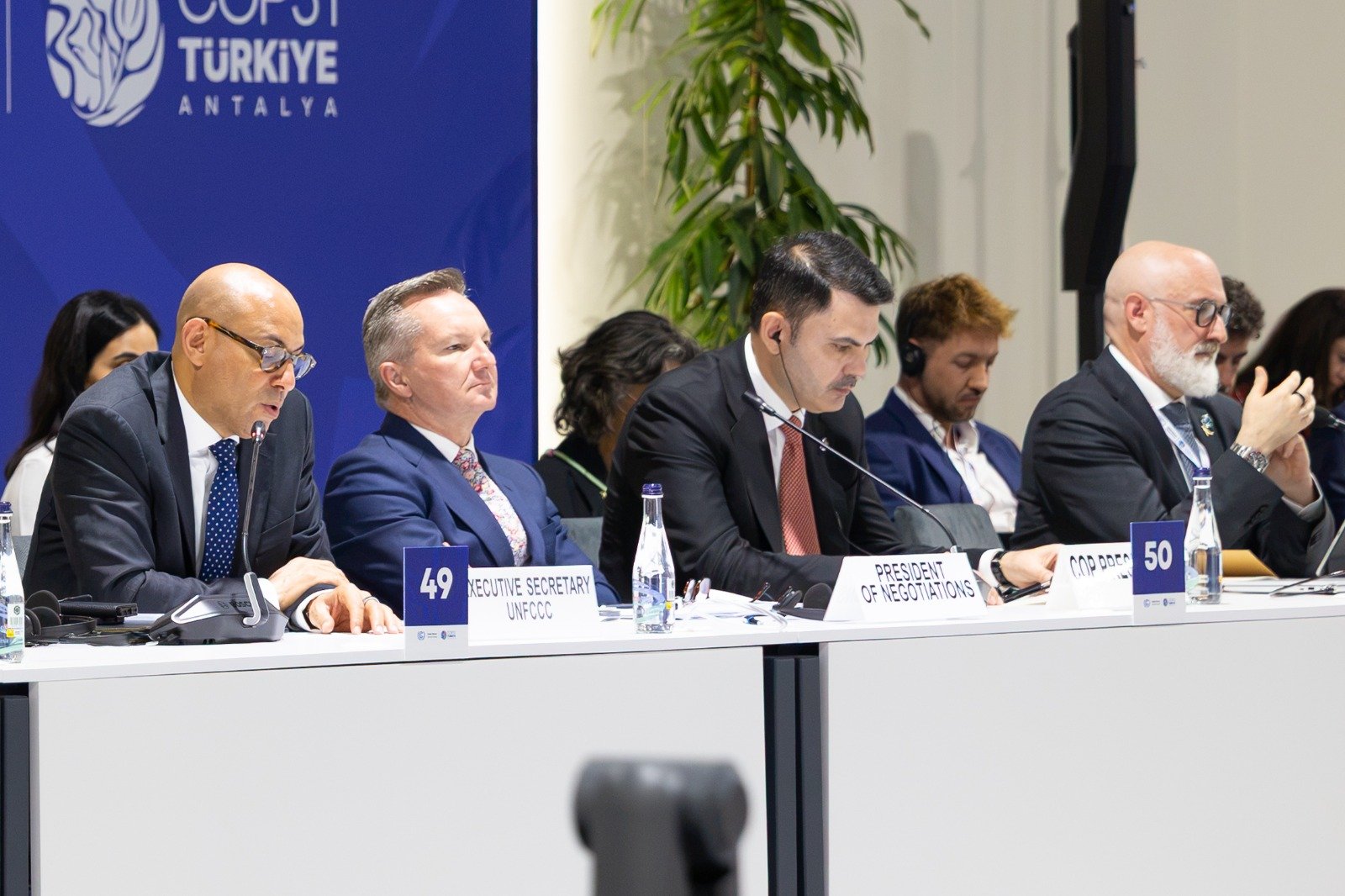
ANTALYA, November 16, 2026: COP31 entered the second week of negotiations with the presentation of an initial draft cover decision, bringing some of the most politically sensitive issues of the climate conference into sharper focus. The proposed text recognizes the growing risk of exceeding the Paris Agreement’s 1.5°C temperature limit and supports an ambitious global electrification target. However, differences remain over how these ambitions should be translated into concrete commitments, financial support and implementation.
The draft, presented to negotiators on Monday, is not an agreed outcome. It is expected to undergo further revisions as governments seek consensus on the final political package before the conference closes on November 20.
1.5°C ambition and electrification at the center
One of the most significant elements of the emerging cover text is its recognition that the world is likely to exceed the 1.5°C warming threshold, at least temporarily. It proposes limiting the magnitude and duration of this overshoot and bringing global warming back to 1.5°C as early as possible within this century.
The language reflects growing concern over the widening gap between current national climate commitments and the emissions reductions required to meet the Paris Agreement goals. However, the wording remains politically sensitive, particularly over how much responsibility countries should assume for accelerating emissions reductions.
The draft also supports Türkiye’s proposed target of increasing electricity’s share of global final energy consumption to 35% by 2035, from around 23% currently. The proposal is intended to accelerate electrification across transport, buildings and industry, alongside the expansion of renewable power, electricity grids and storage.
While several industrialized countries support the electrification ambition, developing countries have stressed that such targets must be accompanied by finance, technology transfer and capacity-building. African countries, in particular, have argued that electrification cannot be separated from the need to expand energy access and strengthen infrastructure.
The key question is whether the final text will establish a meaningful link between electrification and the financial resources required by developing countries to implement it.
Fossil fuel transition remains politically sensitive
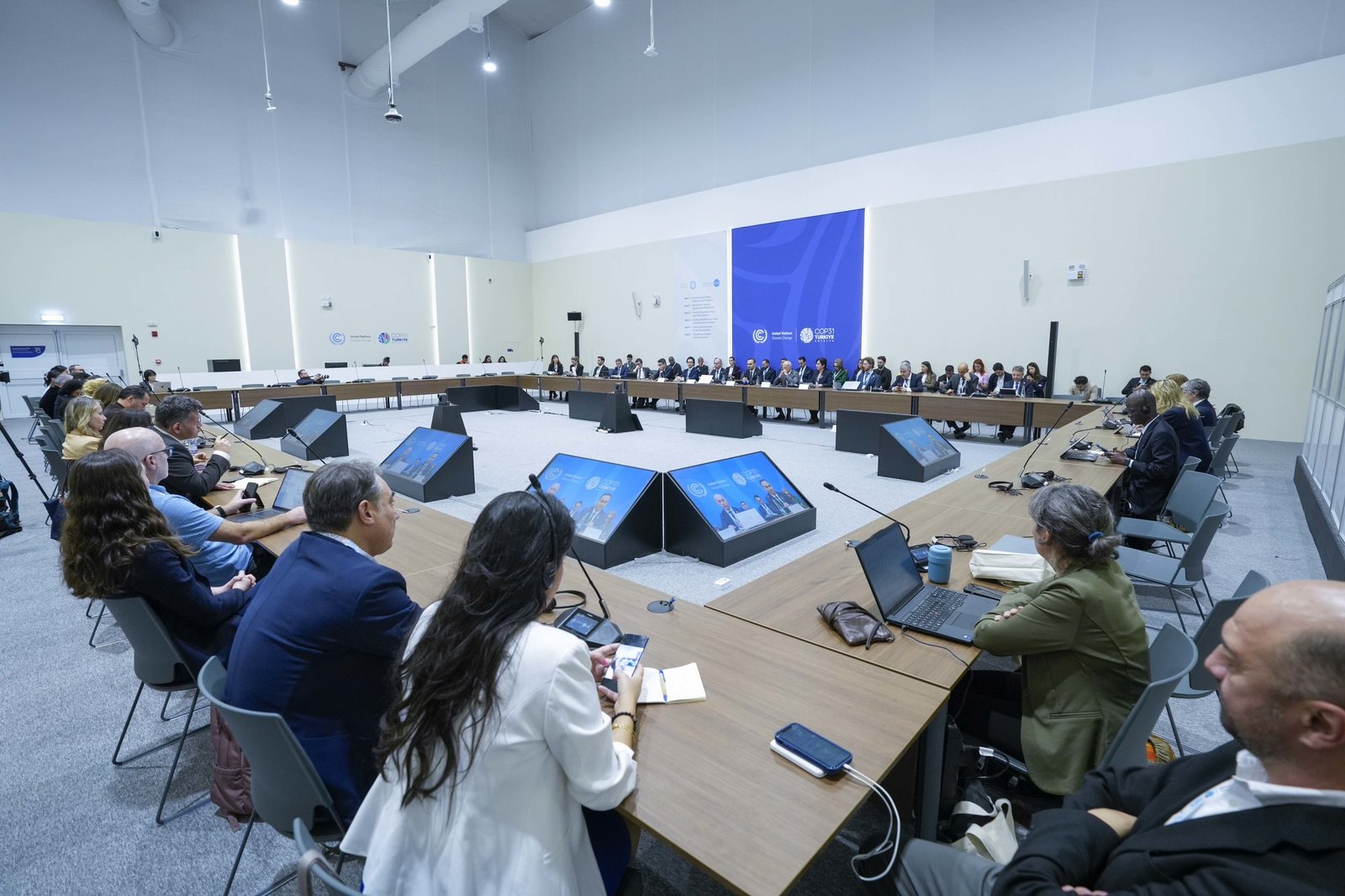
The cover-decision discussions are also taking place against the backdrop of continuing disagreements over the transition away from fossil fuels. Developing countries have emphasized national circumstances, energy security and the principle of common but differentiated responsibilities.
Many climate-vulnerable countries want stronger language on reducing fossil fuel dependence and accelerating renewable energy deployment. Others remain cautious about internationally agreed sectoral targets or pathways that could constrain their development choices.
The draft’s proposed electrification target may provide a basis for cooperation, but it does not by itself settle the wider debate over fossil fuel phase-out, the pace of transition or the financial support required to make it equitable.
Climate finance and adaptation remain critical demands
Climate finance continues to be a central concern for developing countries. The first week exposed divisions over the responsibility of developed countries to provide public finance, the role of private investment and the need for grant-based support.
As ministers and negotiators returned to the negotiating rooms on Monday, vulnerable countries continued to demand predictable and accessible resources for adaptation, resilience and loss and damage.
The Pacific countries have been particularly vocal about the need to turn international commitments into investment and practical protection for communities. At a COP31 side event, Tuvalu Prime Minister Feleti Teo said: “For the Pacific, the time for ambition alone has passed. The priority now is turning commitments into real investment, infrastructure and results.”
The Pacific Political Champions on Climate also called for urgent action, highlighting accessible, grant-based climate finance, community resilience and keeping the 1.5°C limit within reach. Their priorities include strengthening the Pacific Resilience Facility, a regional financing mechanism designed to support communities without adding to national debt.
Adaptation and resilience dominate side events
Beyond the formal negotiations, several side events on Monday focused on practical responses to climate impacts.
A session on equitable and effective adaptation examined why gender equality and social inclusion must be integrated into adaptation planning. Discussions highlighted the disproportionate impacts of climate change on women, Indigenous communities, persons with disabilities and other vulnerable groups.
Another event examined findings and policy implications of the transition away from fossil fuels, building on the momentum generated by the international conference in Santa Marta. Participants discussed how governments could develop credible transition pathways while protecting workers and communities dependent on fossil fuel industries.
The debate also extended to measuring climate resilience and sustainable development beyond conventional economic indicators. A session titled “Counting What Counts: Beyond GDP Metrics for Climate Action, Resilience and Sustainable Development” explored the need for indicators that better capture social and environmental progress.
Small island states explore innovative climate finance
An important development outside the formal negotiations was a proposal by small island developing states to establish a climate resilience financing platform using a small charge on remittances sent by overseas communities.
According to a Reuters report carried by PACNEWS, the initiative aims to mobilize around US$3 billion annually over time. The proposed mechanism would create a long-term fund for adaptation and resilience projects, reducing dependence on traditional development assistance.
Antigua and Barbuda’s UN Ambassador Walton Webson said: “We cannot rely solely on development assistance again. What we are now trying to do is create our own.”
The proposal reflects the growing frustration of small island states over the limited availability and accessibility of international climate finance.
At another event, Tuvalu’s Prime Minister reiterated that his country was not preparing to abandon its homeland despite rising sea levels. “We are not planning to abandon our homeland. We are planning to protect our people, our identity and our future,” he said.
His remarks highlighted the human dimension of climate adaptation, including coastal protection, land reclamation, community resilience and the rights of people facing climate-related displacement.
UN climate chief urges negotiators to move faster
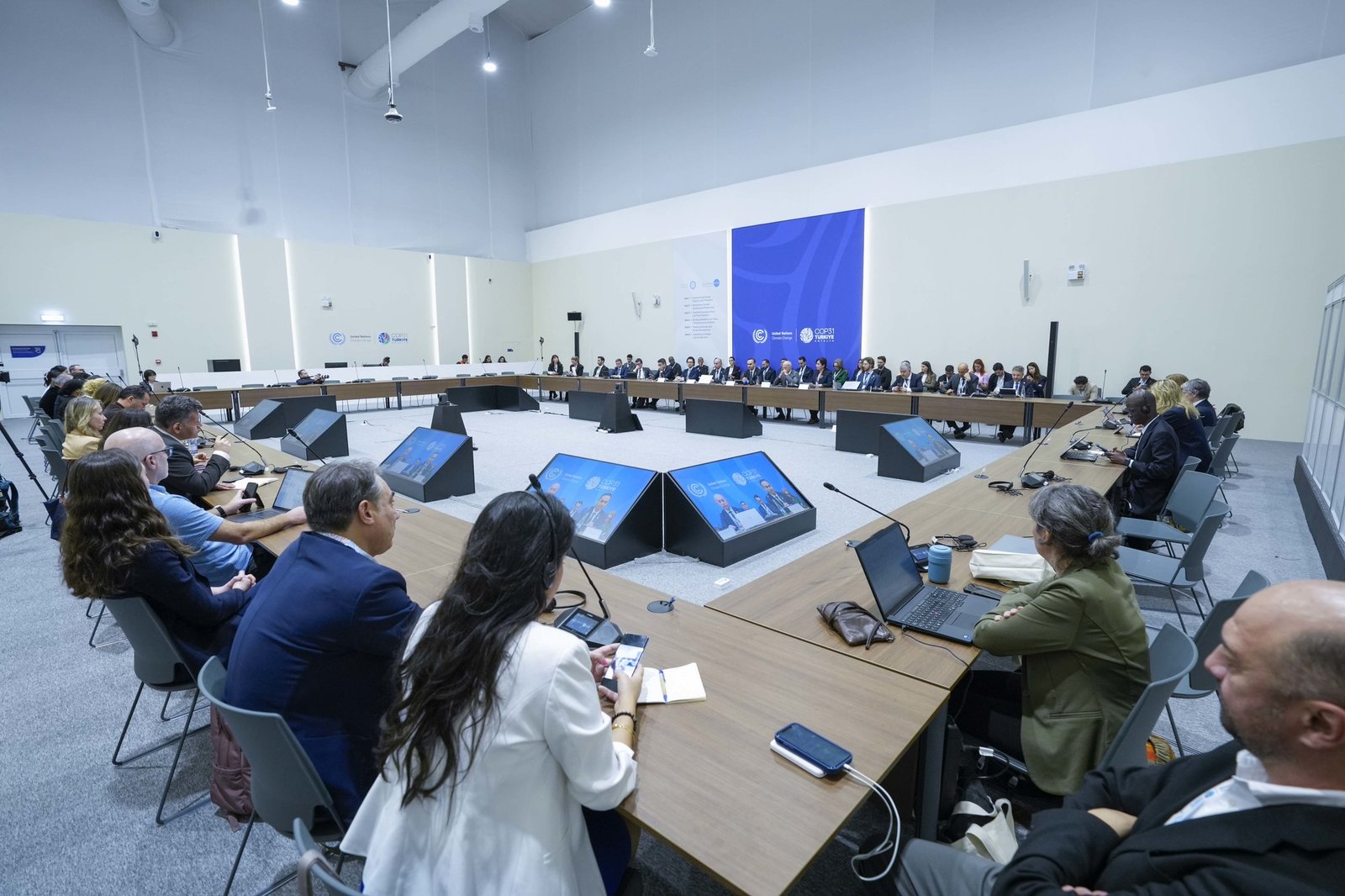
The second week began amid calls for faster progress on unresolved issues. UN Climate Change Executive Secretary Simon Stiell had urged parties to move swiftly towards the most difficult negotiating questions and avoid tactical delays.
“As we head into the second week, I urge Parties to move swiftly to the hardest issues and to avoid tactical delays,” he said.
He also stressed that agreement required compromise among nearly 200 countries working through a complex set of negotiating mandates.
A decisive week ahead
Monday’s negotiations and side events demonstrated the widening gap between climate ambition and the resources available to implement it. The draft cover decision has placed 1.5°C, electrification and climate implementation at the center of the political discussion, but the language remains subject to negotiation.
For Bangladesh and other climate-vulnerable countries, the key test will be whether the final outcome strengthens adaptation finance, provides accessible support for loss and damage and ensures that the energy transition is backed by adequate resources.
The coming days will determine whether COP31 can deliver a balanced political agreement that connects climate commitments with finance, technology and measurable action—or whether longstanding disagreements will once again limit the ambition of the final outcome.