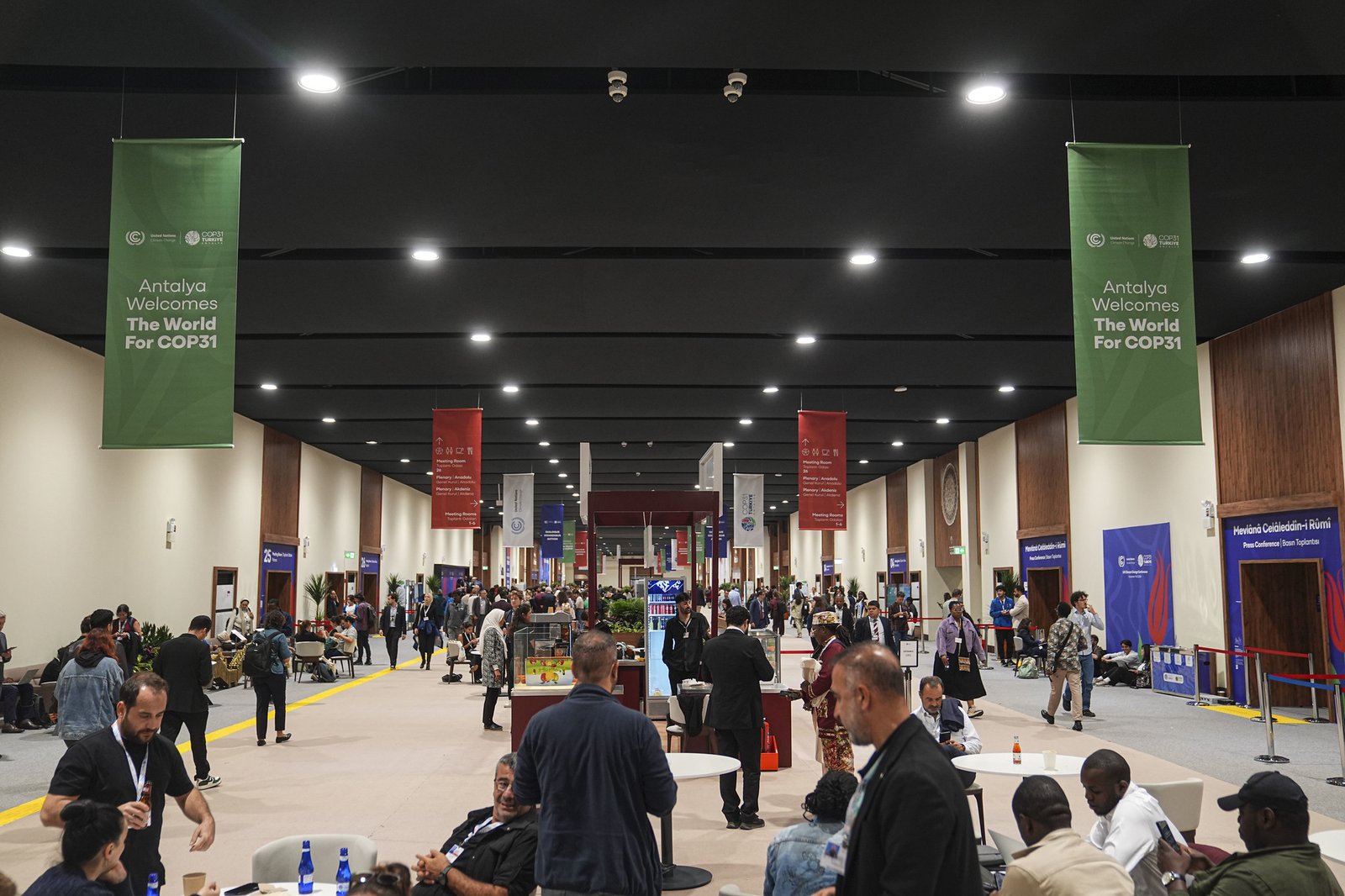
Mollah Amzad Hossain with Afroza Akther Pervin from Antalya, Türkiye
November 20, 2026 — Negotiations at the 31st UN Climate Change Conference (COP31) in Antalya have entered their final and most critical phase, with governments struggling to bridge deep differences over climate finance, adaptation, just transition and the future of fossil fuels. Although the conference is scheduled to conclude on Friday, November 20, the possibility of extended negotiations remains as countries work to reach consensus on the outstanding issues and the Presidency-led cover decision.
The latest draft of the cover decision, released by the COP31 Presidency on November 19, has triggered strong reactions from negotiating groups and civil society organisations. The revised text removed explicit references to fossil fuels and proposals for roadmaps to move away from them, which had appeared in the earlier draft circulated on November 16. It also dropped the proposed target of mobilising US$120 billion annually for adaptation finance by 2035, a key demand of developing countries.
The earlier 18-page draft contained several competing proposals, including accelerated action to phase out fossil fuels, stronger efforts to keep the 1.5°C temperature goal within reach and a proposed increase in adaptation finance. The revised text retains references to the 1.5°C goal and calls for increased electrification, including efforts to raise electricity’s share of global final energy consumption to 35% by 2035. However, it does not establish a specific fossil fuel phase-out pathway.
The changes have exposed the continuing divisions between countries seeking stronger language on emissions reduction and those concerned about the economic and energy-security implications of a rapid transition. The debate also reflects disagreements over whether electrification targets should be linked explicitly to renewable and other low-carbon energy sources.
Presidency calls for compromise
The Turkish and Australian co-presidency arrangements have placed Türkiye’s Environment, Urbanisation and Climate Change Minister Murat Kurum in the role of COP31 President, while Australia’s Climate and Energy Minister Chris Bowen leads the formal negotiations.
The Presidency has been conducting intensive consultations with ministers, negotiating groups and other stakeholders to narrow the differences. The ministerial-level Divan meeting on November 18 was convened to identify common ground on the most difficult political issues.
The Divan, drawing on a traditional Turkish practice of collective deliberation, brought together ministers and representatives of negotiating groups. The discussions were intended to move beyond the repetition of national positions and explore possible compromises.
Kurum stressed the need for a more constructive approach, saying: “What we need at this stage is not so much to reiterate our respective positions, but rather to identify where we can move forward together.”
Bowen also called for cooperation, saying: “This is a chance for the world to show we can work together on climate change and deliver on the real economic and energy pressures people are facing.” He added that the parties needed to build on common ground and deliver an ambitious, balanced and practical message.
UN Climate Change Executive Secretary Simon Stiell has also urged countries to make the most of the remaining negotiating time. At a Presidency press conference on November 19, he noted that almost 200 countries owned the process and that reaching strong and balanced outcomes across the complex issues would require considerable effort.
“These are crucial days ahead for climate cooperation. And we have no time to lose,” Stiell said.
Negotiating groups remain divided
Climate finance remains one of the most difficult areas of negotiation. Developing countries, particularly the G77 and China and the Least Developed Countries (LDCs), have called for predictable, accessible and adequate financial support from developed countries. They argue that public finance, including grants and concessional funding, must remain central to meeting the needs of vulnerable countries.
Developed countries, meanwhile, have emphasised the need to broaden the sources of climate finance, including private investment and contributions from a wider range of economies. The disagreement centres on responsibility for providing funds, the scale of public commitments and how financial support should be delivered.
Adaptation finance and loss and damage are also major concerns. Developing countries have pressed for a clear pathway to increase adaptation funding and strengthen the financial capacity of the Fund for Responding to Loss and Damage. However, the latest cover decision draft does not provide the specific annual adaptation finance figure sought by vulnerable countries. No clear breakthrough on a new funding commitment had emerged by the time of reporting.
Disagreements also persist over the proposed Just Transition Mechanism. Developing countries and labour and civil society representatives want a mechanism with meaningful institutional arrangements, financial support, technology transfer and participation by workers and affected communities. Other parties have expressed concerns about creating new structures that could duplicate existing institutions.
The formal negotiations have continued across several other mandated agenda items, including the Mitigation Work Programme, the Global Goal on Adaptation, Article 6 of the Paris Agreement, the Adaptation Fund and issues concerning the Green Climate Fund, the Global Environment Facility and the Fund for Responding to Loss and Damage.
Civil society demands stronger outcomes
Civil society organisations have strongly criticised the latest cover decision draft, arguing that the removal of fossil fuel language weakens the climate ambition expected from COP31. Campaigners have also questioned the lack of concrete commitments on climate finance and the limited progress in securing support for vulnerable communities.
Organisations representing climate-vulnerable countries and communities have called for a just transition mechanism backed by adequate finance, technology and meaningful participation. They argue that a mechanism based mainly on coordination and knowledge-sharing will not address the practical challenges faced by developing countries.
The criticism has extended beyond the cover decision to the pace of formal negotiations. Civil society groups have urged governments to ensure that the final political message reflects the urgency of climate science, the responsibilities of developed countries and the needs of people already experiencing climate-related disasters.
The final outcome will depend on whether the Presidency can reconcile these competing demands without weakening the central objectives of the Paris Agreement. The remaining negotiations are therefore not only about finalising the cover decision but also about demonstrating that international climate cooperation can deliver practical support and stronger implementation.
As the conference approaches its scheduled closing time, the central challenge remains securing a balanced agreement that addresses the concerns of both developed and developing countries. If consensus cannot be reached within the scheduled period, negotiations may continue beyond Friday.