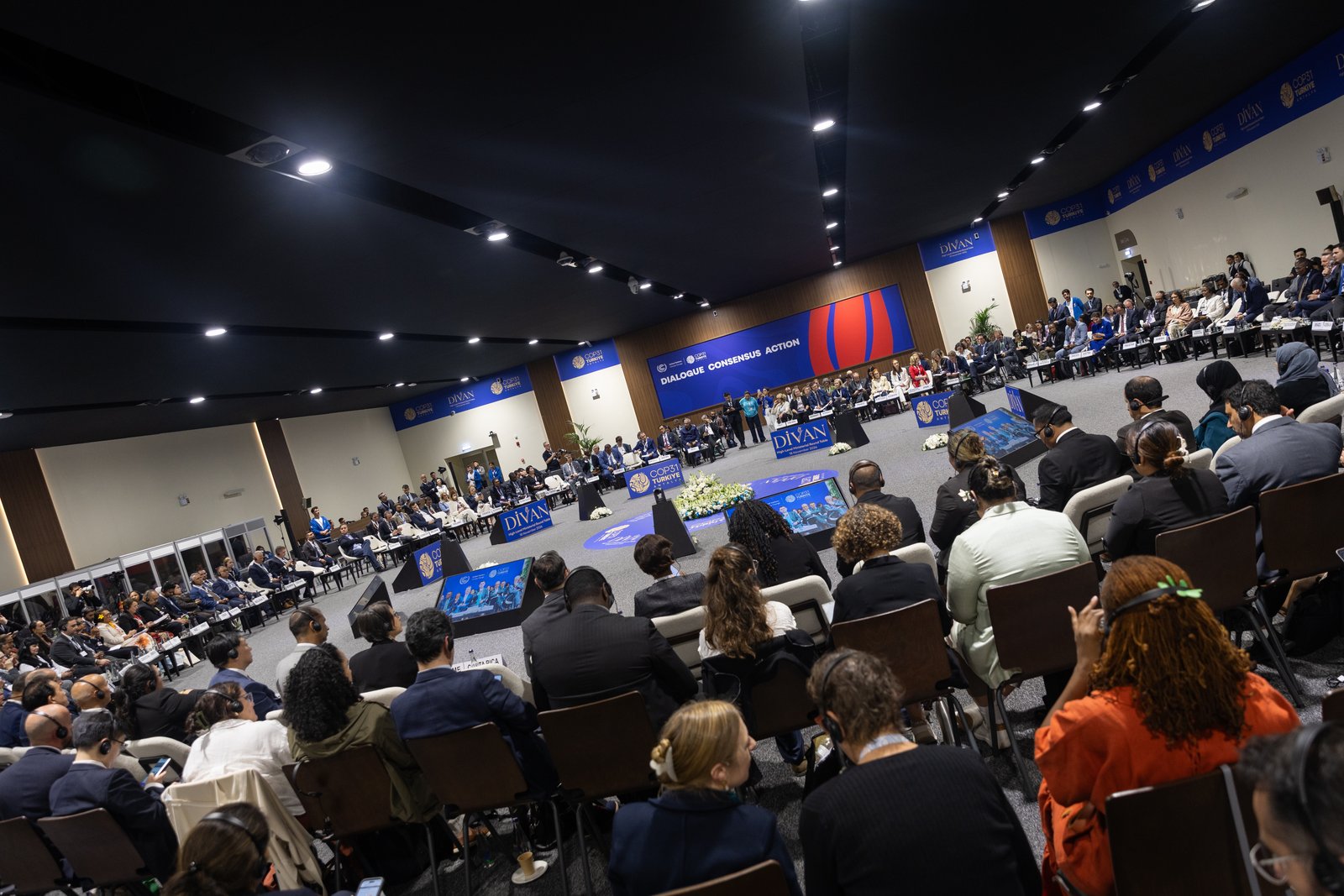
Mollah Amzad Hossain from Antalya, Türkiye
November 19, 2026: COP31 negotiations entered their final stage on Thursday with deep divisions persisting over climate finance, adaptation, fossil fuel transition and the proposed Cover Decision. Although Parties have made progress on some technical issues, civil society organisations, research institutions and developing-country negotiating groups warned that the emerging political outcome risks falling short of the urgent needs of climate-vulnerable nations.
The revised nine-page Cover Decision released by the Turkish and Australian Presidencies on Thursday afternoon has become a major focus of controversy. Compared with the earlier draft, it removes explicit references to transitioning away from fossil fuels and drops a proposed clarification that tripling adaptation finance by 2035 should mean at least US$120 billion annually. It retains references to the 1.5°C goal, adaptation, electrification and low-emission technologies, but does not establish a clear financial delivery pathway.
The text remains a Presidency draft, not an agreed decision. Negotiations are continuing among nearly 200 Parties, with the Presidencies seeking consensus before the conference closes.
Developing countries demand implementation and finance
The G77 and China has called for predictable, accessible and adequate climate finance, with public and grant-based resources at the centre of the COP31 outcome. The group insists that developed countries must fulfil their obligations under Article 9.1 of the Paris Agreement and that adaptation finance commitments must be translated into a clear delivery pathway.
On just transition, the group wants a fully operational mechanism with governance and implementation arrangements capable of facilitating access to finance, technology and capacity-building. Egypt, speaking for the group, said developing countries would not accept a mechanism that was merely a continuation of the existing Just Transition Work Program. “We want a mechanism that will deliver and work in complementarity (with the JTWP),” the group stressed.
The Least Developed Countries (LDCs) have called for adaptation finance of at least US$120 billion annually, alongside support for implementing National Adaptation Plans and addressing loss and damage. LDC Group Chair Adão Soares Barbosa said: “Our expectation for COP31 is clear: stronger action to limit warming, finance that reaches our countries, and decisions that help protect our people.”
AOSIS has also demanded stronger climate finance, accelerated emissions reductions and implementation of the agreed transition away from fossil fuels, emphasising that small island states need accessible, predictable and grant-based support.
Civil society criticises weakened ambition
Climate campaigners have strongly criticised the revised Cover Decision, particularly the removal of fossil fuel language and the absence of a quantified adaptation finance target.
Brandon Wu, director of policy and campaigns at ActionAid, described the negotiations as being at a “complete impasse” on adaptation finance. He accused developed countries, led by the European Union, of resisting progress on both adaptation finance and the proposed Just Transition Mechanism.
Power Shift Africa’s Mohamed Adow also criticised the revised text, warning that it represented a regression in climate ambition and could leave the summit without meaningful progress.
Climate Action Network International has repeatedly urged governments to turn existing commitments into practical protection for vulnerable communities, arguing that declarations without adequate finance will not deliver the required outcomes.
Research institutions warn of implementation gaps
Research and policy experts have also questioned whether the negotiations are producing a workable compromise. World Resources Institute experts reportedly expressed concern that ministers’ discussions were largely repeating established positions without sufficient political guidance to unlock the deadlock.
The revised text’s emphasis on electrification has also prompted debate. While Türkiye’s proposed 35-by-35 initiative has attracted support, campaigners and researchers argue that electrification must be powered by renewable energy and accompanied by a clear transition away from fossil fuels to deliver meaningful emissions reductions.
Final hours remain critical
The Presidency has urged Parties to narrow differences and translate areas of convergence into concrete decisions. However, the revised Cover Decision has not secured consensus, and major questions on finance, adaptation and just transition remain unresolved.
With the conference scheduled to conclude on November 20, the central test for COP31 is whether governments can agree on a package that combines stronger climate ambition with adequate financial and institutional support. For developing countries, the outcome will be measured not by the language of declarations, but by whether commitments translate into resources and action.